Gavvalu Sweet Recipe With Sugar: Crispy Andhra Sweet Shells
This gavvalu sweet recipe with sugar turns four pantry staples into crisp, shell-shaped treats that disappear fast at any festival table. Gavvalu, also called sweet shells, come from Andhra Pradesh, where families fry batches of them for Diwali and Sankranti every year. The name means cowrie shells in Telugu, so the little ridged curls you shape are meant to look like tiny sea shells.
Because the method looks fussy, many home cooks avoid it. Yet the whole thing rests on just two skills: a soft maida dough and a sugar syrup cooked to the right thread. Get those two right, and the rest is simply shaping and frying.
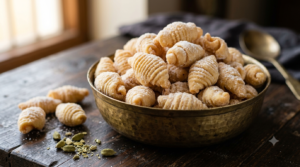
Golden fried gavvalu sweet shells coated in a frosty sugar syrup, an Andhra festival favorite.
Below you get exact measurements, the shaping trick without a special mould, the syrup stage that decides everything, and fixes for the mistakes that turn gavvalu soggy or rock-hard.
Gavvalu Sweet at a Glance
- What it is: a deep-fried Andhra sweet shaped like a cowrie shell, coated in sugar syrup.
- Main ingredients: maida (all-purpose flour), ghee, sugar, and a pinch of cardamom.
- Best made for: Diwali, Sankranti, weddings, or any time you want a crisp jar snack.
- Make-or-break step: the sugar syrup, which must reach a two-thread consistency.
- Shelf life: roughly 8 to 10 days in an airtight container, kept away from moisture.
Recipe Card
| Detail | Value |
|---|---|
| Prep time | 25 minutes |
| Cook time | 30 minutes |
| Total time | 55 minutes |
| Yield | About 30 to 35 pieces (4 to 6 servings) |
| Difficulty | Moderate |
What Makes This Gavvalu Sweet Recipe With Sugar Special
Sweet shells are one of the classic sweets of Andhra Pradesh and Telangana. According to the encyclopedia entry on sweet shells, the dough is made of maida and water or milk, then shaped, fried, and soaked in sugar or jaggery syrup. So the recipe is old, simple, and endlessly repeated across festival kitchens.
This sugar version stays pale gold and glossy, since white sugar keeps the coating clear. The jaggery version, by contrast, turns darker and carries a deeper caramel note. If you want that route instead, our gavvalu recipe with jaggery walks through it.
Here is the honest edge this guide adds. Most pages hand you a list and stop there. Instead, this gavvalu sweet recipe with sugar explains the syrup stage in plain terms, shows how to shape shells without the wooden mould, and lists the exact reasons a batch fails. That way your first attempt actually works.
Ingredients For The Gavvalu Sweet Recipe With Sugar
Everything here likely sits in your kitchen already. Measure before you start, because the frying and syrup stages move quickly once they begin.
For the dough
- 2 cups all-purpose flour (maida)
- 1½ tablespoons ghee (clarified butter)
- 1 pinch of salt
- Warm water, about ½ cup, added little by little
- Oil for deep frying, roughly 1.5 to 2 cups
For the sugar syrup
- 1 cup granulated sugar
- ¾ cup water
- 1 pinch cardamom powder, optional but lovely
One optional tweak sharpens the crunch. Swap 2 tablespoons of the maida for fine rice flour, since rice flour fries up lighter and crisper. Some Andhra cooks add it as standard, so treat it as a tested upgrade rather than a gimmick.
How To Make Gavvalu Sweet Recipe With Sugar Step By Step
Follow the stages in order. Because the syrup waits for no one, shape and fry all your shells first, and cook the syrup only when the frying is done.
Step 1: Prepare the dough
Combine the maida and salt in a wide bowl. Rub in the ghee with your fingers until the mix looks like coarse crumbs. This fat coating is what makes the shells crisp instead of chewy, so do not skip it.
Now add warm water in small splashes, kneading as you go. Stop when the dough turns soft, smooth, and just past sticky. Cover it with a damp cloth and rest it for 10 minutes, which relaxes the flour and makes shaping easier.
Step 2: Shape the shells
Divide the rested dough into small balls, roughly the size of a large marble. You should get about 30 to 35 of them. Traditionally cooks press each ball on a gavvala peeta, a ridged wooden mould that leaves the shell pattern.
No mould at home? A fork works well. Press a ball against the back of the tines, then roll it forward gently so it curls into a shell with grooves. Those grooves matter, because they trap the syrup later and hold the sweetness.
Step 3: Deep fry the shells
Heat oil in a deep kadai on medium flame. To test it, drop in a pinch of dough. If it rises slowly and steadily without browning at once, the heat is right. Oil that is too hot browns the outside while the inside stays raw.
Fry the shells in small batches, stirring gently so they cook evenly. Each batch turns pale golden in about 5 to 7 minutes. Lift them out with a slotted spoon and drain on paper towels while you fry the next batch.
Step 4: Cook the sugar syrup
Add the sugar and water to a heavy pan on medium heat. Stir until the sugar dissolves, then let it bubble. You are aiming for a two-thread consistency, and the next section explains exactly how to read that stage.
Once it reaches that point, stir in the cardamom powder and take the pan off the heat immediately. Syrup left on the flame too long crystallizes, so timing here decides the whole batch.
Step 5: Coat and cool
Tip the fried shells straight into the warm syrup. Fold gently but thoroughly, so every shell picks up a thin, even glaze. Let them sit for 3 to 5 minutes, then spread them on a tray in a single layer to cool and set.
As they cool, the syrup crystallizes into a fine white frost on each shell. That frosty finish is exactly what you want in a good gavvalu sweet recipe with sugar.
Getting the Sugar Syrup Consistency Right
This is the stage that makes or breaks the gavvalu sweet recipe with sugar, so slow down here. Sugar syrup passes through several stages as it cooks, and gavvalu needs the two-thread stage, sometimes called double-string.
To check it, cool a drop on a plate for a second. Then press it between your thumb and forefinger and pull them apart. When two fine threads form and hold, the syrup is ready.
Stop too early at a single thread, and the coating stays wet and sticky rather than frosting over. Push too far past two threads, and the syrup hardens into a candy shell or turns grainy. When in doubt, pull the pan off a touch early, because you can always warm it again.
Pro Tips For The Gavvalu Sweet Recipe With Sugar
- If the dough feels sticky, work in a tablespoon of flour. If it feels stiff, add a splash of warm water.
- Keep the frying flame at medium-low, since a rushed high flame browns the shells before they cook through.
- Fry in small batches, because a crowded kadai drops the oil temperature and the shells soak up grease.
- Use fresh ghee in the dough where you can, as it gives a richer flavor than plain oil.
- Let each batch drain fully before it meets the syrup, so the coating grips instead of sliding off.
Common Mistakes In The Gavvalu Sweet Recipe With Sugar
Most failed batches of this gavvalu sweet recipe with sugar trace back to a handful of errors. Spotting them early saves your ingredients and your time.
Soggy, oily shells usually mean the oil was too cool or the kadai was too crowded. Raise the heat slightly and fry fewer pieces at once. Hard, tooth-cracking shells come from over-frying or a syrup cooked past two threads, so ease off both.
Syrup that will not coat points to an under-cooked, watery syrup. Return it to the flame and take it back to the two-thread stage. A grainy, crystallized mess means the syrup went too far or got stirred too hard while cooling, so handle it gently next time.
Sugar, Jaggery, or Wheat Flour: Which Gavvalu To Make
The gavvalu sweet recipe with sugar is only one of a few well-loved versions, and each suits a different taste. This table lays them side by side so you can pick before you cook.
| Version | Sweetener / flour | Character |
|---|---|---|
| Sugar gavvalu (this recipe) | White sugar, maida | Pale, glossy, clean sweetness |
| Jaggery gavvalu | Jaggery, maida | Darker, deeper, caramel note |
| Wheat flour gavvalu | Sugar or jaggery, atta | Nuttier, denser, more rustic |
| Karam gavvalu | Spices, no syrup | Savory, hot, snacky |
Prefer a heartier, whole-grain bite? Try our gavvalu recipe with wheat flour. Want the spicy cousin instead of a sweet? The karam gavvalu recipe skips the syrup entirely.
Gavvalu, by the way, is a close relative of Goan kulkul and Kerala kalkal, which use nearly the same shaping trick. So if those sweets feel familiar, this one will come naturally.
Storing Your Gavvalu Sweet Recipe With Sugar
This gavvalu sweet recipe with sugar keeps beautifully, which is why it is such a popular festival make-ahead. Cool the shells completely first, because trapped warmth turns to moisture and softens them.
Store them in a clean, airtight container at room temperature. Kept dry, they stay crisp for about 8 to 10 days. Avoid the fridge and any humid corner, since damp air makes the sugar coating turn sticky. For gifting, pack them only after they are fully cool and frosted.
Nutrition Information (Approximate)
These figures are rough estimates per serving and will shift with your exact measurements and frying. Treat them as a guide, not a lab reading.
| Nutrient | Amount |
|---|---|
| Calories | ~350 kcal |
| Carbohydrates | ~60 g |
| Fat | ~12 g |
| Protein | ~4 g |
| Sugar | ~30 g |
Because these shells are deep-fried and sugar-heavy, they are a festive treat rather than an everyday snack. Anyone watching sugar intake, including people managing diabetes, should enjoy them in small portions.
Gavvalu Sweet Recipe With Sugar: The Bottom Line
A good gavvalu sweet recipe with sugar rewards patience over speed. Rub the ghee in well, shape the shells with grooves, fry gently in small batches, and cook the syrup to a true two-thread stage. Nail those four things, and you get crisp, frosty sweet shells worthy of any Diwali or Sankranti spread. Pair them with other festival favorites from our Diwali sweets collection for a full mithai plate.
Frequently Asked Questions
What is the gavvalu sweet recipe with sugar made of?
It uses maida, ghee, salt, and water for the dough, plus sugar, water, and cardamom for the syrup. You fry the shaped shells, then coat them in the syrup. The whole thing needs no special or hard-to-find ingredient.
Do I need a special mould to shape gavvalu?
No. A traditional ridged gavvala peeta gives the cleanest pattern, but the back of an ordinary fork works just as well. Press and roll each ball on the tines to create the grooves that hold the syrup.
Why is my gavvalu sweet recipe with sugar not crisp?
Usually the oil was too cool or the kadai was overcrowded, so the shells absorbed oil instead of crisping. Fry in small batches on a steady medium flame. A little rice flour in the dough also boosts crunch.
What sugar syrup consistency do gavvalu need?
They need a two-thread, or double-string, consistency. Cool a drop, then pull it between your fingers, and two fine threads should form. This stage sets the frosty coating and keeps the shells from staying sticky.
Can I use jaggery instead of sugar?
Yes, jaggery gives a darker color and a deeper caramel flavor. Melt and strain it to remove grit before cooking it to the same two-thread stage. The method is otherwise identical to the sugar version.
Can I bake gavvalu instead of frying them?
Baking changes the texture and loses the signature light crunch. These shells are traditionally deep-fried, which is what gives them their crisp bite. Baking is possible but will not taste quite the same.
How long do gavvalu stay fresh?
Stored in an airtight container away from moisture, they stay crisp for roughly 8 to 10 days. Cool them fully before sealing, since trapped heat softens the shells. Keep them out of the fridge and humid spots.
Are gavvalu only for festivals?
Not at all. While they shine at Diwali, Sankranti, and weddings, they make a fine jar snack any time. Many families keep a batch ready for guests and tea-time treats throughout the year.