Kannada Brahmin Style Sambar Powder Easy Cooking
Kannada Brahmin Style Sambar Powder Recipe Easy Cooking
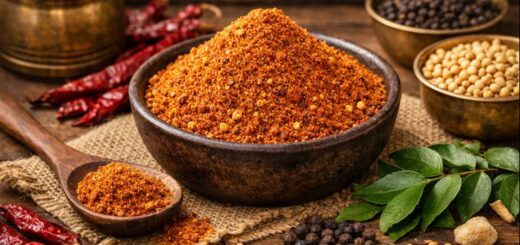
“Kannada Brahmin Style Sambar Powder Recipe Easy Cooking” is a treasured kitchen staple that helps you make authentic, aromatic sambar every time you cook. This homemade spice blend combines perfectly roasted spices and lentils to create a robust flavor that instant store-bought powders often lack. In traditional South Indian kitchens, especially among Brahmin families in Karnataka, this spice powder is made with care and kept at the ready for daily cooking. Sambar itself is a classic South Indian lentil stew that pairs wonderfully with rice, idli, dosa, and other staples — and its signature flavor comes from fresh sambar powder. Sambar on Wikipedia gives a broader view of how this stew fits into South Indian cuisines like Kannada, Tamil, and Malayali.
When I visited Udupi and stayed with friends of the Brahmin community, I was surprised at how each household’s sambar powder had its own character — even though the basic ingredients were the same. I personally recommend making this masala at home; the aroma while roasting spices fills the kitchen in a way that’s deeply comforting.
Recipe Card
| Prep Time | 15 minutes |
|---|---|
| Roasting Time | 25–30 minutes |
| Grinding Time | 10 minutes |
| Total Time | 50 minutes |
| Yield | About 200 g powder (makes ~3–4 months supply) |
| Servings | About 80–100 tsp (use ~2–3 tsp per sambar) |
| Difficulty | Moderate |
Ingredients (Exact Quantities)
- 100 g (1/2 cup) Coriander seeds (dhania)
- 50 g (1/4 cup) Cumin seeds (jeera)
- 25 g (2 tsp) Fenugreek seeds (methi)
- 100 g (1/2 cup) Urad dal (split black gram)
- 50 g (1/4 cup) Chana dal (split Bengal gram)
- 150–200 g dried red chilies (mix of Byadagi & Guntur)
- 1 tsp Black peppercorns
- 1 tsp Asafoetida (hing)
- 1–2 tbsp Turmeric powder
- Optional: handful of dried curry leaves (for aroma)
Step-by-Step Instructions
1. Prepare Ingredients
Measure all spices precisely. Break the dried red chilies into halves and deseed if you want milder heat. Keep curry leaves ready if using. This helps ensure all ingredients roast evenly. Understanding Kannada Brahmin Style Sambar is essential.
2. Dry Roast Lentils
Heat a heavy pan on low flame. Add urad dal first and roast for 6–8 minutes until it turns light golden brown and aromatic. Then add chana dal and roast for another 6–7 minutes. Lentils should smell nutty. Keep stirring to avoid burning.
3. Roast Whole Spices
Add coriander seeds, cumin seeds, black peppercorns, and fenugreek seeds to the pan. Keep the flame low and roast spices for about 8–10 minutes until aromatic — coriander seeds should feel crunchy when pressed between fingers.
4. Dry Roast Red Chilies
Add the broken red chilies to the pan. Roast them for about 6–8 minutes until they darken slightly and release a smoky red aroma. Be careful not to char them; low heat is key. This relates to Kannada Brahmin Style Sambar.
5. Add Turmeric And Asafoetida
Turn off the heat and sprinkle turmeric and hing over the warm roasted ingredients. Stir briefly just to combine — this also helps preserve aroma. Optionally you can roast curry leaves separately until crisp (about 3–4 minutes) and add them now.
6. Cool Completely
Transfer all roasted ingredients to a wide plate and let them cool completely to room temperature (about 15 minutes). This prevents condensation inside the grinder jar.
7. Grind Into Powder
Pour the cooled spices into a clean, dry spice grinder or mixer. Grind to a fine, even powder (about 10 minutes). If making a large batch, grind in batches. Learn more about Kannada Brahmin Style Sambar.
8. Store The Powder
Once ground, transfer the powder into a dry, airtight glass jar. Label with date. Avoid using wet spoons; moisture shortens shelf life. Stored well, this powder stays potent for ~3–4 months.
Pro Tips From Cooking Experience
- If you prefer milder spice, use Kashmiri or Byadagi chilies only — they give color without too much heat.
- Roasting each ingredient separately brings out deeper, balanced flavors.
- I found that adding dried curry leaves gives a unique fragrance that store powders cannot match.
- Keep flame consistently low; high heat kills aroma and can burn the spices.
- Grind only after ingredients are fully cooled — warm grinding can make powder clumpy.
Chef’s Notes
Substitutions
- Fenugreek seeds are slightly bitter. If you don’t have them, reduce quantity to 1 tsp.
- Black peppercorns can be skipped but add a warm depth to flavor.
- For a gluten-free version, this recipe is already naturally compatible.
Storage Tips
- Always use a dry spoon to take out sambar powder.
- If you live in humid regions, consider refrigerating the jar to extend shelf life.
- Small jars are better; once opened, freshness fades slowly even in airtight jars.
Suggested Uses
This sambar powder elevates:
- Traditional South Indian sambar (vegetable & toor dal stew)
- Vegetable stir-fries with a dash of tangy tamarind
- Rice bath, rasam, and even certain lentil curries for added depth
Nutrition (Approx.) Per 1 Teaspoon
| Calories | 12–14 kcal |
|---|---|
| Carbohydrates | 2 g |
| Protein | 1 g |
| Fat | 1 g |
| Fiber | 1 g |
| Vitamin A | About 200 IU |
| Iron | ~1 mg |
Nutrition per teaspoon is estimated based on typical spice content and preparation methods.
Frequently Asked Questions
Can I Add Coconut To Sambar Powder?
Yes, roasted desiccated coconut adds richness but reduces shelf life — store in fridge if added.
How Much Powder Per Sambar Serving?
For a family of 4, adding 2–3 tsp of homemade sambar powder during cooking gives balanced flavor.
What’s The Difference Between Udupi & Kannada Brahmin Powders?
Udupi Brahmin spice blends often use more coriander and less chili; other Kannada groups vary ratios based on heat preference.