Poori Recipe Without Salt: Easy Homemade Atta Puri
A poori recipe without salt can still produce a crisp, golden Indian bread with a soft centre. The key is a firm atta dough, even rolling and careful frying. This version keeps the original recipe’s wheat flour, optional semolina and simple method, but it does not promise that every poori will puff.
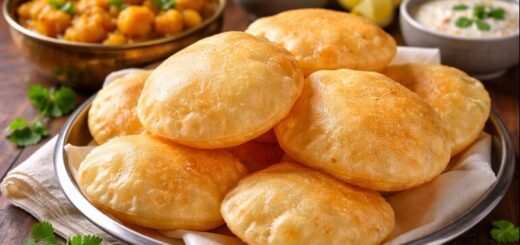
Illustrative image of golden whole-wheat pooris made without added salt, served fresh with a simple Indian side dish.
Recipe testing disclosure: No documented kitchen test, measured oil absorption or verified batch photographs were available for this refresh. The instructions and quantities below are adapted from the previously published recipe, not presented as results of a new hands-on test. Timings, final yield and nutrition are unverified until a weighed kitchen trial confirms them.
Image disclosure: Any food image accompanying this article should be treated as illustrative unless its source confirms that it shows this exact prepared batch. An AI-generated image must be labelled as AI-generated; a stock image must not be described as a photograph of a tested result.
Poori Recipe Without Salt at a Glance
- Style: Indian whole-wheat, deep-fried bread with no salt added to the dough.
- Yield: Not yet tested or confirmed. The number of pooris depends on the finished dough weight, portion size and rolling thickness.
- Preparation: About 15 minutes of mixing and shaping, plus a 10-minute dough rest.
- Frying: Allow roughly 10–15 minutes for a batch, depending on your pan and the number and size of pooris.
- Total: Roughly 35–45 minutes including heating the oil. These are untested estimates, not guaranteed timings.
- Diet: Vegetarian and made without added salt, but not gluten-free or low-fat.
Important distinction: No added salt does not mean zero sodium. Whole wheat contains small amounts of sodium, while packaged seasonings and side dishes may add more. The American Heart Association explains this difference.
Ingredients for a Poori Recipe Without Salt
- 2 cups whole-wheat atta. The original recipe calls this approximately 300 g, but actual cup weights vary.
- 1/2 cup fine sooji or rava, approximately 75 g, optional for a different texture.
- 3 tablespoons neutral cooking oil for mixing into the dough, as in the original recipe.
- About 3/4 cup water, added slowly. You may need less or more.
- A tiny pinch of turmeric, optional for colour.
- A tiny pinch of asafoetida (hing), optional for aroma. Read the ingredient label for wheat, salt or other additives.
- Additional neutral oil for deep-frying. The amount in the pan is not the amount the pooris absorb.
For this poori recipe without salt, leave out table salt, rock salt and black salt entirely. You can use a little cumin or crushed ajwain for flavour instead. If you omit the semolina, adjust the water gradually rather than pouring it all in at once.
Poori Recipe Without Salt: Step-by-Step Method
1. Prepare a Firm Dough
Put the atta and optional semolina in a mixing bowl. Add the 3 tablespoons of oil and rub it through the flour with clean fingertips. Mix in the turmeric or hing, if using.
Add water a little at a time, then knead until the dough holds together and looks smooth. The original method suggests about five minutes of kneading. It should feel firmer than everyday chapati dough, yet still be easy to roll without deep cracks.
2. Let the Dough Rest Briefly
Cover the dough with a clean cloth or a lid for about 10 minutes. This brief rest can make rolling easier because the flour hydrates and the dough relaxes. Avoid leaving raw dough out for hours, especially in a hot kitchen.
Do not taste the dough to check the seasoning. Raw flour can carry harmful germs, even when it contains no eggs. The US Centers for Disease Control and Prevention (CDC) advises cooking flour-based dough before eating it.
3. Divide and Roll the Pooris
Divide the dough into evenly sized portions, keeping unused pieces covered. Roll each into a smooth ball, then flatten it into a disc around 2–3 mm thick. Choose the diameter to suit the portion and your kadai rather than forcing every piece into a fixed size. In a poori recipe without salt, even thickness matters more than a promised count or diameter.
With 300 g atta, 75 g semolina, roughly 180 g water and about 40 g oil, the dough could weigh approximately 595 g. Dividing that into 10–12 pieces would produce about 50–60 g portions, which may be too thick if rolled to only 8–10 cm. Therefore, the original small-poori yield is not confirmed without a cooking test.
Use only a little oil on the rolling surface if the dough sticks, rather than showering it with loose flour. Excess flour can burn in the pan. Also, make sure the discs have no tears that could stop them puffing.
4. Fry Carefully and Serve Hot
Choose a stable, deep kadai with enough room above the oil for bubbling. Do not fill it more than about one-third full, and keep a well-fitting metal lid close by. Heat the oil gradually over medium to medium-high heat without letting it smoke.
A kitchen thermometer is more reliable than guessing from a piece of dough. About 175–185°C is a practical starting range for pooris, not a tested requirement for this batch. If the oil smokes or the bread browns at once, lower the heat.
Using a long slotted spoon, ease one dry-surfaced disc away from you into the hot oil. It may rise and puff; if it does, gently nudge the edge beneath the oil. Turn it once it has set and gained colour, then fry the other side until cooked through.
Remove each poori with the slotted spoon and let extra oil drain over the pan. Transfer it to a paper-lined plate or wire rack. The original recipe suggests roughly 20–30 seconds per side, but actual cooking time depends on size, oil heat and dough.
Frying and Raw-Dough Safety Precautions
Hot oil deserves close attention because splashes and grease fires can cause serious injury. Keep children away from the stove, use dry utensils and never leave the kadai unattended. Water on a wet spoon or on dough can make the oil splatter.
- Roll and prepare the dough away from the hot burner. Keep your hands clear when lowering a disc.
- Watch for smoke. If the oil becomes too hot, turn down or switch off the heat and let it cool safely.
- Never pour water onto a cooking-oil fire. For a small contained pan fire, cover it with a metal lid and turn off the heat only if safe to do so; otherwise evacuate and call emergency services.
- Wash hands, utensils and the work surface after they touch uncooked flour or dough. Keep raw flour away from ready-to-eat food.
- Discard oil that smells rancid, smokes unusually or contains lots of burnt flour particles. Do not pour hot oil into the sink.
These precautions follow the US Consumer Product Safety Commission’s cooking-fire advice and US Food and Drug Administration guidance on raw flour.
Why a Poori Recipe Without Salt Can Still Puff
A poori recipe without salt can still puff because salt is not the ingredient that creates steam. Steam forms as moisture heats inside the dough, while the surface begins to set. Even rolling and suitable oil heat therefore matter more than adding a pinch of salt.
| Problem | Likely cause | Try next time |
|---|---|---|
| Flat poori | Uneven thickness or a tear | Roll an even, smooth disc. |
| Greasy poori | Oil too cool or dough too soft | Heat the oil gently; knead firmer dough. |
| Dark outside, undercooked inside | Oil too hot | Reduce heat before the next disc. |
| Dough cracks while rolling | Too dry or not rested enough | Add a few drops of water and rest briefly. |
| Stiff finished poori | Too much flour dust or prolonged frying | Brush off excess flour and fry only until cooked. |
Test one poori before you fry the whole batch. It gives you a chance to adjust the heat and rolling thickness. Perfect puffing is not guaranteed, especially when you change the flour mix.
Substitutions: Atta, Sooji, Millets and Baking
The easiest version of this poori recipe without salt uses just atta, water and oil. The original optional semolina gives another texture, though removing it changes how much water the dough needs. For a standard salted comparison, the site also has a separate atta-flour poori recipe.
Can You Make a Poori Recipe Without Salt with Jowar or Bajra?
Not as a guaranteed one-for-one swap. Jowar and bajra lack the gluten network that makes this wheat-dough method easy to roll. Consequently, an all-millet poori can crack or fail to puff unless you use a separately developed recipe.
Both atta and semolina contain gluten, so the recipe as written is unsuitable for coeliac disease. For a gluten-free meal, use a dedicated tested recipe with suitable ingredients and clean utensils. The World Gastroenterology Organisation lists wheat and semolina among gluten-containing foods.
Are Baked or Pan-Cooked Discs the Same as Poori?
No. A baked or dry-pan-cooked disc uses a different cooking method, so it may resemble a small flatbread rather than a puffed poori. The old article’s exact baking time was not supported by a documented test and should not be treated as reliable.
If reducing frying oil is your priority, try a simple cooked atta flatbread instead. Do not describe that variation as a lower-calorie poori without measuring both recipes. You can also read the site’s semolina poori recipe to compare dough texture, but its salt content and instructions differ.
Poori Recipe Without Salt: Nutrition and Diet Suitability
A poori recipe without salt changes the seasoning, not the basic calorie or carbohydrate content. Poori remains a fried bread made mainly from wheat and oil. Serving size, semolina, oil mixed into the dough and oil absorbed during frying all affect nutrition.
Why the earlier nutrition table has changed: Its 120–150 kcal, 12–18 g carbohydrate and 6–8 g fat figures were not tied to a weighed finished batch. A precise per-poori number would mislead readers because neither the finished yield nor absorbed frying oil has been measured.
An Illustrative Calculation, Not a Nutrition Label
Suppose a cook weighs out 300 g of atta and 75 g of semolina, then mixes in 3 tablespoons of oil. Using reference values of roughly 340 kcal per 100 g whole-wheat flour, 360 kcal per 100 g semolina and 120 kcal per tablespoon of oil, those ingredients supply about 1,650 kcal in total.
The roughly 1,650 kcal figure is an illustrative whole-batch ingredient total before frying, not a nutrition label for the finished pooris. It excludes oil absorbed during deep-frying. Because the number and weight of cooked pooris have not been tested, reliable calories, carbohydrates, protein and fat per poori cannot yet be given. If the atta weighs less than 300 g or you omit semolina, even the batch calculation changes.
For reference food composition, use the US Department of Agriculture FoodData Central. To make a real recipe nutrition panel, weigh each raw ingredient, record the actual cooked yield and estimate absorbed oil using a validated method. Until then, do not label one poori as a fixed-calorie or sodium-free food.
Who Should Be Careful with This Recipe?
- People limiting sodium: There is no added salt in the dough, but natural sodium, seasoning blends and salty curries still count. Review your whole meal, especially if a clinician prescribed a sodium limit.
- People with diabetes: Wheat and semolina contain carbohydrates that can raise blood glucose. Count portions and discuss meal planning with your care team if needed.
- People with coeliac disease or wheat allergy: Avoid this wheat-based version and check hing or other seasonings for wheat-containing additives.
- Children: This is still deep-fried food. Choose suitable portions and temperatures for the child; adults should handle frying.
- Anyone limiting fried foods: No added salt does not make pooris low-fat or a treatment for any condition.
For carbohydrate planning, the CDC’s carbohydrate-counting guide explains why portions matter. Individual diet needs differ, so a clinician or registered dietitian should guide strict medical diets.
Poori Recipe Without Salt: Storage and Reheating
A poori recipe without salt tastes best when the pooris are fresh, crisp outside and soft inside. Leftovers can still be kept safely when handled correctly. The old advice to avoid refrigeration altogether confused a possible texture change with food-safety guidance.
Storing Uncooked Dough
Use the dough soon after mixing for best handling. If you need to prepare ahead, refrigerate it promptly in a covered food-safe container at 4°C or below. Using it by the following day is a practical quality target, not a proven maximum safe-storage period for this specific dough.
Do not leave raw dough out overnight or allow children to sample it. Wash hands after handling it. Discard dough if it has been mishandled or shows signs of spoilage; cooking is not a way to rescue poorly stored food.
Storing and Reheating Cooked Pooris
Let cooked pooris cool briefly, then place them in a clean, shallow, covered container and refrigerate promptly. FoodSafety.gov guidance for cooked leftovers advises using them within 3–4 days at 4°C or below. This is general food-safety guidance, not a tested shelf life for this particular poori recipe; its texture may deteriorate sooner.
Keep perishable side dishes separate. They should enter refrigeration within two hours, or one hour in temperatures above 32°C. Reheat pooris on a clean, hot dry tawa or in an oven until thoroughly hot; they may become chewy rather than crisp. Do not repeatedly reheat the same batch.
What to Serve with a Poori Recipe Without Salt
Gentle spices can make a poori recipe without salt taste less plain. Try cumin, coriander, ginger or fresh herbs in the accompaniment. A lightly spiced potato curry, plain curd with herbs or a simple dal can work well, provided their seasoning fits your needs.
When you serve a poori recipe without salt, do not overlook black salt, chaat masala, packaged chutneys or pickles. These can add salt even if the poori dough contains none. A little lemon, fresh coriander or toasted cumin may add flavour without extra salt.
Before You Cook
This poori recipe without salt keeps the familiar atta method while leaving salt out of the dough. Start with a firm dough, roll evenly and fry only while you can watch the pan. Most importantly, treat the yield and nutrition as unverified until a measured kitchen test confirms them.
The original method remains useful for home cooking, but its diet and storage claims needed sharper limits. If you track calories, sodium or carbohydrates for medical reasons, base your decision on weighed ingredients and professional dietary advice.
Frequently Asked Questions
Can poori puff without salt?
Yes, poori can puff without adding salt. Steam inside the dough helps it expand during frying. Even rolling, suitable dough firmness and oil heat are more important than salt, although results will vary by batch.
Is a Poori Recipe Without Salt Sodium-Free?
No. Not adding salt to the dough does not prove a sodium-free result. Wheat flour and optional ingredients may contribute natural sodium, while curry and chutney can add much more.
Is this suitable for a low-sodium diet?
It may help reduce added salt in one part of a meal. However, its suitability depends on the full ingredient labels, sides, portion size and your prescribed limits. Check with your care team for a medically restricted diet.
Can I Skip Semolina in a Poori Recipe Without Salt?
Yes. Semolina is optional in the original recipe, so you can make the dough with atta alone. Add water slowly, since a flour change may affect how much liquid you need and how the poori puffs.
Can I use gluten-free flour instead of atta?
Not as a direct substitution with a promised result. Atta and semolina contain gluten, while gluten-free flour blends handle differently. Use a specifically developed gluten-free poori recipe if you need to avoid wheat.
Why is my poori oily or flat?
Oil that is too cool can lead to a greasy finish, while a torn or uneven disc may stay flat. Fry one test poori and adjust your rolling or heat before cooking the rest.
Can I bake this dough instead of deep-frying?
You can experiment with baking, but the result will be a different flatbread. No documented test supports the previous fixed oven time, so do not expect the same puff or texture.
How long can cooked pooris stay in the fridge?
FoodSafety.gov gives a general 3–4-day refrigeration guideline for cooked leftovers kept at 4°C or below. This poori batch has no tested shelf-life claim, and its texture may decline sooner. Freshly prepared pooris are preferable.
May I taste raw poori dough?
No. Raw flour can contain germs, even when there is no egg in the recipe. Cook the dough fully, and clean utensils, hands and surfaces after handling it.