Almond Flour Nankhatai: Untested Diwali Recipe Trial
Almond flour nankhatai is the subject of this untested Diwali baking trial, not a finished kitchen-tested recipe. The proposed biscuit pairs finely ground almonds with besan, rice flour, ghee and cardamom. The key experiment is whether a tender, lightly cracked nankhatai can hold its shape without wheat flour.
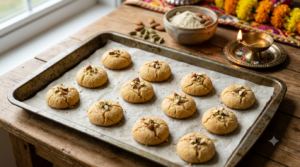
Illustrative almond flour nankhatai for a proposed Diwali baking trial. This image does not represent a kitchen-tested batch.
Untested recipe notice: Bhimas Cook has not baked and verified this exact formula. Ingredient weights, oven temperature and timing checks below are trial starting points, not confirmed results. The number of finished biscuits, their final texture and any safe storage period are unknown until appropriate testing.
Almond Flour Nankhatai Trial at a Glance
- Recipe type: Eggless, oven-baked Indian-style shortbread experiment for Diwali.
- Flour base: Almond flour with small amounts of besan and rice flour.
- Proposed oven setting: 165°C in a preheated conventional oven; the actual setting needs testing.
- First inspection: Begin checking the small test batch after about 10 minutes; do not treat this as a finished bake time.
- Texture target: A biscuit that holds together when cool yet breaks with a short, tender bite.
- Known allergens: Almonds (tree nuts), milk from ghee, and optional pistachios (tree nuts).
- Actual yield and storage life: Not established. Count pieces after baking and do not promise a shelf life.
This is a development recipe for cooks who want to run a deliberate small test before Diwali. It does not claim a perfect first attempt. If you need reliable sweets for guests immediately, choose a recipe already tested in your own kitchen.
What Makes This Almond Flour Version Different?
Traditional nankhatai often uses wheat flour, ghee, sugar and cardamom, sometimes with besan or semolina. This trial instead makes almond flour the main flour. The change matters because ground almonds supply their own fat but lack the gluten structure of wheat. Almond flour nankhatai therefore needs its own measured trial rather than a direct flour swap.
King Arthur Baking’s almond flour guide explains why almond flour produces tender baked goods and why it cannot simply replace wheat flour in every formula. Its separate almond flour baking comparison found that a fully almond-based cookie can spread and become fragile. Those findings inform the questions here, not proof of this particular biscuit’s outcome.
The test includes besan for a familiar nankhatai note and rice flour as a possible crispness aid. Both choices are hypotheses that need tasting and texture checks. The intended result should still taste primarily of almond, ghee and cardamom.
Ingredients for the First Almond Flour Nankhatai Trial
Use a kitchen scale wherever possible, since cup measures vary with how tightly flour settles. These weights define a proposed test batch, not a validated bakery formula. Avoid altering several ingredients at once or the results will be difficult to interpret.
| Ingredient | Proposed amount | Reason for the trial |
|---|---|---|
| Fine blanched almond flour | 100 g | Main flavour and tender crumb |
| Besan (chickpea flour) | 40 g | Traditional flavour and dry structure |
| Fine rice flour | 15 g | Possible lightness and edge crispness |
| Fine powdered sugar | 55 g | Sweetness and shortbread texture |
| Ghee, soft but not melted | 50 g | Richness and dough cohesion |
| Ground cardamom | 1/4 tsp | Festive aroma |
| Baking powder | 1/8 tsp | Small lift trial |
| Fine salt | A small pinch | Balance |
| Chopped pistachios | Optional, a small pinch per piece | Decoration; extra tree-nut allergen |
The proposed batch uses 100 g almond flour, 40 g besan and 15 g rice flour. It also uses 50 g ghee and 55 g powdered sugar. These are starting measurements for almond flour nankhatai, not quantities proven to produce a particular number of biscuits.
Choose finely ground almond flour rather than coarse almond meal for the first trial. Coarse particles may change the bite, so save that comparison for another batch. If the sugar contains added starch, record the brand because that ingredient can affect the dough.
Equipment and Preparation Before Baking
Set out a digital scale, mixing bowl, spoon or spatula, baking tray, parchment paper and cooling rack. A conventional oven with an oven thermometer would make the first test easier to repeat. Use a clean ruler or scale if you want consistent portions.
Keep the ghee soft enough to mix but not liquid. Then line a cool tray with parchment instead of greasing it. For almond flour nankhatai, record this choice as part of the test conditions. King Arthur’s cookie-spread comparison shows that the baking surface can change how cookies spread, so the lining belongs in your test notes.
Wash your hands and work surfaces before handling the ingredients. FoodSafety.gov’s four-step food-safety guide advises washing hands and cleaning utensils and counters during food preparation. Also check that the flour packs are within their labelled dates and free from unusual smells.
How to Make Almond Flour Nankhatai: First Trial Steps
The method below describes a proposed sequence for one carefully observed bake. It is not a promise that the dough will behave exactly as described. Bake only a couple of pieces first, then use the evidence to decide how to finish the remaining dough.
- Prepare the oven. Set a conventional oven to a proposed 165°C and allow it to preheat fully. Note the actual temperature if you have an oven thermometer.
- Mix the dry ingredients. Combine almond flour, besan, rice flour, cardamom, baking powder and salt. Break up any lumps without compressing the flour.
- Blend ghee and sugar. Stir the soft ghee with the powdered sugar until evenly mixed. You need a smooth blend, not a guaranteed fluffy cream.
- Bring the dough together. Add the dry ingredients and fold gently. Stop when a pressed portion begins to hold, since extra mixing will not create wheat-style gluten.
- Assess and rest. Compress a little dough in your palm. If it crumbles, let the bowl rest for five minutes and try again before changing any ingredient.
Shape, Bake and Evaluate the Test Pieces
- Shape test pieces. Weigh two small, similar portions, around 20 g each as an initial size trial. Form thick discs and place them well apart on the cool lined tray.
- Add a topping if suitable. Press a tiny amount of pistachio into the centre, or leave the tops plain. Keep toppings consistent on the two trial pieces.
- Bake and observe. Put the tray on the middle rack and start inspecting at about 10 minutes. Continue in short checks until the tops look set and the edges show gentle colour.
- Cool before judging. Leave the pieces on the tray until they can hold their shape, then move them carefully to a rack. Assess the centre only after they cool fully.
- Record the result. Write down the actual bake time, spread, colour and cooled texture. Only then decide whether the rest of the dough needs a change.
Do not sample raw dough to judge the besan flavour, since raw flour is not a ready-to-eat ingredient. A firm outer edge alone does not prove the centre has cooked through. If a cooled test piece has a wet, pasty or raw-flour centre, extend the baking trial rather than serving it.
The Two-Cookie Test That Matters Most
Baking every portion together would hide useful information. Instead, place two similarly sized pieces on a tray with clear space around them. Measure their width and height before they enter the oven, then compare both after cooling.
King Arthur Baking recommends trying a few cookies first when the formula or equipment is unfamiliar. That principle is especially relevant here because almond flour can change spread and structure. It supports the testing approach, not the proposed ingredient ratio.
For this almond flour nankhatai experiment, look for an intact top, gentle cracking and a centre that breaks cleanly. Notice whether the base feels greasy or leaves a damp mark. A tender biscuit may feel delicate while warm, so wait before calling it too soft. That cooling check matters particularly for almond flour nankhatai.
What If the Dough or Biscuits Fail?
Failure is possible with this untested recipe. The main risks are spreading, crumbling, raw-tasting besan, excessive browning and a heavy, greasy mouthfeel. Change one variable at a time, then bake another small test rather than guessing across the full tray.
| Observed problem | Possible cause | Next controlled test |
|---|---|---|
| Dough will not hold | Dry flour balance or poor compression | Rest briefly; compress again; log any small ghee adjustment |
| Pieces spread flat | Warm fat, pan surface or flour ratio | Chill shaped pieces; keep tray cool; repeat with same weight |
| Edges darken too early | Actual oven heat or tray position | Check thermometer; test lower heat or higher rack next time |
| Centre stays pasty | Too thick or not baked enough | Use thinner equal discs and extend checks cautiously |
| Fully cooled biscuit breaks apart | Weak structure or handling | Try a slightly smaller piece; review flour ratio in next batch |
If the first pieces flatten, chilling the remaining shapes may help with spread. However, cold dough cannot fix every flour or fat imbalance. Record the change so the second test remains useful even if it still fails.
Three Variables Worth Testing Separately
Almond Flour Grind and Biscuit Structure
A finer almond flour may give a more even crumb than coarse ground almonds. For the baseline test, use the same flour brand throughout. If the biscuit proves gritty, change the grind next time while leaving the other ingredients alone.
Almond flour naturally adds fat, so adding more ghee to solve every crumbly dough can create a different problem. Compress and rest the mixture first. If you eventually adjust ghee, weigh the addition and document it.
Disc Thickness and Browning
Thin discs may become crisp before the centre develops the wanted shortbread bite. Thick discs may brown outside while staying pasty within. The initial trial therefore favours similar, modestly thick discs rather than decorative shapes of mixed sizes.
Record the shaped height and the cooled height, since spread is part of the result. When comparing batches, keep the oven rack and parchment the same. That makes the thickness change easier to judge.
Cardamom, Besan and the Final Flavour
Cardamom should support the nutty taste rather than drown it. Start with the listed small amount, then judge only after the biscuit cools. The warmth of fresh baking can make the spice seem stronger than it will taste later.
Besan contributes a familiar nankhatai character but also needs full baking. If the cooled centre tastes raw or floury, revisit time and size first. Do not simply hide an underbaked result with more cardamom or nuts.
Is This Almond Flour Nankhatai Gluten-Free?
The proposed formula contains no wheat, semolina or other deliberately added gluten-containing grain. However, that alone cannot establish a gluten-free product. Packaged besan, rice flour, almond flour, baking powder and shared equipment may introduce gluten through cross-contact.
Anyone who must avoid gluten for medical reasons should check every ingredient label and the preparation environment. Do not advertise the test batch as certified gluten-free without appropriate controls. Also remember that the absence of wheat does not remove nut and milk allergens.
An eggless formula is not automatically vegan either, because ghee comes from milk. Swapping ghee for a plant-based fat would create a different recipe that needs its own test. Avoid telling guests that such a substitution has already worked here.
Allergens and Safe Serving for Diwali
Allergen alert: This trial contains almonds, a tree-nut allergen, and ghee, a milk-derived ingredient. Optional pistachios add another tree nut. Besan comes from chickpeas, so people with relevant legume allergies should also check whether the ingredient is suitable for them.
The US Food and Drug Administration’s allergen guide identifies tree nuts, including almonds, and milk as major food allergens. When offering homemade sweets, tell guests exactly which nuts and dairy ingredients you used. Avoid cross-contact with utensils or containers that previously held allergenic foods.
For a Diwali plate, keep these biscuits labelled and separate from nut-free items. Never claim the same kitchen has eliminated cross-contact unless that is genuinely verified. If a guest has a serious food allergy, do not serve an uncertain homemade batch as allergen-safe.
Diwali Preparation Without a Storage Promise
Almond flour nankhatai could become part of a festive sweet assortment once the recipe works reliably. For now, test it well before a gathering and record how it behaves after cooling. The finished number of biscuits depends on actual dough weight, portion size and how much of the batch remains usable.
There is no verified room-temperature shelf life for this particular trial. Storage safety depends on ingredients, moisture, cleanliness, temperature and handling. Allow completely baked biscuits to cool, then use clean, dry, food-grade containers and follow sound food-safety practice rather than a guessed number of days.
The US Department of Agriculture’s guidance on shelf-stable foods explains that room-temperature stability depends on appropriate processing and storage. It does not establish a safe shelf life for this untested biscuit formula. Crispness, a pleasant smell or a sealed tin cannot prove safety, so discard food if its storage conditions are uncertain.
For festive menu planning, compare this test with Bhimas Cook’s Diwali sweets recipes. A savoury tray could include the site’s baked methi mathri trial, which also stresses documenting results. Almond lovers can explore almond flour halwa as a different sweet format.
Almond Flour Nankhatai Kitchen-Test Record
One successful-looking cookie is not enough to approve the recipe. Repeatability matters, especially before a festival when several trays may bake in sequence. Complete a written log after each trial so the next batch tests a clear improvement.
| Test item | What to record | Decision cue |
|---|---|---|
| Ingredients | Brands and exact gram weights | Can the mix be repeated? |
| Ghee condition | Soft, firm or partly melted | Does texture affect spread? |
| Dough feel | Crumbly, cohesive or greasy | Does shaping work without guesswork? |
| Shape | Portion weight, width and height | Are pieces reasonably even? |
| Oven | Mode, thermometer, rack and tray | Can heat conditions be repeated? |
| Actual baking | First check and removal time | Is the centre fully baked? |
| Cooling | Tray time and final texture | Does the biscuit stay intact? |
| Finished batch | Actual count and cooled weight | Is yield now measured? |
| Storage | Conditions and texture observations | Do not infer safety from texture |
Once a batch meets the desired taste and texture, repeat it on another day using the same measured formula. Compare the results before calling the method reliable. Storage-life claims require suitable food-safety evidence; a home taste test cannot establish them.
Before You Put This on a Festive Plate
This almond flour nankhatai trial offers a way to learn how nut flour behaves in a familiar Indian biscuit. Its value lies in careful weighing, testing two pieces first and recording the cooled result. Do not serve a pasty or doubtful batch, and make the almond and dairy allergens clear. After repeat kitchen trials, the page can be updated with measured yield, confirmed bake settings and real photographs.
Frequently Asked Questions
Has this almond flour nankhatai recipe been kitchen-tested?
No. Bhimas Cook has not verified this exact ingredient mix in a real bake. All measurements and oven checks are proposed trial settings. The recipe should remain labelled untested until the kitchen documents repeatable results.
Can I replace all the besan with almond flour?
That would create a different experiment, not a proven substitution. Almond flour has more fat and no wheat-style gluten structure, so spread and texture can shift. Test a couple of pieces before committing to a full tray.
Does this recipe need an egg?
No egg appears in the proposed formula. Ghee and the flour blend are intended to form the dough, but that binding has not been confirmed by baking. If the dough does not hold, record the problem before changing ingredients.
What oven temperature should I try first?
The suggested starting point is 165°C in a fully preheated conventional oven. This is a test setting, not a universally correct baking temperature. Oven calibration, cookie size and tray material can change the result, so inspect early.
How many nankhatai biscuits will the batch make?
The actual yield is unknown because no completed kitchen trial has counted the finished pieces. Portion size and handling losses will affect the result. Count and weigh the cooled biscuits in your own trial before publishing any yield.
How long can I store almond flour nankhatai?
No safe storage duration has been established for this formula. Keep handling and containers clean, and avoid assuming that a dry, crisp biscuit must remain safe. Follow appropriate food-safety guidance and discard food when conditions are doubtful.
Is it safe for someone with a nut allergy?
No. Almond flour is the main ingredient, so this biscuit is unsuitable for someone who must avoid almonds. Optional pistachios add another tree nut, while ghee introduces milk. Tell guests about the ingredients and possible cross-contact.
Can I use an air fryer instead of an oven?
An air-fryer version has not been tested for this formulation. Airflow and tray size can alter browning and spread, so the listed oven setting should not be copied as a confirmed air-fryer programme. Develop a separate small trial with close observation.