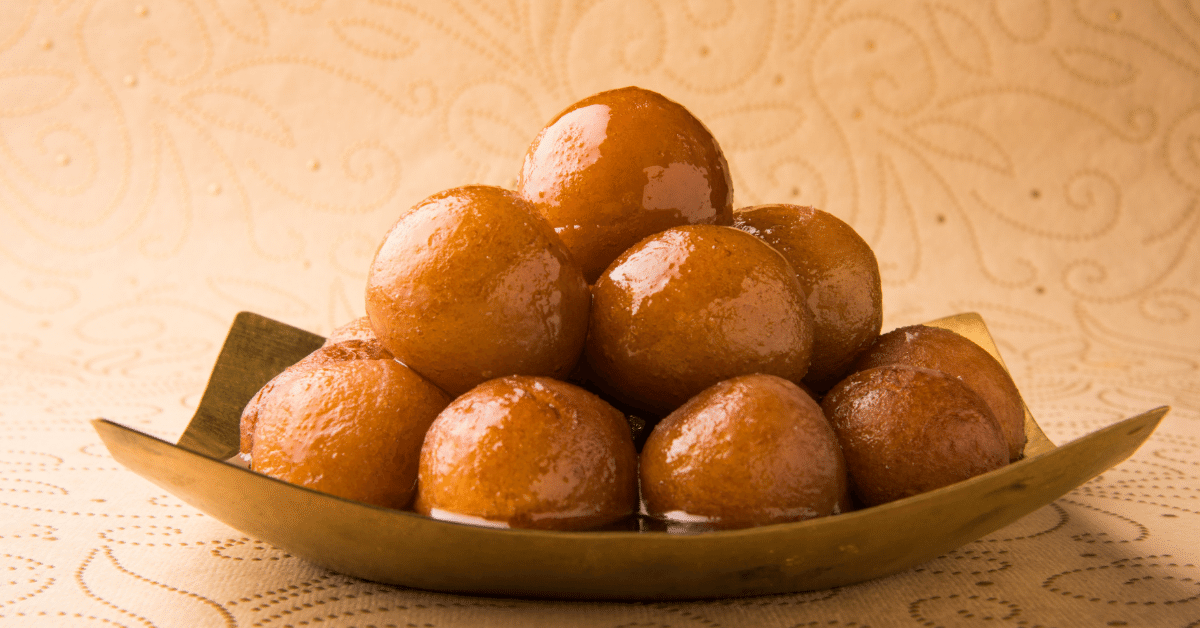
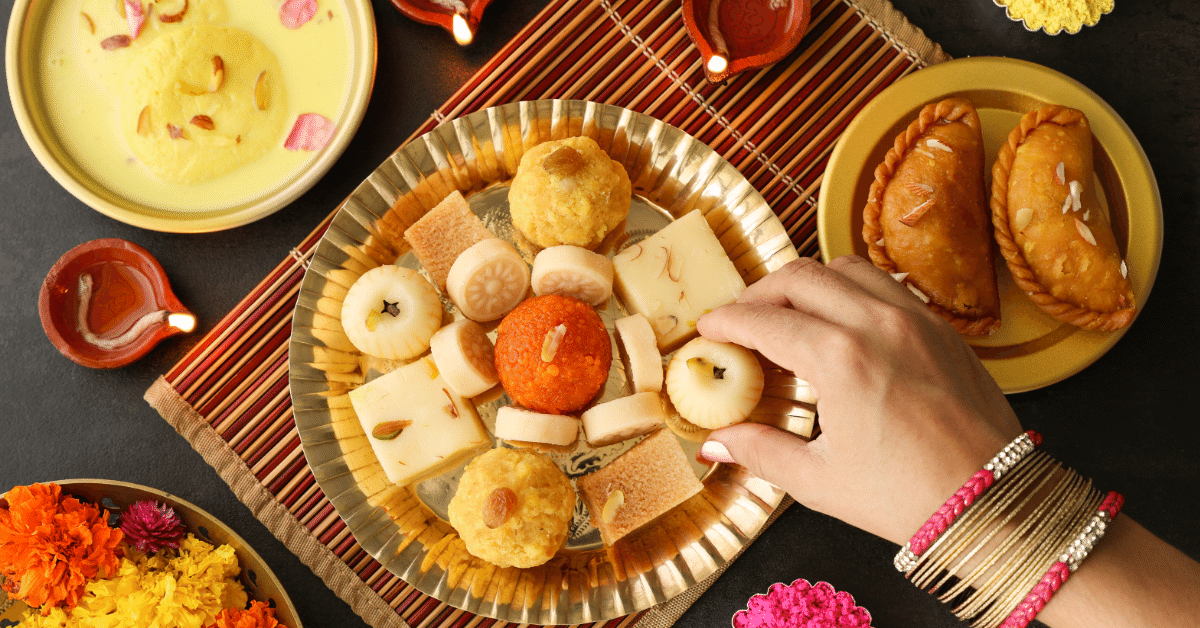
Coconut Milk Mysore Pak: Untested Recipe Trial
Coconut milk Mysore Pak is the Diwali sweet trial here, but this version has not yet passed a Bhimas Cook kitchen test. The aim is a coconut-forward, ghee-free variation with enough Mysore Pak character to justify the name. Until a real batch confirms the texture, final quantity, cooking time and yield, every number below is a controlled starting point rather than a reliable finished recipe.
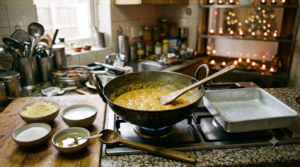
An illustrative coconut milk Mysore Pak development setup for Diwali; the recipe is still an untested first-batch trial.
This page is deliberately separate from Bhimas Cook’s classic ghee-based Mysore Pak. That version follows the familiar besan, sugar and ghee route. This trial changes the fat-and-moisture system, so it needs its own testing rather than a simple ingredient swap.
Coconut Milk Mysore Pak Trial at a Glance
- Status: untested first-batch formulation; do not label it tested or foolproof yet.
- Goal: a clean-setting sweet with coconut aroma, a tender bite and some Mysore Pak-style porosity.
- Starting formula: besan, sugar, unsweetened coconut milk, neutral oil and cardamom.
- Yield: unknown until the cooled batch is counted or weighed.
- Cooking time: not established; record the actual time during the trial.
- Storage life: not established; do not publish a room-temperature shelf-life after one batch.
- Key test: decide whether the result eats like Mysore Pak or drifts closer to coconut-besan burfi.
The most useful outcome is not a neat number for minutes or pieces. Instead, the first test should reveal how much moisture the coconut milk brings, how the oil incorporates, and what the cooled texture actually becomes.
Why Coconut Milk Mysore Pak Needs a Different Test
Classic Mysore Pak depends on a simple but unforgiving balance of besan, sugar syrup and hot fat. India’s official tourism portal describes the traditional sweet around gram flour, ghee and sugar. That baseline matters because this trial removes ghee and adds a water-containing coconut ingredient. Incredible India also links the sweet closely with Karnataka’s food heritage.
Coconut milk is not just another fat. Codex defines it as a dilute emulsion of coconut material in water, so it brings both coconut solids and moisture into the pan. That means a direct one-for-one replacement for ghee would change the cooking physics. See the Codex standard for aqueous coconut products for the formal category.
Commercial coconut-milk Mysore Pak also exists, which proves the idea is not purely theoretical. However, a commercial ingredient list does not reveal its process or ratios. Therefore, this page treats the home formula as recipe development, not reverse engineering.
How This Trial Differs from Classic Mysore Pak
| Point | Classic Bhimas Cook version | This trial |
|---|---|---|
| Main flour | Besan | Besan |
| Main sweetener | Sugar | Sugar |
| Main fat | Ghee | Neutral oil |
| Extra liquid | Water for syrup | Coconut milk |
| Texture claim | Established classic target | Not yet verified |
| Yield | Existing recipe guidance | Unknown until tested |
The distinction is important for searchers, too. A reader looking for classic Mysore Pak expects ghee to do most of the flavour and texture work. In coconut milk Mysore Pak, coconut milk becomes a structural variable as well as a flavour ingredient.
There is another naming risk. If the mixture cooks into a smooth, dense fudge with little porosity, it may resemble seven-cup burfi more than Mysore Pak. The test should record that honestly instead of forcing the intended label onto the result.
First-Batch Ingredients: Starting Points Only
These quantities are proposed for a small controlled batch. They are not yet reliable recipe quantities because Bhimas Cook has not cooked and repeated them. Weigh the besan and sugar where possible, since cup packing can hide useful differences during testing.
| Ingredient | Starting quantity | What to record |
|---|---|---|
| Besan | 100 g | Brand, freshness, fineness |
| Granulated sugar | 150 g | Whether it dissolves cleanly |
| Unsweetened coconut milk | 100 ml | Brand, fat per 100 ml, thickness |
| Neutral cooking oil | 120 ml | How much fully incorporates |
| Cardamom powder | 1/4 tsp | Whether coconut still leads |
| Salt | One tiny pinch | Optional flavour balance |
Use an unsweetened coconut milk, not a sweetened coconut beverage. Shake packaged coconut milk before measuring because the fat can separate in storage. Also record the label’s fat content, since one brand can behave differently from another.
Keep the first batch plain. Nuts, saffron and other garnish can wait because they add variables without answering the main question. First establish whether the besan, coconut milk, sugar and oil can create the intended body.
Coconut Milk Mysore Pak First-Batch Method
This method is a test protocol rather than a promise of the final method. Use a heavy kadai, a broad heatproof spatula and a tray prepared before the stove goes on. Hot sugar and fat can cause serious burns, so keep water away from the pan and do not touch syrup or hot mixture with bare fingers.
- Sieve the besan. Pass 100 g besan through a fine sieve, so dry lumps do not confuse the texture test later.
- Prepare the tray. Lightly grease a small metal tray with neutral oil. Record the tray dimensions because depth affects cooling and cutting.
- Warm the oil gently. Put 120 ml neutral oil in a small pan over the lowest heat. It should be warm and fluid, not smoking.
- Dissolve sugar in coconut milk. Add 150 g sugar and 100 ml coconut milk to the heavy kadai. Heat gently while stirring until the sugar looks dissolved and the mixture simmers evenly.
- Add besan gradually. Lower the heat, then whisk in the sieved besan in small additions. Keep stirring so dry pockets do not form.
Adding Oil and Finding the Trial Endpoint
The second half of the test is about absorption and endpoint control. Keep the heat low enough to stir safely, and record what the mixture does after each oil addition. If the pan suddenly spits or the oil smokes, reduce the heat before continuing.
- Cook the base carefully. Continue on low heat while stirring. Cook the besan fully before any tasting: continue stirring until the raw flour smell has disappeared and the mixture has cooked through. Smell and texture are only preliminary cues, not proof of complete cooking; never taste uncooked batter or hot mixture.
- Add warm oil in stages. Add one small ladle at a time, stirring until most of it disappears before the next addition. Stop and record if the mixture refuses to absorb the full amount.
- Watch the texture, not a guessed minute mark. Look for thickening, increased bubbling and some release from the pan. Do not claim these cues are final until the trial proves they match a good cooled texture.
- Transfer once the test endpoint is reached. Pour the mixture into the prepared tray when it appears cohesive and no longer flows like batter. Note any free oil left in the pan or on the surface.
- Cool before judging. Leave the tray undisturbed until the sweet is fully set enough to cut cleanly. Only taste a cooled sample after the besan has cooked fully; if proper cooking is uncertain, do not sample that batch. Record the cooling time instead of publishing an assumed one.
Why a Fixed Sugar-Syrup Stage Is Not Yet Claimed
This coconut milk Mysore Pak method deliberately avoids claiming a one-string coconut-milk syrup stage. Coconut milk contains fat and suspended solids, so the classic finger-thread cue may not translate cleanly. The test should decide whether a separate sugar syrup gives better control in the next version.
What a Successful First Trial Should Prove
A successful batch should answer measurable questions rather than merely taste pleasant. First, the sweet should set firmly enough to lift from the tray without smearing. It should also cut cleanly after cooling, while remaining tender rather than chewy.
Second, the interior should show whether the mixture developed any fine pores. Large hollow tunnels would suggest uneven fat incorporation, while a completely smooth fudge may signal a burfi-like result. Neither outcome should be hidden because both tell the next test what to change.
Third, taste only a fully cooked, cooled sample to judge whether the coconut comes through. If the aroma disappears behind toasted besan, the next test may need a different coconut milk or a small formula adjustment. If coconut dominates and the sweet feels greasy, the oil and coconut-fat balance needs review.
What Can Go Wrong in the Coconut Milk Mysore Pak Trial?
| Result after cooling | Possible cause | Next controlled change |
|---|---|---|
| Soft and sticky | Too much retained moisture or early endpoint | Cook further before changing ratios |
| Hard and crumbly | Too much cooking or too little retained fat | Shorten endpoint first |
| Greasy surface | Oil exceeded what the base could hold | Record unused oil and reduce next test |
| Dense, smooth fudge | Moisture stayed high or aeration stayed low | Review process before changing sugar |
| Raw flour smell during cooking | Besan may still be undercooked | Continue cooking gently and stirring; never taste the uncooked mixture. If full cooking cannot be confirmed, do not serve the batch |
| Weak coconut flavour | Coconut milk too dilute or flavour cooked out | Test a richer unsweetened milk |
Change one variable at a time. If the first batch is sticky, do not simultaneously reduce coconut milk, add more oil and increase the heat. A three-variable correction might work, yet you would not know which change mattered.
Why Coconut Milk Brand Matters More Than It Seems
Two cartons labelled coconut milk can contain different amounts of coconut solids and fat. Some also contain stabilisers, so viscosity alone does not tell you how much water is present. That is why the test log should capture the exact brand and nutrition panel.
Fresh coconut milk creates another variable because extraction strength depends on coconut, water and pressing. Bhimas Cook’s coconut payasam recipe already separates thin and thick coconut milk for that reason. For this trial, packaged unsweetened coconut milk gives a more repeatable starting point.
If a later test moves to fresh coconut milk, treat that as a new version. Do not assume the same 100 ml will behave identically, because the water-to-fat balance may change.
Diwali Planning: Test Before the Festival Rush
This coconut milk Mysore Pak trial is better tested on a quiet day than during the main Diwali cooking session. A calm batch lets you weigh ingredients, photograph stages and record the endpoint. If it works, repeat the same formula before calling it dependable.
For a wider festive menu, Bhimas Cook’s Diwali sweets guide already covers tested classic options. That makes this page useful as the experimental branch, rather than another copy of the same ghee Mysore Pak.
The site also uses this test-first approach for new festival recipes. The baked methi mathri trial records variables before locking in time, yield and storage. The same discipline matters even more here because coconut milk changes both moisture and fat.
Storage and Food-Safety Notes for an Untested Sweet
Do not publish a shelf-life number for this batch yet. Coconut milk adds moisture, so the finished water activity may differ from classic Mysore Pak. A sweet that looks firm at room temperature has not automatically proved a safe keeping period.
Keep the test process clean, use clean utensils and protect food from contamination. The World Health Organization’s Five Keys to Safer Food calls for thorough cooking, cleanliness and safe storage temperatures. Refrigerate perishable test food promptly rather than guessing its safety from texture.
Also avoid converting one household observation into a universal storage claim. A repeatable recipe still needs cautious storage wording because room temperature, container hygiene and final moisture all vary.
Kitchen Test Log Before This Becomes a Finished Recipe
| Test item | Record during cooking | Why it matters |
|---|---|---|
| Coconut milk | Brand and fat per 100 ml | Controls moisture and richness |
| Oil added | Actual ml absorbed | Prevents a false fixed-fat claim |
| Pan and heat | Pan size and burner level | Explains evaporation rate |
| Cook time | Start-to-transfer minutes | Becomes useful only after repeat |
| Set time | Time until clean cutting | Shows cooling behaviour |
| Final weight | Weigh fully cooled batch | Establishes real yield |
| Piece count | Count chosen cut size | Prevents invented serving claims |
| Texture | Porous, fudgy, crumbly or greasy | Decides the next change |
Photograph the mixture at three points: after besan goes in, after most oil is absorbed, and immediately before transfer. Those images make later comparison far more useful than memory. Also photograph one cut piece after full cooling so the crumb can be compared with the repeat batch.
Before Calling Coconut Milk Mysore Pak a Reliable Recipe
Coconut milk Mysore Pak should lose the “untested trial” label only after the same formula works in the real kitchen and then repeats successfully. The final page can then publish the confirmed coconut milk brand or specification, actual oil used, measured cooking time, cooled yield and observed texture.
If the result is more like coconut-besan burfi, rename it rather than forcing a Mysore Pak claim. If the texture is promising but slightly greasy, keep the name provisional and run a second oil-level test. The recipe earns confidence through repetition, not through a polished recipe card.
That is also the cleanest way to keep this page distinct from the classic recipe. The classic teaches the familiar ghee technique, while this one documents how a coconut-milk variation is developed and verified.
Frequently Asked Questions
Is this coconut milk Mysore Pak recipe tested?
No. This is an untested first-batch formulation for recipe development. The ingredient quantities are starting points, so Bhimas Cook should confirm the method, actual cook time, cooled texture and yield before presenting it as a tested recipe.
Does coconut milk replace ghee in Mysore Pak?
Not directly. Coconut milk contains water as well as coconut fat and solids, while ghee is primarily fat. This trial therefore uses coconut milk for flavour and moisture, plus neutral oil as the main added cooking fat.
Can I call this vegan Mysore Pak?
The proposed formulation contains no ghee or other dairy ingredients. However, check every packaged ingredient if you need strict vegan labelling. The final wording should still wait until the kitchen test confirms the recipe itself.
Why is there no yield for this coconut milk Mysore Pak?
The yield has not been measured because the recipe has not been cooked yet. After the first batch cools, weigh the full slab and count the chosen pieces. Repeat the successful formula before publishing a dependable yield.
Why does this trial not give a fixed cooking time?
A fixed time would be false precision before testing. Pan width, burner strength and coconut milk composition can all change evaporation. Record the first batch, then confirm the same endpoint in a repeat test before locking in minutes.
Can I use fresh coconut milk instead of packaged coconut milk?
You can test it, but treat fresh coconut milk as a separate version. Its strength changes with the coconut and extraction water, so the same volume may behave differently. A packaged unsweetened milk is easier for the first controlled trial.
What if the result tastes like coconut burfi instead of Mysore Pak?
Record that result and reconsider the name. A dense, smooth fudge may fit a coconut-besan burfi description better than Mysore Pak. Texture should decide the final label, not the original keyword target.
How long will coconut milk Mysore Pak keep?
This untested trial makes no shelf-life claim. Coconut milk changes the moisture profile, so classic Mysore Pak storage guidance should not be copied automatically. Establish the recipe first, then use cautious food-safety guidance for storage.