Mango Sambar Recipe: Andhra-Style Raw Mango Sambar
This mango sambar recipe makes a tangy Andhra-style sambar with raw green mango, soft toor dal, sambar powder and one final tempering. The key is not a fixed amount of tamarind or jaggery. Raw mangoes vary sharply in sourness, so taste the cooked mango base first and adjust only after that.
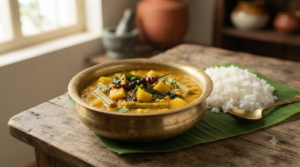
Andhra-style raw mango sambar with tender mango pieces, toor dal, curry leaves and a fresh mustard tempering.
That one change makes the recipe more reliable than treating every mango alike. You get bright mango flavour without a pot that turns painfully sour, sugary or over-spiced.
Mango Sambar Recipe at a Glance
- Prep time: about 15 minutes
- Cook time: about 30 minutes
- Total time: about 45 minutes
- Serves: 4 with rice
- Main lentil: 1/2 cup toor dal
- Main souring ingredient: about 200 g firm raw mango
- Tamarind: optional, only if the mango is not sour enough
- Jaggery: optional, used only to soften excessive sharpness
The finished sambar should taste mango-first, not tamarind-first. It should also stay pourable enough to mix easily with steamed rice.
Why Raw Mango Changes the Usual Sambar Method
Raw mango is both a vegetable-like ingredient and a souring agent in this dish. That means it replaces part, and sometimes all, of the tamarind you might use in regular sambar. If you add a full tamarind measure before tasting the mango, the finished pot can become harsh.
Several South Indian versions use raw mango with toor dal, sambar powder and a small amount of tamarind. Others rely on mango alone for acidity. Both approaches work because the right choice depends on the fruit in front of you.
Andhra cooks also make mamidikaya pappu, which is raw mango dal without the same sambar-spice profile. If that is the flavour you want, see the Andhra pappu charu guide for a lighter dal-based direction.
Ingredients for Andhra-Style Raw Mango Sambar
| Ingredient | Quantity | Why it is here |
|---|---|---|
| Toor dal | 1/2 cup | Gives body and lentil flavour |
| Firm raw mango | About 200 g, peeled and cubed | Main sour flavour |
| Small onion | 1, sliced | Sweet savoury base |
| Tomato | 1 small, chopped | Adds body and mild acidity |
| Sambar powder | 2 to 2 1/2 tsp | Main spice blend |
| Turmeric | 1/4 tsp | Colour and warmth |
| Tamarind | Up to 1 tsp, optional | Only for a mild mango |
| Jaggery | 1/2 to 1 tsp, optional | Rounds very sharp acidity |
| Salt | To taste | Balances the whole pot |
| Water | About 3 to 3 1/2 cups total | Adjusts cooking and consistency |
For the tempering
- 2 tsp sesame oil, peanut oil or another neutral cooking oil
- 1/2 tsp mustard seeds
- 1/2 tsp cumin seeds
- 1/8 tsp fenugreek seeds
- 1 or 2 dried red chillies
- A small pinch of asafoetida
- 1 sprig curry leaves
- 2 tbsp chopped coriander leaves for finishing
If you use a packaged sambar powder, start at the lower end because chilli and salt levels vary by brand. For a fresh homemade blend, the sambar powder method and ratio explains how the spice base changes the final pot.
Mango Sambar Recipe: Step-by-Step Method
- Cook the dal. Rinse the toor dal well. Pressure-cook it with 1 1/2 cups water and half the turmeric until very soft, then mash it smooth.
- Prepare the mango. Peel the raw mango and cut it into medium cubes. Taste a tiny piece now, because its sourness decides whether you need tamarind later.
- Cook the base. Add onion, tomato, mango, remaining turmeric, sambar powder and about 1 cup water to a pot. Simmer for 8 to 10 minutes until the mango is tender but still holds its shape.
- Add the dal. Stir in the mashed toor dal and another 1/2 to 1 cup hot water. Simmer gently for 5 to 7 minutes so the lentil and spice flavours come together.
- Balance the sourness. Taste before adding anything else. Add a little tamarind extract only if the mango tastes too mild, or 1/2 teaspoon jaggery if the sourness feels sharp and one-dimensional.
- Temper once. Heat the oil in a small pan. Add mustard, cumin and fenugreek, then the dried chilli, asafoetida and curry leaves. Pour the sizzling tempering over the sambar.
- Finish and rest. Add coriander, check salt and let the sambar rest for 5 minutes before serving. The short rest helps the mango, dal and tempering taste like one dish rather than separate layers.
This mango sambar recipe uses one final tempering instead of splitting the same spices across two pans. That keeps the method simpler and gives the fresh curry-leaf aroma a clearer finish.
How to Judge Mango Sourness Before Adding Tamarind
Use the mango itself as your first acidity test. A firm raw mango that makes your mouth pucker after one small bite usually needs no tamarind at the start. A milder mango may need a little extra sourness after the dal goes in.
For the optional tamarind, soak about 1 teaspoon in a few tablespoons of warm water. Squeeze and strain it, then add the extract a spoonful at a time. This is safer than pouring in a full measure before you know how sour the mango has become after cooking.
Jaggery works the same way. It is a correction tool, not a requirement. Add only enough to round the edges, because a noticeable sweet taste moves the dish away from a bright raw-mango sambar.
Mango Sambar Recipe Troubleshooting
| Problem | Likely cause | Best fix |
|---|---|---|
| Too sour | Mango plus too much tamarind | Add more cooked dal and hot water; use a little jaggery only if needed |
| Not sour enough | Mango was mild | Add strained tamarind extract gradually |
| Bitter finish | Too much fenugreek or burnt tempering | Dilute with dal and avoid darkening the tempering next time |
| Raw spice taste | Sambar powder did not simmer long enough | Simmer the combined pot for another 5 to 8 minutes |
| Mango disappeared | Pieces cooked too long | Use larger cubes and stop when just tender |
| Watery sambar | Too much water or poorly mashed dal | Mash more dal and simmer uncovered |
Do not try to repair every problem with jaggery. In this mango sambar recipe, extra dal is usually the cleaner fix for excess sourness because it reduces acidity without turning the sambar sweet.
What the Old Method Needed to Fix
The earlier version treated two teaspoons of jaggery as a standard Andhra rule and said every home adds it. That is too broad. Family methods differ, and published mango sambar recipes vary between no jaggery, a small optional amount and sweeter regional styles.
The old version also used two tablespoons of sambar powder for only half a cup of toor dal. That can dominate the mango, especially with a strong commercial blend. This refresh lowers the starting amount and tells you to adjust after simmering.
Another weak point was the duplicate tempering. Mustard, cumin and other spices were fried near the start and again at the end. One clean final tempering is easier for home cooks and reduces the chance of scorching the spices.
Optional Drumstick Variation
Raw mango and drumstick are a natural sambar pairing, especially in wedding-style and family versions. Add one drumstick cut into short pieces with the onion and tomato. Give it a head start for a few minutes before adding the mango if the pieces are thick.
Keep the mango quantity the same, but expect the pot to need slightly more water. Do not increase tamarind automatically because the mango still controls most of the sourness.
If you prefer a sweeter regional profile, compare the logic with this sambar recipe with jaggery. The useful principle is the same: sweetness should balance acidity rather than announce itself.
How to Serve Mango Sambar
Serve this mango sambar recipe hot over steamed rice with a little ghee if you use dairy. A dry vegetable fry, papad or simple pickle works well on the side because the sambar already carries plenty of sourness and spice.
You can also serve it with idli, dosa or pongal. For tiffin, thin the sambar with a little hot water and recheck the salt before serving. A thicker version suits rice better because it coats each spoonful.
Fresh coriander is optional, while curry leaves matter more to the final aroma. Add them to the hot tempering so their flavour reaches the oil before it hits the pot.
Storage and Reheating
Cool leftovers promptly and refrigerate them in a covered container. The Food Safety and Standards Authority of India advises keeping prepared food cold below 5°C when it must be stored. It also recommends thorough reheating before eating.
For a conservative home routine, use the sambar within 3 to 4 days when continuously refrigerated. That matches USDA leftovers guidance for cooked foods. If the sambar has sat at room temperature for more than two hours, discard it rather than relying on smell alone.
Reheat only the portion you plan to eat and bring it back to a full, steaming heat. Add a small splash of water because chilled dal thickens noticeably.
Ingredient Swaps and Dietary Notes
Moong dal can replace part of the toor dal, but the flavour becomes softer and less classic. A half-and-half mix is a practical option when you are short on toor dal, although the texture will be lighter.
For a gluten-free version, check the asafoetida packet instead of assuming every hing blend is gluten-free. Some compounded products use cereal flour as a carrier. Skip hing completely if the label is unclear.
The recipe is naturally vegetarian and can be vegan when you use oil instead of ghee for serving. Sesame oil gives a deeper South Indian aroma, but a neutral oil works if that is what you keep at home.
Mango Sambar Recipe: Key Tips Most Guides Miss
- Taste the raw mango first. Sourness varies more than recipe cards admit.
- Do not add tamarind by habit. Let the mango cook before deciding.
- Keep mango cubes fairly large. Small cubes collapse before the dal finishes simmering.
- Use less powder first. You can add more sambar powder, but you cannot remove an overpowering spice blend.
- Temper at the end. Curry leaves and mustard stay fresher and more aromatic.
- Fix excess sourness with dal first. Jaggery is a secondary adjustment, not the main rescue.
The biggest advantage of this approach is control. Instead of forcing one fixed sour-sweet ratio onto every mango, you cook the fruit, taste it and finish the balance from there.
Before You Serve
A good batch should smell of curry leaves and sambar spice before you taste it. The first spoonful should give you lentil body, followed by a clean raw-mango tang and gentle heat.
If one flavour dominates, make the smallest correction possible and simmer for two more minutes. This mango sambar recipe is at its best when the mango stays recognisable rather than disappearing behind tamarind, jaggery or spice powder.
Frequently Asked Questions
Can I make mango sambar without tamarind?
Yes. A very sour raw mango can provide enough acidity on its own, so cook the mango before deciding. Add tamarind only if the finished base tastes flat or too mild.
Should I add jaggery to raw mango sambar?
Jaggery is optional. Use a small amount only when the mango tastes aggressively sharp, and stop before the sambar becomes noticeably sweet. Extra cooked dal is often a better first fix.
Which mango is best for mango sambar?
Choose a firm, green, sour mango that holds its shape during simmering. Avoid a soft, fragrant mango that has started ripening because it can turn mushy and add unwanted sweetness.
Can I add drumstick to this mango sambar recipe?
Yes. Add one chopped drumstick for a classic mango-and-drumstick combination. Start it a little earlier than the mango when the pieces are thick, since drumstick takes longer to become tender.
Why did my mango pieces turn mushy?
The pieces were either too small, too ripe or cooked too long. Cut medium cubes and simmer only until a knife enters easily while the edges still hold their shape.
How much sambar powder should I use?
Start with 2 to 2 1/2 teaspoons for this half-cup dal recipe. Strong commercial powders may need less, while a mild homemade blend may need a little more after tasting.
Can I make the sambar in an Instant Pot?
Yes, but cooking dal and mango together can make the mango collapse. For better texture, pressure-cook the dal first, then use sauté mode to cook the mango base and combine everything before tempering.
How long does mango sambar keep in the fridge?
Use refrigerated leftovers within 3 to 4 days when they were cooled promptly and kept cold. Reheat the portion you need until steaming hot, and discard food left at room temperature too long.