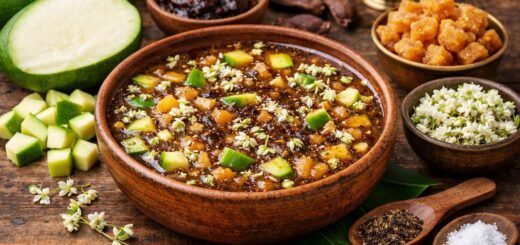
Ugadi Pachadi Banana Traditional Easy Recipe
Ugadi Pachadi Banana Traditional Easy Cooking Process
Ugadi Pachadi Banana Traditional is the heart of the Telugu New Year celebration. Prepared on Ugadi, this symbolic dish blends six distinct tastes that represent the six emotions of life—sweet, sour, bitter, spicy, salty, and tangy. According to cultural references on Wikipedia – Ugadi Festival, this festive dish is deeply rooted in Andhra Pradesh, Telangana, and Karnataka traditions. What makes the banana version special is its natural sweetness and texture, which balances the bitterness of neem flowers beautifully.
Furthermore, when I visited my grandmother’s village near Tirupati during Ugadi, I watched elders prepare this pachadi at dawn, right after oil bath rituals. What surprised me was how precisely each ingredient was measured—no guessing, no shortcuts. I personally recommend following exact quantities because balance is everything in this recipe.
Recipe Card
| Prep Time | 15 Minutes |
| Cook Time | 5 Minutes (For Jaggery Syrup Optional) |
| Total Time | 20 Minutes |
| Servings | 6 Servings |
| Difficulty | Easy |
Ingredients With Exact Quantities
Below are the traditional measurements followed in Andhra households. These quantities serve 6 people. Understanding Ugadi Pachadi Banana Traditional is essential.
- Ripe Banana – 1 medium (approximately 120 grams), finely chopped
- Fresh Neem Flowers – 1 tablespoon (5 grams)
- Tamarind – 20 grams (lemon-sized ball)
- Jaggery – 50 grams (about ¼ cup grated)
- Raw Mango – ½ cup finely chopped (75 grams)
- Green Chili – 1 small, finely chopped (5 grams)
- Salt – ½ teaspoon (3 grams)
- Water – 1 cup (240 ml)
For nutrition reference of banana and jaggery, you can check the official database by the USDA FoodData Central, which confirms calorie and carbohydrate values.
Step-By-Step Cooking Process With Timings
Step 1: Prepare Tamarind Extract (5 Minutes)
Soak 20 grams of tamarind in ½ cup warm water for 5 minutes. Squeeze well and strain to remove fibers. You should get about ½ cup tamarind juice.
Step 2: Prepare Jaggery Syrup (Optional – 5 Minutes)
If jaggery contains impurities, heat ¼ cup water and dissolve 50 grams grated jaggery. Strain to remove dirt. Cool before using. If clean and organic, you may mix directly without heating. This relates to Ugadi Pachadi Banana Traditional.
Step 3: Chop Fresh Ingredients (5 Minutes)
Finely chop banana into small cubes. Chop raw mango and green chili finely. Keep neem flowers ready. Use fresh flowers for authentic flavor.
Step 4: Mixing Process (5 Minutes)
In a wide bowl, add tamarind extract. Mix jaggery syrup until dissolved. Add chopped banana, mango, green chili, neem flowers, and salt. Stir gently for 2 minutes until well combined.
Step 5: Resting Time (5 Minutes)
Allow the pachadi to rest for 5 minutes so flavors blend naturally. Serve at room temperature. Learn more about Ugadi Pachadi Banana Traditional.
Also, that’s it. No complicated cooking. Just balance.
The Six Tastes And Their Meaning
Ugadi Pachadi is not random. Each ingredient represents life experiences:
- Sweet (Jaggery & Banana) – Happiness
- Sour (Tamarind & Mango) – Challenges
- Bitter (Neem Flowers) – Difficulties
- Spicy (Green Chili) – Anger
- Salty (Salt) – Interest
- Tangy (Raw Mango) – Surprises
When I first understood this symbolism from temple priests during Ugadi celebrations, it changed how I tasted this dish. It is philosophy served in a bowl.
Pro Tips From My Personal Cooking Experience
1. Banana Choice Matters
Use fully ripe but firm banana. Overripe banana turns mushy and changes texture.
2. Neem Flowers Quantity
Do not exceed 1 tablespoon. Here’s what most people get wrong—they add too much bitterness, ruining balance.
3. Tamarind Strength
If tamarind is very sour, reduce to 15 grams. Taste before final mixing.
4. Raw Mango Freshness
Fresh seasonal mango gives natural aroma. I personally recommend using Totapuri or small local varieties available during March-April.
5. Avoid Refrigeration Before Offering
Traditionally, it is offered to God at room temperature before serving family members.
Chef’s Notes: Substitutions And Storage
Substitutions
- No raw mango? Add 1 tablespoon lemon juice.
- No fresh neem flowers? Use dried neem flowers (½ tablespoon).
- Diabetic-friendly option: Reduce jaggery to 30 grams.
Storage Tips
Best consumed fresh within 4 hours. If stored in refrigerator, keep in airtight container and consume within 24 hours. Stir before serving.
Common Mistakes To Avoid
- Adding too much water – Pachadi becomes diluted.
- Using unripe banana – Taste becomes starchy.
- Skipping resting time – Flavors won’t blend.
Nutrition Information Per Serving (Approximate)
| Calories | 120 kcal |
| Carbohydrates | 28 g |
| Protein | 1 g |
| Fat | 0.3 g |
| Fiber | 2 g |
| Sugar | 18 g |
Values are calculated based on USDA standard ingredient data for banana and jaggery averages.
Serving Suggestions
Serve Ugadi Pachadi Banana Traditional first during Ugadi lunch. Traditionally consumed before rice dishes. A small 50 ml serving per person is ideal.
Also, when I attended Ugadi celebrations in a temple near Tirupati, I noticed elders serving it in small silver cups. That small portion carries deep meaning.
Frequently Asked Questions
Can I Make Ugadi Pachadi Without Banana?
Yes, but banana adds natural sweetness and body. Traditional Andhra style often includes banana.
Is Cooking Required?
No full cooking required. Only optional jaggery syrup heating.
Can Children Eat Neem Flowers?
Yes, in small quantity. The bitterness is mild when balanced.
How Long Does It Last?
Best within same day. Refrigerate up to 24 hours.
Why Is It Made Only On Ugadi?
It marks Telugu New Year, symbolizing acceptance of life’s six emotions.
Why This Recipe Works
The exact ratio of 50 grams jaggery to 20 grams tamarind creates the perfect sweet-sour balance. Banana enhances texture without overpowering neem bitterness. Precision matters. Measure carefully. Taste before serving.
Therefore, i personally recommend preparing this with family members early morning. The process itself feels sacred. Simple ingredients. Deep meaning. Timeless tradition.
Ugadi Pachadi Banana Traditional is not just food. It is culture. It is memory. It is philosophy served fresh every year.