Rava Laddu Recipe – Soft & Easy Sooji Laddu (No Sugar Syrup)
This rava laddu recipe gives you soft, melt-in-the-mouth semolina laddus with no fiddly sugar syrup and no thermometer. Even a first-timer can shape a perfect batch in about half an hour. Rava laddu, also called suji ke laddu, sooji ladoo, or rave unde, is one of the fastest festive sweets you can make from pantry staples.
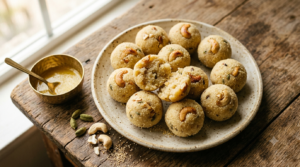
Soft, melt-in-the-mouth rava laddu made with roasted sooji, ghee, coconut and cardamom.
Because it skips the syrup stage, the two things that usually go wrong come down to one factor: moisture balance. Get that right, and this becomes the only rava laddu recipe you keep coming back to for Diwali, Ganesh Chaturthi, or a sudden guest at the door.
Rava laddu recipe at a glance
- Total time: about 30 minutes, since there is no syrup to boil.
- Makes: 12 medium laddus from 1 cup of rava.
- Method: dry-roast, cool, mix, bind, and shape on a low flame.
- Key to success: roast on low heat, then add warm milk one spoon at a time.
- Skill level: easy, because you never chase a sugar-syrup consistency.
Why this rava laddu recipe works every time
Most laddus fail for one of two reasons, and neither is about sugar quantity. When the mixture is too dry, the balls crack the moment you press them. When it holds too much milk, they slump as they cool. So this method controls moisture at every stage.
First, the rava is roasted slowly until it smells nutty but stays pale. That cooks off the raw taste without hardening the grain. Next, the mixture cools before the sugar goes in, because powdered sugar melts against hot rava and turns everything sticky.
Finally, warm milk is added drop by drop while shaping. You stop the instant the mixture binds, and that is what keeps these laddus soft for days.
Ingredients for this rava laddu recipe
Every good laddu starts with accurate measurements, so weigh where you can. These are the exact quantities this family recipe uses, and they scale cleanly if you double the batch.
| Ingredient | Quantity |
|---|---|
| Fine rava (Bombay rava/sooji) | 1 cup (160 g) |
| Fresh grated coconut | ½ cup (50 g) |
| Powdered sugar | ¾ cup (150 g) |
| Ghee | ¼ cup (60 ml) |
| Cashews, broken | 10 |
| Raisins | 10 |
| Cardamom powder | ½ teaspoon |
| Warm milk | 2–3 tablespoons |
Use fine rava, sometimes sold as Bombay rava or upma rava, because coarse semolina leaves a gritty bite. If you only have coarse rava, pulse it in a mixer for a few seconds first. The ratio to remember is 1 cup rava to ¾ cup sugar, since that gives a laddu that is sweet but not cloying.
A quick note on each ingredient
Rava: it is semolina milled from durum wheat, so it does contain gluten. Coconut: fresh coconut adds the classic festival aroma, while desiccated coconut lasts longer. Sugar: powder it finely and sift once, because gritty sugar makes lumpy laddus.
Ghee: homemade or a trusted brand works, and it is the flavour backbone, so do not swap it for oil. Nuts: cashews and raisins are traditional, yet almonds or pistachios slot in happily.
How to make rava laddu step by step
Follow the stages in order, and keep the flame low the whole time. This rava laddu recipe takes six short steps, and none of them needs special equipment beyond a heavy pan.
Step 1: Roast the rava (8 minutes)
Heat a heavy-bottom pan on low flame, then add 1 cup of fine rava. Dry-roast it for seven to eight minutes while stirring almost constantly. The colour must stay pale, because a browned rava turns the laddus bitter. Once a warm, nutty aroma rises, the rava is ready.
Step 2: Roast the coconut with the rava (3 minutes)
Now add the grated coconut into the roasted rava. Cook them together for two to three minutes, since the goal is to drive off the coconut’s moisture. Skipping this is exactly why some batches spoil within a day. When the coconut looks dry and smells toasty, move on.
Step 3: Fry the nuts (4 minutes)
Heat the ghee in a small pan, then fry the cashews until light golden. Add the raisins next, and switch off the heat the moment they puff up. They scorch in seconds. Set the fried nuts aside, but keep the warm ghee for later.
Step 4: Cool before adding sugar (5 minutes)
Transfer the rava-and-coconut mixture to a wide bowl, then let it cool for about five minutes. This pause matters, because sugar added to hot rava melts and makes the mixture sticky. The mixture should stay warm to the touch but no longer steaming.
Step 5: Mix in the sugar and cardamom (3 minutes)
Once the mixture is just warm, add the powdered sugar and cardamom powder. Stir gently until everything is evenly combined. Taste now, and adjust the sweetness if you like, since you cannot fix it after shaping.
Step 6: Bind and shape the laddus (5 minutes)
Add the fried cashews, the raisins, and the reserved warm ghee to the bowl. Now sprinkle in the warm milk one tablespoon at a time, and mix until the crumbs clump when pressed, like damp sand. While the mixture is still warm, scoop a heaped tablespoon and press it firmly into a round ball. Rest the laddus for 20 minutes so the ghee sets and locks the shape.
What most people get wrong with rava laddu
Here is the mistake I made on my first batch: I poured all the milk in at once. The mixture turned into a paste, and the laddus flattened as they cooled. So treat milk as a finishing touch, not a main ingredient. Add half a tablespoon, test whether a ball holds, and only then add more.
The opposite problem is dryness. If the crumbs refuse to bind even after a little milk, the fix is warm ghee rather than more milk. Ghee both binds and keeps the laddu soft, so add a teaspoon at a time until a pressed ball stays together. Balance those two levers, and the shaping becomes almost foolproof.
Fresh coconut, desiccated, or none at all
Coconut is the one flexible choice here, so decide by how long the laddus need to last. Fresh coconut tastes the most festive, yet it shortens shelf life because of its moisture. Desiccated coconut keeps longer and stays convenient. Leaving coconut out is fine too, since the laddus still bind well on ghee and milk alone.
| Coconut choice | Flavour | Shelf life at room temperature |
|---|---|---|
| Fresh grated | Richest, most festive | About 2 days |
| Desiccated | Mild, still pleasant | About 5–6 days |
| No coconut | Clean, rava-forward | Up to 7 days |
If you want a coconut-free batch with the same method, our rava laddu recipe without coconut covers the small tweaks in shelf life and binding.
Sugar, jaggery, or condensed milk: which version to make
This is the classic sugar version, and it suits most occasions. That said, the same semolina base takes happily to other sweeteners. So match the version to your taste and time.
- Sugar (this recipe): the everyday favourite, because it is quick and the colour stays pale.
- Jaggery: deeper, caramel-like sweetness. See our rava laddu with jaggery for the binding tweaks it needs.
- Condensed milk: the richest, softest option for a fudgy bite. Our rava laddu with condensed milk covers the exact measures.
Keeping these as separate guides means each method gets its own accurate quantities, so you never guess while a hot pan waits.
Pro tips from years of festival cooking
- Always roast rava on a low flame, because high heat ruins the aroma before the grain cooks.
- Use fresh coconut for festival flavour, since desiccated coconut changes the taste.
- Powder the sugar finely and sift it once, so the laddus stay smooth.
- If the mixture cools and stops binding, warm it gently before shaping.
- Grease your palms lightly with ghee, and the laddus will not stick while you roll.
Storage, shelf life, and make-ahead
Let the laddus cool completely, then store them in an airtight container. With fresh coconut, they stay good for about 2 days at room temperature, and up to 5 days refrigerated. Without coconut, they last up to a week on the shelf.
Because they hold up so well, you can make them two or three days before a festival, which takes real pressure off the big day. If you refrigerate them, leave them out for 15 to 20 minutes before serving, so they soften back to that melt-in-the-mouth texture.
Dietary and allergen notes
Rava laddu is vegetarian, yet a few points are worth flagging. Since rava is wheat semolina, this sweet is not gluten-free, so it is unsuitable for anyone with coeliac disease. It also contains tree nuts and dairy from the ghee and milk.
For a dairy-free version, bind with warm water instead of milk. Anyone managing blood sugar should treat these as an occasional treat, because sugar and ghee make them energy-dense. For general food-safety and nutrition guidance in India, you can refer to the Food Safety and Standards Authority of India.
Nutrition information per laddu
These values are approximate, and they shift with the exact brands you use. Each laddu lands at roughly 165 calories, which matches a standard 40 g laddu.
| Nutrient | Per laddu (approx.) |
|---|---|
| Calories | 165 kcal |
| Carbohydrates | 22 g |
| Fat | 7 g |
| Protein | 3 g |
| Sugar | 12 g |
Best occasions to make rava laddu
This rava laddu recipe earns its place at almost every celebration, because it is quick and rarely fails. I have made it for Varalakshmi Pooja, Ganesh Chaturthi, and plenty of ordinary weekends. It also travels well, so it is a reliable pick for tiffin boxes and gifting. For a bigger festival spread, pair it with our Diwali special sweets collection, or a batch of ragi ladoo for a healthier twist.
Before you start rolling
The whole secret to this rava laddu recipe fits in one line: roast low, cool before sugar, and add milk drop by drop. Nail those three, and you get soft, aromatic laddus that keep for days. Start with a single cup of rava while you learn the feel of the mixture. Then scale up once you trust it, because this classic sugar-and-coconut version is the one worth mastering first.
Frequently asked questions
Why are my rava laddus hard?
Hard laddus usually mean the rava was over-roasted, or there was too little moisture to bind. Add a teaspoon of warm milk or melted ghee, then knead and reshape while warm. Roasting on a strictly low flame prevents the problem next time.
Can I use jaggery instead of sugar?
Yes, jaggery works well, so use finely powdered jaggery in place of the sugar. Because jaggery adds moisture and darkens the colour, add an extra tablespoon of ghee to help binding. Our dedicated jaggery guide covers the exact ratios.
Is coconut mandatory in rava laddu?
No, coconut is optional. It adds aroma and a little softness, yet the laddus hold their shape well without it. Leaving it out also extends the shelf life to about a week.
Can I make rava laddu without ghee?
Ghee is strongly recommended, because it carries the flavour and binds the mixture as it sets. You can bind with warm milk or water for a lighter version, though the laddus turn drier. Oil changes the taste noticeably, so use it only as a last resort.
What is the best rava to use?
Fine rava, also sold as Bombay rava or upma rava, gives the softest laddus. Coarse semolina leaves a grainy bite that some people enjoy. If coarse rava is all you have, pulse it briefly in a mixer before roasting.
How many laddus does this recipe make?
One cup of rava yields about 12 medium laddus. Because this rava laddu recipe scales cleanly, you can double or triple it, though the roasting time rises a little with a larger batch.
How do I make soft rava laddu that does not crumble?
Softness comes from enough ghee and shaping while the mixture is warm. If it cools and stops binding, warm it gently, then add ghee a teaspoon at a time until a ball holds. Milk keeps them moist, while ghee keeps them from cracking.
Can I prepare this rava laddu recipe ahead for a festival?
Yes, and it is ideal for that. Make the laddus two or three days in advance, then store them in an airtight container. Refrigerate if you used fresh coconut, and bring them to room temperature before serving.