Ekadashi Fasting Recipes: Easy Vrat Dishes and Tips
Ekadashi fasting recipes can make a grain-free vrat meal practical without turning family customs into universal rules. Here are eight familiar dishes, from sabudana khichdi to makhana kheer, with clear cooking steps and ingredient choices. The important first step is deciding which form of Ekadashi you observe, because an ingredient accepted in one home may not suit another tradition.
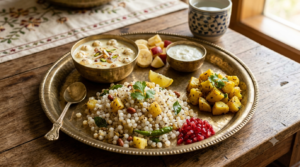
A traditional Ekadashi fasting food thali featuring sabudana khichdi, jeera aloo, makhana kheer and fresh fruits.Illustrative; not a documented recipe-test batch.
These are adaptable home-cooking methods, not laboratory-tested or independently kitchen-tested recipes. Ingredient amounts, yields and cooking times are starting estimates. Watch the texture and cook food thoroughly rather than relying on a clock alone.
Thali image: Illustrative; not a documented recipe-test batch.
Health note: Fasting should not put your health at risk. If you have diabetes, are pregnant, take medicines with food, or have other health concerns, seek medical guidance before changing meals or attempting a waterless fast. Do not stop prescribed medicine for a vrat.
Ekadashi Fasting Recipes at a Glance
The simplest Ekadashi menu often starts with fruit, dairy if you consume it, potatoes and selected non-grain ingredients. However, the full list depends on your family, sampradaya or temple. A fruit-and-milk fast is different from a cooked farali meal, so choose the appropriate recipes before shopping.
- Simple meals: jeera aloo, sabudana khichdi and sweet potato chaat.
- Heavier dishes: sabudana vada and kuttu puri, if those ingredients fit your observance.
- Sweets: makhana kheer and singhare ka halwa.
- Conditional dish: samak pulao, only if your household permits barnyard millet.
- Salt and spices: check your tradition instead of assuming every fast requires identical seasonings.
For a busy day, prepare boiled potatoes and wash fruit ahead. Meanwhile, soak sabudana according to the package and the pearls’ size. Keep soaked foods chilled if you prepare them well before cooking.
What Can You Eat on Ekadashi? Follow Your Tradition
There is no single ingredient list that makes all Ekadashi fasting recipes suitable for every observance. For example, ISKCON Bangalore advises avoiding grains, cereals and pulses, while its guide allows several levels of fasting. Some North Indian household vrat menus also use foods that other groups debate. Ask your temple or family guide when a particular ingredient matters to your vow.
| Ingredient | Practical guidance | Why to check |
|---|---|---|
| Fruit, milk, plain curd | Common choices for many non-grain fasts | Some devotees follow stricter fasting levels |
| Rice, wheat, dal, besan, poha | Avoid under ISKCON Bangalore’s grain-and-pulse rule | These come from grains or pulses |
| Sabudana, potato, sweet potato | Common in Indian vrat meals | Check the chosen level of fasting |
| Peanuts | Used in many family recipes | Botanically legumes; acceptance varies |
| Kuttu, singhara, rajgira flours | Used in some farali kitchens | Flour rules vary; check your practice |
| Samak or barnyard millet | Not a universal Ekadashi option | Some authorities discourage millet or pseudo-grains |
| Rock salt and ordinary salt | Many households prefer sendha namak | Salt preferences are customary, not a universal medical rule |
What ISKCON Bangalore says about grains and spices
In its Ekadashi observance guide, ISKCON Bangalore advises devotees to avoid grains, cereals and beans or pulses. It also cautions against mustard seeds, grain-containing powdered hing and cross-contact from wheat flour. Its sesame guidance is specific to its practice, so it should not be presented as a rule for every Hindu family.
The same guide describes levels ranging from a waterless fast to meals of non-grain foods. Therefore, a cooked dish that fits one level may not fit a stricter personal vow. Onion and garlic are also excluded from its suggested non-grain vegetable meals.
How BAPS describes farar and lighter fasting meals
The Bochasanwasi Shri Akshar Purushottam Swaminarayan Sanstha (BAPS) discusses farar, or fasting-food meals, alongside other observances. Its Ekadashi food article offers ideas such as fruit, yoghurt, nuts and vegetable dishes. It also encourages planning meals instead of relying only on rich sweets and fried snacks.
That BAPS article is an example of one tradition’s approach, not approval for every ingredient in this guide. Follow your own group’s instructions when they differ.
Why samak, kuttu, peanuts and salt need a second look
Samak looks like rice but comes from barnyard millet. Some households use it as vrat rice; however, Drik Panchang’s Ekadashi fasting-food guidance says the suitability of samak and kuttu remains debated. The safest editorial choice is to label both as conditional rather than promise they suit every vrat.
Peanuts require similar care because they are legumes, even though many fasting kitchens use them like nuts. For salt, sendha namak is a common custom, but regular salt is not intrinsically unsafe or spiritually impure. Use the seasoning your observance allows. If unsure, omit the disputed ingredient and prepare a simpler dish.
Mistakes to Avoid in Your Ekadashi Fasting Recipes
For Ekadashi fasting recipes, ingredient problems often start during shopping or seasoning rather than cooking. First, check packaged spice mixes, flour blends and snacks for rice, wheat, corn or gram flour. Do not assume an item marked “fasting” matches your specific tradition.
- Powdered hing: some products contain wheat or another carrier. Read the ingredient label, or leave it out.
- Shared oil and utensils: avoid grain residue when your religious practice requires strict separation.
- Samak labelled “rice”: it is millet, so the familiar name does not settle whether it is permitted.
- Unqualified peanuts: omit them when your chosen observance excludes legumes.
- Ready-made seasonings: inspect the label before adding a commercial masala to fasting food.
Religious cross-contact rules are separate from food-allergy safety. If someone has a peanut or other food allergy, follow proper allergen precautions regardless of fasting custom.
Easy Ekadashi Fasting Recipes to Start With
These savoury Ekadashi fasting recipes preserve the familiar dishes in the original collection. Each ingredient list gives a suggested small household batch, not a guaranteed yield. Adjust salt, chilli and fat to taste, using only ingredients allowed in your observance.
Sabudana Khichdi: A Classic Ekadashi Fasting Recipe
Among Ekadashi fasting recipes, sabudana khichdi pairs soaked tapioca pearls with potato and gentle seasoning. Start with about 1 cup dry sabudana, 1 boiled potato, 2 tablespoons crushed roasted peanuts and a little ghee. Add cumin, green chilli, ginger, lemon and permitted salt as you prefer.
- Rinse the pearls, then soak them using the packet’s method. Pearl size changes the time and water needed.
- Check that a pearl presses easily between your fingers. Drain excess water before cooking.
- Heat ghee, add cumin, chilli and ginger, then warm the potato cubes.
- Fold in sabudana and peanuts, if permitted. Cook gently until the pearls look translucent and feel tender.
- Switch off the heat before adding lemon and coriander.
Kitchen check: clumps often mean too much free water or excess stirring. If the pearls stay hard, they need further soaking or cooking. See our masala sabudana khichdi recipe for another variation. The result depends on the sabudana brand, so no fixed soaking time works for every packet.
Vrat Wale Jeera Aloo
Jeera aloo is a convenient choice when your fast allows cooked potatoes. For a small pan, use 2 boiled potatoes, a little ghee, cumin, ginger, green chilli and permitted salt. Keep black pepper, lemon and coriander optional.
- Cool the boiled potatoes enough to handle, then cut them into even cubes.
- Heat ghee and briefly sizzle the cumin without burning it.
- Add ginger and chilli, then fold in potatoes and seasoning.
- Turn the cubes until heated through and lightly golden. Finish with lemon if desired.
If the potatoes crumble, use firmer boiled cubes and turn them less often. For a lighter meal, serve with plain curd if dairy suits your fast. This version contains no onion or garlic.
Kuttu Ki Puri: A Conditional Grain-Free Fasting Recipe
Buckwheat is not wheat, but that fact alone does not prove it meets every Ekadashi rule. Make these puris only when your family or temple accepts kuttu flour. For a starter batch, combine roughly 1 cup kuttu flour, 1 mashed boiled potato and permitted salt.
- Add water gradually until the mixture holds together as a firm dough.
- Flatten small portions between lightly greased sheets or with your hands.
- Fry in clean, properly heated oil or ghee, turning carefully until both sides cook evenly.
- Check the centre before serving. A browned surface alone does not prove the inside is cooked.
Kitchen check: cracked edges suggest the dough needs more moisture or binding potato. If a puri browns too quickly, reduce the heat so the middle can cook. Never taste the uncooked flour or dough.
Sabudana Vada
Sabudana vada uses many of the same ingredients as khichdi. Mix about 1 cup soaked, well-drained sabudana with 1 mashed boiled potato. Add crushed peanuts only if allowed, plus cumin, chilli, coriander and permitted salt.
- Combine everything into a mixture that holds its shape when pressed.
- Make small, fairly thin patties so the centres cook more evenly.
- Fry in batches without crowding the pan. Turn until both sides are golden and the centres are hot and cooked.
- Drain excess oil and serve freshly made.
If a patty falls apart, add a little more mashed potato and remove any pooling water. Avoid assuming that a dark crust means the centre is ready. Shallow-frying is an option, although it changes the texture.
Samak Rice Pulao (Only Where Permitted)
This pulao remains in the collection for readers whose household accepts samak or barnyard millet. It is not a default choice for strict grain-avoiding traditions. Choose jeera aloo or sabudana khichdi instead when millet is excluded.
If permitted, rinse about 1 cup samak and cook it with water according to the packet until tender. Separately warm cumin, chilli and boiled potato in ghee, then fold in the cooked millet. Add peanuts only when your rules allow them. Avoid using the term “grain-free” for this particular dish.
Sweet Ekadashi Fasting Recipes for the Evening
These sweet Ekadashi fasting recipes work as small portions after a meal, not as an automatic way to break the religious fast. The formal parana, or fast-breaking observance, generally takes place on the following day at the appropriate time. Also, check whether your chosen observance permits milk, nuts and sweeteners.
Makhana Kheer: A Simple Ekadashi Fasting Recipe
For a small batch, take about 2 cups milk and 1 cup makhana, also called fox nuts. Add a little ghee, cardamom and sweetener to taste. Chopped nuts are optional, especially when allergies or personal fasting rules apply.
- Roast makhana briefly in ghee, stirring so it does not scorch.
- Crush some pieces and keep others whole for a mixed texture.
- Simmer the milk, add makhana and stir until the pieces soften and the mixture thickens.
- Sweeten near the end and finish with cardamom.
Milk thickens further as it cools, so stop while the kheer is slightly looser than your preferred serving texture. Refrigerate leftovers promptly rather than leaving milk desserts out for hours.
Singhare Ka Halwa
Water chestnut flour makes a smooth halwa, provided you cook the flour completely. A starting mix is about 1/2 cup singhara flour, 1 tablespoon ghee and enough hot water or milk to make a spoonable mixture. Add sugar and cardamom to taste.
- Heat the ghee, add the flour and stir steadily over moderate or low heat.
- Continue cooking the flour, then carefully add warm liquid in small additions.
- Stir out lumps and simmer until the halwa thickens and no dry flour remains.
- Add sweetener, mix thoroughly and cook to your desired consistency.
Safety check: do not sample raw flour or partly cooked paste. If lumps remain dry inside, break them up and continue cooking. Flour-based halwa needs more than a quick surface toast.
Sweet Potato and Fruit Chaat
For a no-frying option, combine 1 cooked, cooled sweet potato with banana, apple or pomegranate. Add lemon and a pinch of roasted cumin only if your household permits them. A little permitted salt is optional.
Wash fruit before cutting, and use clean utensils. Dice the sweet potato into small pieces, fold in the fruit and serve soon after mixing. If you prefer a simpler fruit meal, skip the spices entirely. Our steamed banana recipe gives another cooked-fruit idea, subject to your fasting rules.
Raw Flour Safety in Ekadashi Cooking
Flour used in Ekadashi fasting recipes still needs proper cooking. The US Food and Drug Administration’s flour safety guidance explains that flour is a raw food. Milling alone does not reliably remove harmful bacteria, and uncooked flour, dough or batter should not be tasted. The warning is relevant when handling flour-based puris and halwa, including non-wheat flours unless a product has a validated ready-to-eat treatment.
- Do not lick a spoon or taste dough while shaping kuttu puris.
- Cook fried breads through the centre and cook halwa until no uncooked flour remains.
- Keep flour away from cut fruit, curd and other ready-to-eat ingredients.
- Wash hands, bowls, boards, spoons and worktops after handling raw flour.
- Do not assume home dry-roasting makes flour safe for uncooked use.
Religious ingredient separation and germ control are different concerns. A clean fasting spoon may satisfy a family custom, while safe handling also requires washing surfaces and fully cooking raw ingredients.
Kitchen Tips for Better Ekadashi Fasting Recipes
Clear cooking cues matter more than impressive claims about a recipe being “foolproof.” These notes explain what to look for, but they do not represent documented test-kitchen results.
- Sabudana: press a soaked pearl before frying or sautéing. The middle should no longer feel hard.
- Vada: drain the mixture well and keep patties thin enough to cook inside.
- Kuttu: add liquid gradually; buckwheat dough behaves differently from wheat dough.
- Makhana: stir during roasting to avoid burnt spots.
- Halwa: add warm liquid carefully because steam and splashes can burn.
- Labels: inspect binders, shared-processing warnings and ingredients whenever your religious or allergy needs require it.
Plan smaller portions if you are unsure how many people will eat during the fast. Also, refrigerate perishable cooked foods promptly, especially milk-based dishes and soaked ingredients.
How Often Does Ekadashi Come, and When Is Parana?
Ekadashi occurs around twice in each lunar month, during both the waxing and waning phases. Because Hindu calendars account for lunar dates and occasional extra months, the number and civil dates can vary. Do not reuse a previous year’s fasting or parana time.
Drik Panchang’s Ekadashi calendar guidance explains that parana generally follows the fast, after sunrise during the appropriate Dwadashi period, with restrictions such as Hari Vasara. However, the exact window and even the fasting day can depend on location and Vaishnava or Smarta observance. Check a location-specific panchang or your temple calendar before planning the meal.
Plan Your Ekadashi Fasting Recipes
Before choosing Ekadashi fasting recipes, decide your observance and make a short ingredient list. If you accept cooked non-grain meals, jeera aloo, sabudana khichdi and fruit chaat offer a simple combination. Add kuttu, samak or peanuts only after checking your specific practice.
For more festival-food ideas, see our Navratri fasting recipes, while remembering that Navratri and Ekadashi restrictions are not automatically identical. Keep food safety separate from religious restrictions, and let the texture of each dish guide cooking rather than unsupported promises about exact time or results.
Ekadashi Fasting Recipes: FAQs
Can I eat sabudana during Ekadashi?
Many households use tapioca-based sabudana in cooked vrat meals. However, permission depends on the level of fasting you follow. If your observance allows only fruit, milk or water, a sabudana dish may not fit it. Follow the packet’s soaking advice and cook the pearls until tender.
Is samak rice allowed on Ekadashi?
Not in every tradition. Samak is barnyard millet, although shops often call it vrat rice. Some households permit it, while other guidance questions millet during Ekadashi. If you follow strict grain avoidance, check your temple’s instructions rather than assuming samak is safe for that vow.
Is rock salt compulsory during an Ekadashi fast?
Many Indian families choose sendha namak during fasting, but it is a tradition-specific preference. Do not treat ordinary table salt as medically unsafe. Follow your household or temple rule, and moderate salt intake when your clinician advises it.
Are peanuts allowed in Ekadashi recipes?
Peanuts appear in many regional vrat dishes, yet botanically they are legumes. Some observances that avoid all pulses or beans may exclude them. Omit peanuts when your tradition says so, and never use them when cooking for someone with a peanut allergy.
Can I use hing in fasting food?
Check the ingredient list first. ISKCON Bangalore cautions against powdered hing because formulations commonly contain grain-based carriers. Pure resin and commercial compounded hing are not necessarily the same product. When unsure, leave hing out and flavour the dish with permitted spices.
Can I drink tea or coffee on Ekadashi?
Practices differ, so no single answer covers every family. Some devotees avoid caffeine as part of a simpler fast, while others allow selected drinks. BAPS recommends avoiding caffeine in its article on healthy farar choices. Follow your spiritual guidance and any medical advice about hydration.
Do I need to cook kuttu or singhara flour fully?
Yes. Do not taste raw flour, uncooked puri dough or partly cooked halwa. The FDA advises cooking flour-based foods thoroughly because raw flour can carry germs. Check the centre of puris and stir halwa until it cooks evenly, not merely until its surface changes colour.
What time should I break my Ekadashi fast?
Plan any Ekadashi fasting recipes around the parana window for your location and chosen observance. Many traditions break the fast during the following Dwadashi, but the correct interval is not simply “any time after sunrise.” A location-specific panchang or temple calendar gives the relevant timing and exceptions.