Puran Poli Chana Dal Recipe: Soft, Easy & Fail-Proof
This puran poli chana dal recipe gives you a soft, thin flatbread with a smooth jaggery filling that stays inside while rolling. The two details that matter most are simple: drain the cooked dal very well, and keep the dough softer than regular roti dough. Once those are right, the rest becomes much easier.
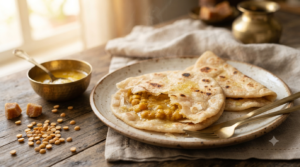
Soft puran poli filled with smooth chana dal and jaggery puran, served warm with a light coating of ghee.
Puran poli is popular in Maharashtra and has close relatives across South India, including bobbatlu, holige, obbattu and boli. This puran poli chana dal version keeps jaggery at the centre, while a small amount of maida helps the outer layer stretch without turning tough.
Puran Poli Chana Dal Recipe at a Glance
- Yield: about 10 to 12 medium puran polis.
- Soaking time: 45 to 60 minutes for the chana dal.
- Dough rest: 30 to 45 minutes.
- Best texture: soft outer layer, smooth puran and light golden spots from the tawa.
- Main filling ratio: equal cups of dry chana dal and grated jaggery give a balanced starting point.
- Best heat: medium, because high heat browns the outside before the centre warms through.
The method below uses 1½ cups chana dal and 1½ cups jaggery. That amount gives a generous filling without making the stuffed dough difficult to seal. If you prefer a less sweet puran, reduce the jaggery slightly after testing your batch.
Why This Puran Poli Chana Dal Method Works
Good puran poli depends more on texture than on complicated ingredients. The dal must cook until tender, yet it should drain cleanly before jaggery goes in. The dough, meanwhile, needs enough water and fat to stretch around the filling without cracking.
Many recipes tell you only to “cook until thick,” which leaves beginners guessing. Here, use three checks instead. The puran should leave the pan in a soft mass, hold a ball after cooling, and feel smooth when pressed between your fingers.
The dough should feel softer than chapati dough, because a stiff covering fights the rolling pin. Resting also matters, since the flour hydrates and the gluten relaxes. That is why a rested dough spreads more evenly around the puran.
Ingredients for Puran Poli Chana Dal Recipe
For the Puran Poli Chana Dal Filling
- 1½ cups chana dal, rinsed well
- 3 cups water for pressure cooking
- 1½ cups grated or powdered jaggery
- 1 teaspoon cardamom powder
- A small pinch of nutmeg, optional
- 1 teaspoon ghee
- A small pinch of salt
For the poli dough
- 2 cups whole wheat flour
- ½ cup maida or all-purpose flour
- 2 tablespoons neutral oil or melted ghee
- ¼ teaspoon salt
- ¼ teaspoon turmeric, optional
- About ¾ to 1 cup warm water, added gradually
- Extra flour for light dusting
- Ghee for cooking and serving
Using a wheat-and-maida mix keeps some whole-wheat flavour while improving stretch. For this puran poli chana dal method, the blend also makes sealing more forgiving. If you want a fully wheat version, use all atta and knead a little longer. For a softer maida-forward version, see Bhimas Cook’s bobbatlu recipe with maida.
Step-by-Step Puran Poli Chana Dal Recipe
1. Soak and pressure-cook the dal
Rinse the chana dal until the water looks mostly clear, then soak it for 45 to 60 minutes. Drain the soaking water before cooking. Add the dal and 3 cups fresh water to a pressure cooker.
Cook on medium heat until the dal is tender enough to crush between two fingers. Pressure cookers vary, so use texture rather than whistle count as the final test. After the pressure drops naturally, drain the dal very well and keep the cooking liquid if you want to use it in another dish.
2. Make the jaggery puran
Add the drained dal and jaggery to a wide, heavy pan. The jaggery will melt first, so the mixture may look looser before it thickens. Keep the heat low to medium and stir often.
Continue until the puran comes together and starts leaving the sides of the pan. In a puran poli chana dal filling, this moisture check matters more than an exact minute count. Add cardamom, nutmeg, salt and 1 teaspoon ghee near the end. Then cool the mixture before judging its final firmness, because hot jaggery always looks softer.
For the smoothest filling, pass the warm mixture through a puran yantra or food mill. You can also mash it very thoroughly. Avoid adding water while blending, since even a small amount can make the filling sticky again.
3. Knead and rest the dough
Mix the whole wheat flour, maida, salt and optional turmeric. Add the oil or ghee, then rub it through the flour. Pour in warm water gradually until you get a soft, slightly tacky dough.
Knead for about 6 to 8 minutes, then coat the dough lightly with oil. Cover and rest it for 30 to 45 minutes. The dough should feel more elastic after resting, so do not add extra dry flour too early.
4. Portion, fill and seal
Divide the cooled puran into 10 to 12 smooth balls. Make the dough balls slightly smaller than the filling balls, because a generous centre gives puran poli its characteristic bite. Keep both covered while you work.
Flatten one dough ball into a small cup, then place the puran inside. Bring the edges up evenly and pinch them closed. Press the sealed ball gently with your palm before using the rolling pin, because that helps spread the filling toward the edges.
5. Roll without tearing
Dust the worktop lightly rather than heavily. Roll from the centre outward with gentle strokes, and turn the disc often. Aim for a medium-thin circle of about 6 to 7 inches for the easiest handling.
If a small crack appears, stop pressing that area. Dust the spot lightly and continue from another direction. A tearing poli usually means the dough is stiff, the filling is wet, or the filling still has coarse dal pieces.
6. Cook on a hot tawa
Heat a heavy tawa over medium heat, then place the rolled poli on it. When small bubbles appear and the underside develops pale spots, flip it. Spread a little ghee and cook the second side.
Flip once more if needed, then remove the poli when both sides show light golden patches. Keep the finished pieces stacked under a clean kitchen towel. This traps enough steam to keep them soft without making them soggy.
How to Know the Puran Poli Chana Dal Filling Is Ready
The filling stage causes more failed batches than any other part of the recipe. A puran poli chana dal filling can look loose while hot, so do not judge it only by cooking time. Pan size and jaggery moisture vary, which makes the texture tests below more reliable.
| Test | What you should see | If it fails |
|---|---|---|
| Pan test | Puran gathers together and leaves the sides | Cook a little longer |
| Cooling test | A spoonful holds shape after cooling | Return it to low heat |
| Finger test | No hard dal pieces remain | Mash or pass through a food mill |
| Rolling test | Filling spreads without leaking | Cool fully before stuffing |
One useful kitchen rule is to match moisture, not just weight. A very dry puran can split the poli, while a wet one pushes through the dough. The best filling is soft enough to press, yet firm enough to roll into a ball.
Puran Poli Chana Dal Troubleshooting Guide
Why does the filling become sticky?
Sticky puran usually contains too much moisture, either from poorly drained dal or very moist jaggery. Cook it on low heat while stirring, then cool a spoonful before testing. If the cooled sample holds shape, the batch is ready even when the pan mixture still looks soft.
Why does puran poli tear while rolling?
Tearing often comes from a stiff dough, coarse filling or too much pressure from the rolling pin. Let the dough rest longer if it springs back. Also mash the filling until smooth, because intact dal grains create weak points in the covering.
Why does puran poli turn hard?
Hard puran poli usually comes from too much dry flour or excessive tawa heat. Use only a light dusting while rolling, and cook on steady medium heat. After cooking, stack the polis under a towel so they stay flexible.
Why does the filling leak out?
Leakage means the seal has opened or the puran is too soft. Cool the filling completely before shaping, and keep the dough edges even while sealing. If one side has a thick rim, pinch away the excess before rolling.
Whole Wheat, Maida or a Mix for Puran Poli Chana Dal?
All three options work, but they give different results. Whole wheat has a fuller flavour and a slightly firmer bite. Maida stretches more easily, while a blend gives beginners a useful middle ground.
| Dough choice | Texture | Best for |
|---|---|---|
| 100% whole wheat | Soft but slightly hearty | Everyday home style |
| Wheat + maida | Soft, flexible and easy to roll | First-time cooks |
| Mostly maida | Very thin and stretchy | Bobbatlu or bakery-style texture |
If your family prefers the South Indian style, compare this method with the site’s soft bobbatlu recipe. For a different regional filling, the Gujarati puran poli recipe uses a distinct approach and is worth keeping separate.
What “Hotel-Style” Should Mean Here
“Hotel-style” should not mean more sugar or more ghee. The useful difference is texture: a smooth centre, a thin covering and even browning. You can get that at home by controlling moisture and resting the dough rather than loading the recipe with fat.
For a polished finish, brush only a small amount of ghee on the hot poli and another little smear after it leaves the tawa. Serve it warm, because the jaggery filling tastes softer and more aromatic before it cools completely.
Serving and Storage Tips for Puran Poli Chana Dal
Serve puran poli warm with ghee, milk or a savoury side such as katachi amti. This puran poli chana dal combination also leaves useful dal cooking liquid behind. If you saved it, use it as the base for that thin spiced dal, which reduces waste and keeps the traditional pairing practical.
For make-ahead cooking, prepare the puran first and chill it in a covered container. Bring it close to room temperature before stuffing, since very cold filling can make rolling harder. You can also knead the dough earlier the same day and keep it covered.
Cool cooked puran polis fully before storing them, because trapped steam creates condensation. Refrigerate leftovers in a sealed container, then reheat on a tawa over low heat. Add ghee after reheating if you want a fresher surface.
Nutrition and Food-Safety Notes
Puran poli is a festive sweet, so portion size and added ghee make a large difference to its nutrition. Chana dal contributes pulse protein and fibre, while jaggery still counts as an added sweetener. For broader Indian diet guidance, see the ICMR-National Institute of Nutrition dietary guidelines.
The Food Safety and Standards Authority of India also publishes recipe and nutrition education resources, including a puran poli example in its Natural Sweetness booklet. Its version uses different sweetening ingredients, so do not treat those nutrition numbers as a direct calculation for this recipe.
What Beginners Get Wrong With Puran Poli Chana Dal
- They keep the dal water in the filling. Drain thoroughly first, because jaggery will loosen the mixture again.
- They use chapati-stiff dough. Puran poli dough needs more softness and rest so it can stretch around the filling.
- They roll too hard. Gentle centre-out strokes spread the puran without forcing it through the surface.
- They judge the filling while it is hot. Always cool a small sample, because jaggery firms as it cools.
- They use too much dusting flour. Extra flour dries the outer layer and can make the finished poli hard.
- They rush the tawa. Medium heat gives the dough time to cook while the filling warms evenly.
Before You Make Puran Poli Chana Dal Again
The biggest upgrade to this puran poli chana dal recipe is not another ingredient. It is learning the correct feel of the puran and dough. When the filling holds a ball and the dough stretches without springing back, shaping becomes predictable.
Start with medium-size polis until your rolling becomes consistent. This puran poli chana dal recipe becomes easier once you learn how the dough and filling should feel. Then make the polis thinner or larger if you prefer, while keeping the heat steady and the ghee restrained.
Puran Poli Chana Dal Frequently Asked Questions
Do I need to soak chana dal for puran poli?
Soaking is helpful but not essential. A 45 to 60 minute soak helps the dal cook more evenly and can shorten pressure-cooking time. If you skip soaking, cook until the dal crushes easily between your fingers, then drain it thoroughly.
What is the best chana dal to jaggery ratio?
Equal cups of dry chana dal and grated jaggery are a reliable starting point for a balanced sweet filling. Jaggery varies in sweetness and moisture, so taste the cooked puran before the final thickening stage. Reduce the jaggery slightly if your family prefers a milder sweetness.
Can I make puran poli with only whole wheat flour?
Yes, you can use only whole wheat flour. Keep the dough soft, add a little oil or ghee, and knead it well before resting. The finished poli will be slightly more hearty than a wheat-and-maida version, but it can still stay soft.
Can I make the puran filling one day ahead?
Yes. Cool the puran fully, cover it and refrigerate it. Before shaping, bring it closer to room temperature so it softens enough to roll without cracking the outer dough.
Can I use sugar instead of jaggery?
You can, but the flavour will change. Jaggery gives the filling a deeper caramel note and a warmer colour, while white sugar tastes cleaner and lighter. If you substitute, add it gradually because sweetness levels differ.
What can I do with the drained chana dal water?
Do not throw it away if it tastes clean and is not overly salted. You can use it as a base for katachi amti, add it to another dal, or use a little in savoury dough. Refrigerate it promptly if you are not using it at once.
How do I reheat puran poli without making it hard?
Warm it on a tawa over low heat for a short time, then add a small smear of ghee. Avoid prolonged high heat, because that dries the outer layer. A covered pan can also help warm the centre gently.
Is puran poli the same as bobbatlu or holige?
They belong to the same family of stuffed sweet flatbreads, but regional recipes differ. The puran poli chana dal style is strongly associated with Maharashtra, while bobbatlu and holige are common names in Andhra Pradesh, Telangana and Karnataka. The dal, flour, sweetener and flavouring can still change from state to state.