Rasam Recipe Andhra Style: Easy Telugu Chaaru at Home
This Rasam Recipe Andhra Style gives you the tangy, pepper-forward chaaru that Telugu homes cook almost every week. In Andhra Pradesh and Telangana, rasam is called chaaru, and it leans sharper and spicier than its Tamil cousin. You get bright tamarind sourness, a warm hit of crushed black pepper and garlic, and a fragrant tempering that perfumes the whole kitchen.
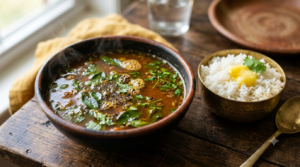
A steaming bowl of Andhra-style rasam (chaaru) served with hot rice and ghee.
Best of all, it comes together in one pot in under 45 minutes. Below you will find exact quantities, a foolproof method, the one mistake that ruins chaaru, and answers to the questions Telugu home cooks actually ask. If you love this soup, you can also try the milder traditional Tamil Nadu rasam once you have this one down.
Andhra Rasam at a Glance
- What it is: a thin, spiced tamarind soup called chaaru in Telugu, sipped warm or poured over rice.
- Signature taste: tangy tamarind, plus a bold kick from black pepper and garlic.
- Total time: about 45 minutes, start to finish, for 4 servings.
- The golden rule: never let chaaru boil — switch off the flame the moment it froths.
- Best served with: hot steamed rice, a dollop of ghee, and a simple pappu or fry.
What Is Andhra Rasam (Chaaru)?
Andhra rasam, or chaaru, is a light South Indian soup made by simmering tamarind extract with tomatoes, garlic, black pepper, and a spice tempering. The word rasam comes from rasa, meaning juice or essence. In Telugu the same dish is chaaru, in Kannada it is saaru, and in Tamil it stays rasam. It is watery on purpose, so it soaks into rice or works as a comforting broth when you feel under the weather.
Telugu kitchens name their chaaru by the star ingredient. Tamarind rasam becomes chintapandu charu, since chintapandu means tamarind. Pepper rasam becomes miriyala charu, while tomato rasam is tomato charu.
This guide covers the everyday tomato-and-tamarind version most families make, with easy swaps for the others. For the dish’s wider history and regional names, the Wikipedia entry on rasam is a useful reference.
What Makes This Rasam Recipe Andhra Style Different
People often ask how Andhra chaaru differs from Tamil or Karnataka rasam. The base idea is shared, yet the balance of spice changes from region to region. This Rasam Recipe Andhra Style pushes more black pepper and garlic, so it tastes hotter and more robust than a mild Tamil rasam. The table below sums up the differences at a glance.
| Style | Local name | Flavour lean |
|---|---|---|
| Andhra / Telangana | Chaaru | Sharp, tangy, heavy on pepper and garlic |
| Tamil Nadu | Rasam | Balanced, milder, more curry-leaf aroma |
| Karnataka | Saaru | Slightly sweet, often with a touch of jaggery |
Because Andhra food is known for heat, the pepper here is not just for warmth. It also aids digestion and helps clear a blocked nose, which is why chaaru is a classic monsoon and winter dish. If you prefer a gentler, faintly sweet version, the Karnataka-style saaru is worth a look.
Ingredients for Rasam Recipe Andhra Style
Every ingredient in this Rasam Recipe Andhra Style is a pantry staple, so you rarely need a special shopping trip. These quantities serve four people as a side with rice. Scale up if you want extra to sip as soup.
- 2 ripe tomatoes, medium (about 250–300 g), diced
- 1 lemon-sized tamarind ball, or 3 tbsp tamarind pulp
- 3–4 cups water, adjusted for the consistency you like
- 1 tbsp rasam powder, homemade or store-bought
- 1 tsp black peppercorns, crushed
- 1 tsp cumin seeds
- 1 tsp mustard seeds
- 8 garlic cloves, crushed
- 1/4 tsp turmeric powder
- 1/4 tsp asafoetida (hing)
- 2 dried red chillies, broken
- 1 sprig curry leaves
- 2 tbsp fresh coriander leaves, finely chopped
- 1 tbsp ghee or oil, for tempering
- Salt to taste, about 1 tsp
Quick Homemade Rasam Powder (Charu Podi)
Fresh powder beats the store-bought jar every time, so make a small batch if you have ten minutes. Dry roast 1 tsp black peppercorns, 2 tsp coriander seeds, 1 tsp cumin seeds, 5 dried red chillies, and a pinch of fenugreek (methi) seeds until they turn aromatic. Cool the mix fully, then grind it fine. This gives a fragrant charu podi that lifts the whole dish.
How to Make Rasam Recipe Andhra Style (Step by Step)
Follow these six steps and you will have this Rasam Recipe Andhra Style on the table in about 45 minutes. Read step five twice, because that is where most home cooks slip up. If you want a version with no tomato at all, the no-tomato lemon rasam follows a similar method.
- Prepare tamarind juice (5 mins). Soak the tamarind ball in 1 cup warm water for 5 minutes. Once soft, mash it well and strain out the juice. Set the extract aside.
- Cook the base (10 mins). Heat a pot with 2 cups water. Add the diced tomatoes and crushed garlic, then simmer for 5–7 minutes until the tomatoes turn soft and pulpy.
- Add tamarind and spices (5 mins). Pour in the tamarind extract, salt, turmeric, and rasam powder. Stir, then add the remaining water for your preferred consistency.
- Warm it gently (5 mins). Bring the chaaru to a light simmer only. Taste now and adjust tamarind or salt while it is warming.
- Season with tadka (3 mins). Heat ghee in a small pan. Add mustard seeds, and when they splutter, add cumin, crushed pepper, red chillies, curry leaves, and hing. After a few seconds, pour this sizzling tempering into the chaaru and switch off the heat.
- Garnish and rest (2 mins). Stir in the coriander leaves. Cover the pot and let it sit for 2 minutes so the flavours settle before serving.
The One Mistake That Ruins This Rasam Recipe Andhra Style
Here is the correction most recipes get wrong: never boil chaaru. Once the tamarind and rasam powder go in, keep the flame low and warm it only until a light froth rises to the surface. The moment it starts to foam and is about to boil, switch off the heat.
A hard boil turns the tamarind bitter, dulls the fresh pepper aroma, and flattens the flavour. Traditional Andhra cooks live by this rule, so treat the froth as your signal to stop, not the bubbles of a rolling boil.
Rasam Recipe Andhra Style Variations to Try
Once you master the base, you can spin it into the classics Telugu families rotate through the week. Each one uses the same method with a small change, so nothing new to learn.
| Variation | Telugu name | Key change |
|---|---|---|
| Tamarind rasam | Chintapandu charu | Skip tomatoes; tamarind carries all the sourness |
| Pepper rasam | Miriyala charu | Double the pepper; often add cooked toor dal water |
| Tomato rasam | Tomato charu | More tomatoes, less tamarind, softer tang |
| No-garlic rasam | Vellulli-leni charu | Leave out garlic for a sattvic or fasting version |
For a richer miriyala charu, save the water from cooked toor dal and use it in place of plain water. It adds body and a mild nuttiness that plain water cannot.
Pro Tips for the Best Rasam Recipe Andhra Style
- Balance the sourness. Andhra chaaru is proudly tangy, yet too much tamarind overwhelms it. Start with less, taste, then add more.
- Crush garlic, do not chop. Crushing releases more of the oils that give chaaru its depth, so a rough crush beats neat mincing.
- Adjust the heat for kids. Reduce pepper and chillies for children, while adults can add a pinch of extra pepper at the very end.
- Keep it thin. Chaaru should stay soupy, not thick. Loosen it with hot water if it reduces too much.
- Let it rest. A two-minute rest under a lid lets the spices bloom, so never rush it straight from stove to bowl.
Common Problems and Quick Fixes
Even a simple chaaru can go sideways, so here are the usual complaints and how to correct them fast.
- Too sour? Add a little more water and a small piece of jaggery to round off the tang.
- Too bland? Your tamarind was weak. Stir in a spoon more of extract and a pinch of salt.
- Bitter taste? You boiled it too long. Next time, switch off as soon as it froths.
- Raw pepper smell? The tempering did not sizzle enough. Give the spices a few more seconds in hot ghee.
Storing Your Rasam Recipe Andhra Style
Chaaru keeps well for a day, which makes it handy for busy weeknights. Store leftovers in an airtight container in the fridge for up to 2 days. When you reheat, warm it on a low flame or microwave for a minute or two, but do not boil it hard again, since that changes the taste. For the freshest flavour, cook it the day you plan to eat it and add the coriander garnish only at serving time.
What to Serve With Andhra Rasam
Traditionally, chaaru is served with hot steamed rice and a spoon of ghee. A vegetable curry, a simple pappu (dal), or a crisp papad rounds out the plate. In Vijayawada and coastal Andhra, a bowl of rasam-rice with a side of pappu charu is comfort food at its finest. You can also skip the rice and sip it as a warm, light soup on a cool evening.
Nutrition and a Quick Health Note
A serving of this Rasam Recipe Andhra Style is one of the lighter South Indian dishes, so it fits easily into most meals. A single serving is roughly 95–110 kcal, with about 12–15 g carbohydrates, 2–3 g protein, and 4–6 g fat. These figures are estimates and shift with your exact tamarind, ghee, and portion size. To check any single ingredient yourself, the USDA FoodData Central database is a reliable source.
The spices carry real comfort value too, since pepper and cumin are traditionally used to aid digestion and ease a cold.
One gentle caution: a very pepper-heavy chaaru can upset a sensitive stomach. If you are prone to acidity, go easy on the pepper and tamarind. As with any home remedy, chaaru soothes but does not replace medical care when you are genuinely unwell.
Before You Cook: The Bottom Line
Andhra chaaru is proof that a handful of pantry spices can make something deeply comforting. Keep the tamarind bright, lean on pepper and garlic, and above all, switch off the flame the moment it froths. Get those three things right and this Rasam Recipe Andhra Style will taste like it came straight from a Telugu grandmother’s kitchen. Make a batch this week, then start experimenting with the miriyala and chintapandu variations.
FAQs About Rasam Recipe Andhra Style
Can I make rasam without tamarind?
Yes, you can use lemon juice for the sour note instead. Add it near the end of cooking rather than early. Tamarind still gives the most authentic Andhra taste, so use it when you can.
How is Andhra rasam different from Tamil rasam?
Andhra chaaru is sharper and spicier, with more black pepper and garlic. Tamil rasam is usually milder and more balanced. Both share the same tamarind-and-tempering base, so the difference is mainly the level of heat.
Why should I not boil chaaru?
Boiling turns the tamarind bitter and dulls the fresh pepper aroma. Traditional Andhra cooks switch off the flame as soon as the chaaru froths. Warm it gently and stop at the froth for the best flavour.
Can I skip garlic?
Yes, simply leave it out for a no-garlic or fasting version. The chaaru stays tasty, though garlic does add depth and a mild sweetness. Reduce rather than remove it if you like just a hint.
Is rasam healthy?
Rasam is low in calories and rich in antioxidants from its spices and tomato. It is easy to digest and comforting when you feel under the weather. Just moderate the pepper if you have a sensitive stomach.
What is the difference between chaaru and rasam?
They are the same dish under different names. Chaaru is the Telugu word used in Andhra and Telangana, while rasam is the common Tamil term. Kannada speakers call it saaru.
What can I serve with Andhra style rasam?
Steamed rice with ghee is the classic pairing. Add a vegetable curry, a simple pappu, or a papad for a full meal. You can also enjoy the chaaru on its own as a light soup.
Can I make chaaru without rasam powder?
Yes, a simple mix of crushed pepper, cumin, and garlic works well. Grind them coarsely just before cooking for a fresher aroma. Fresh ground spices often beat a store-bought powder.