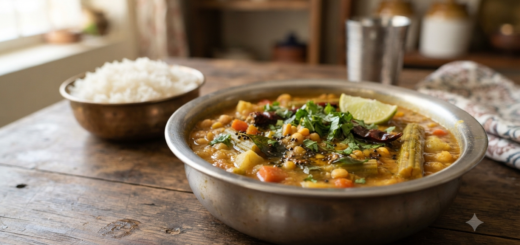
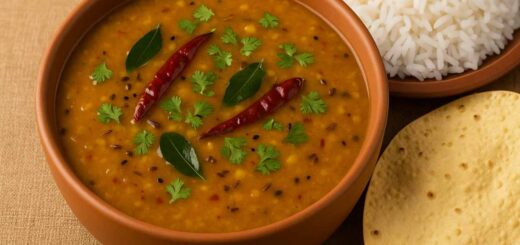
Rasam Recipe Karnataka Style: Authentic Saaru at Home
This Rasam Recipe Karnataka Style gives you the tangy, peppery, lightly sweet saaru that Kannadiga homes cook almost every day. In Karnataka, rasam is called saaru, and the local version leans sweeter and rounder than its Tamil or Andhra cousins because a little jaggery balances the tamarind sourness. You cook it with toor dal, fresh tomatoes, tamarind, and a freshly roasted spice blend called saarina pudi. The result is a soul-soothing bowl that works both poured over hot rice and sipped as a warming soup.
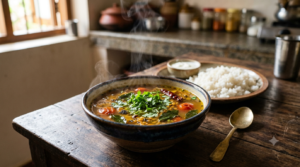
A hot bowl of Karnataka style rasam (saaru) topped with fresh coriander, served with steamed rice.
Below you get exact quantities, a clear six-step method, the one mistake that ruins most rasam, and the regional variations that make Karnataka saaru special. Everything here is home-tested and beginner-friendly.
Karnataka Saaru at a Glance
Here is the quick version before we cook, so you know exactly what you are making.
- What it is: a thin, tangy-peppery lentil broth known as saaru in Kannada.
- Signature touch: jaggery balances the tamarind, and Mysore-style versions add coconut.
- Time: about 20 minutes prep and 35 minutes cooking.
- Serves: 4 people as a rice accompaniment.
- Skill level: easy to medium, since the spice powder is the only fiddly part.
- Best served with: steamed rice and a spoon of ghee, or as a soup with papad.
What Makes This Rasam Recipe Karnataka Style Different
People often assume all South Indian rasam tastes the same, but that is not true. This Rasam Recipe Karnataka Style stands apart in four clear ways, and knowing them helps you get the flavour right.
First, the name changes. Across Karnataka, rasam is usually called saaru, while the spice powder is called saarina pudi instead of rasam powder. Second, the taste is rounder, because cooks add a small amount of jaggery. That gives the finished bowl a gentle sweet note against the sour tamarind.
Third, coconut appears in the famous Mysore version, which makes that saaru thicker and richer than the watery Tamil Nadu style. Fourth, Karnataka blends often use Byadagi chillies for deep red colour with only mild heat. Together, these four touches give this Rasam Recipe Karnataka Style its comforting, home-style character.
Because of these touches, Karnataka saaru feels comforting rather than fiery. If you have tried our traditional Tamil Nadu rasam recipe or the Andhra style rasam, you will notice the difference the moment you taste this one.
Recipe Card
| Detail | Value |
|---|---|
| Prep Time | 20 minutes |
| Cook Time | 35 minutes |
| Total Time | 55 minutes |
| Servings | 4 servings |
| Cuisine | Karnataka, South Indian |
| Difficulty | Easy to Medium |
Rasam Recipe Karnataka Style Ingredients With Exact Quantities
Measure everything before you start, because rasam cooks fast once the base is ready. The list below serves four.
Main Ingredients
- Toor dal (split pigeon peas) – ½ cup, washed
- Water – 5 cups total
- Ripe tomato – 2 medium, chopped
- Tamarind – 1 small lemon-sized ball, soaked
- Green chillies – 2, slit
- Garlic cloves – 6, lightly crushed (optional)
- Curry leaves – 1 sprig
- Turmeric powder – ¼ tsp
- Jaggery – 1 tsp, grated (the Karnataka touch)
- Salt – ¾ tsp, adjust to taste
Saarina Pudi (Homemade Rasam Powder)
- Coriander seeds – 2 tsp
- Cumin seeds – 1 tsp
- Black peppercorns – 1 tsp
- Dried red chillies – 3, ideally Byadagi for colour
- Fenugreek seeds – ¼ tsp
- Asafoetida (hing) – a pinch
Tempering (Tadka)
- Ghee or oil – 2 tsp
- Mustard seeds – ½ tsp
- Cumin seeds – ¼ tsp
- Dried red chilli – 1
- Curry leaves – 1 small sprig
- Fresh coriander leaves – 1 tbsp, chopped
How to Cook Rasam Recipe Karnataka Style Step by Step
Follow these six steps in order. The whole Rasam Recipe Karnataka Style comes together in under an hour, and most of that is hands-off simmering.
Step 1: Cook the Toor Dal (10–12 minutes)
Put the washed toor dal in a pressure cooker with 1½ cups water and ¼ tsp turmeric. Cook for two whistles on medium flame until soft. Once the pressure drops, mash the dal lightly and set it aside. This soft dal gives the saaru its body.
Step 2: Prepare the Tamarind Extract (5 minutes)
Soak the tamarind ball in ½ cup warm water for five minutes. Squeeze it well, then strain out the seeds and fibre. Keep this tamarind water ready, because it delivers the signature tang of Karnataka saaru.
Step 3: Roast the Saarina Pudi (7–8 minutes)
Dry roast the coriander, cumin, peppercorns, red chillies, and fenugreek on a low flame. Stir until they turn fragrant and a shade darker, which takes about four to five minutes. Let them cool, then grind to a coarse powder with a pinch of hing. Freshly roasted powder lifts the flavour far above any store-bought mix.
Step 4: Build the Rasam Base (8 minutes)
In a heavy pot, add the tamarind water, chopped tomatoes, slit green chillies, jaggery, and salt. Bring it to a boil on medium flame, so the raw tamarind smell cooks off. Now stir in the mashed dal and the fresh saarina pudi. Add 3 cups of water, then let it simmer gently for about eight minutes while the flavours meld.
Step 5: Add the Tempering (2 minutes)
Heat the ghee in a small pan until it shimmers. Add mustard seeds and wait for them to splutter. Then toss in cumin seeds, the dried chilli, and curry leaves, and fry for about 30 seconds.
Now pour this sizzling tempering over the rasam and stir once. This tadka carries the aroma that defines Karnataka style saaru.
Step 6: Finish and Rest (3 minutes)
Switch off the heat just as the rasam begins to froth at the edges. Cover the pot and let it stand for a few minutes before serving. Garnish with fresh coriander. This short rest lets the aroma settle, so every spoonful tastes fuller.
The One Rule That Makes or Breaks Your Saaru
Never let rasam reach a hard, rolling boil after you add the saarina pudi. A quick froth is fine, but a long boil drives off the delicate aroma and can leave a dull, bitter edge. Experienced Kannadiga cooks switch off the flame the moment they see froth rising, not bubbles crashing.
So treat the froth as your finish line. Because the powder and tempering are fresh, the flavour is already at its peak, and extra boiling only takes it away. This single habit separates a flat rasam from a fragrant one.
Rasam Recipe Karnataka Style: Regional Variations
Karnataka does not have just one rasam. The state cooks many regional versions, and each brings its own character to the table.
- Mysore rasam: the most famous version, made thicker with fresh coconut ground into the spice paste. It uses more dal and often skips the watery texture entirely.
- Udupi rasam: a coastal style where the spices are fried in coconut oil rather than dry roasted, which gives a distinct nutty aroma. Our Udupi style rasam recipe walks through it fully.
- Menasina saaru: a pepper-forward rasam for cold days or when you feel a cold coming on. You simply increase the peppercorns and ease off the chillies.
- Tomato saaru: a lighter everyday version built mostly around ripe tomatoes, with less tamarind.
- Hesarubele saaru: a gentle moong dal rasam that suits kids and elders, since it is mild and easy to digest.
To make this Rasam Recipe Karnataka Style truly Mysore-style, add 2 tablespoons of fresh grated coconut while grinding the saarina pudi. That one change turns an everyday saaru into a festive one.
Rasam Recipe Karnataka Style: Pro Tips and Common Mistakes
A few small habits decide whether your saaru tastes homely or forgettable. These tips come from real kitchen experience, not theory.
- Roast on low heat only. Burnt spices turn bitter, so keep the flame gentle and stir constantly.
- Balance sour and sweet. If the tamarind feels sharp, add a touch more jaggery instead of extra salt.
- Adjust the thickness. For a soup-style saaru, add up to 1 cup extra water; for a rice-side version, keep it as is.
- Use fresh curry leaves. Dried leaves lose most of their aroma, while fresh ones carry the tempering.
- Do not skip the rest. Rasam always tastes better after standing covered for five minutes.
The most common mistake, however, is over-boiling, closely followed by using stale powder. Avoid both and your rasam will taste like it came from a Karnataka grandmother’s kitchen.
Substitutions and Storage
This Rasam Recipe Karnataka Style is forgiving, so use what you have on hand. These swaps keep the dish close to the original.
- No toor dal? Use moong dal for a lighter, faster-cooking saaru.
- Out of tamarind? Use 1 tablespoon of tamarind paste diluted in ¼ cup water.
- No ghee? Plain oil works and gives a lighter rasam, though ghee tastes richer.
- Prefer no garlic? Simply leave it out, since this recipe works well as a no-onion no-garlic dish too.
Leftover rasam keeps in the fridge for up to two days in an airtight container. Reheat it gently on a low flame, and add a splash of water if it has thickened. Try to finish it within two days, because the tamarind grows sharper the longer it sits.
Rasam Recipe Karnataka Style Nutrition (Per Serving)
| Nutrient | Amount |
|---|---|
| Calories | 90 kcal |
| Protein | 3.2 g |
| Fat | 2.1 g |
| Carbohydrates | 16 g |
| Fiber | 3.8 g |
| Sodium | 420 mg |
This estimate reflects a homemade saaru with dal, spices, and minimal oil. Rasam is naturally light, and the pepper and cumin add warming, digestion-friendly notes. One quick note on allergies: many asafoetida brands are cut with wheat flour, so check the label if you cook gluten-free. You can read more about it on the asafoetida reference page.
Serving This Rasam Recipe Karnataka Style
Serve the rasam hot over steamed rice with a drizzle of ghee and a crisp papad on the side. It also pairs beautifully with Karnataka style bisi bele bath for a fuller South Indian spread. As a soup, ladle it into a cup with a squeeze of lime and sip it slowly. On sick days, a warm bowl of pepper-heavy saaru is the classic Karnataka comfort remedy.
The Bottom Line
This Rasam Recipe Karnataka Style is proof that simple food can be deeply satisfying. Fresh saarina pudi, a whisper of jaggery, and the discipline to stop before it boils are all you need for an authentic bowl. Start with the everyday version here, then try the Mysore coconut twist once you are comfortable.
For more on the dish and its roots, the Wikipedia page on rasam offers useful background. Cook it once, and it will earn a permanent place in your weekly menu.
Frequently Asked Questions
What is saaru in Karnataka cooking?
Saaru is the Kannada word for rasam, a thin and tangy lentil broth. It is served with rice or sipped as a soup. In Karnataka, the spice mix used to make it is called saarina pudi.
Can I make this Rasam Recipe Karnataka Style without homemade powder?
Yes, you can use 2 tablespoons of good store-bought rasam powder. However, freshly roasted saarina pudi delivers a far brighter aroma and deeper flavour. If you have five extra minutes, roast your own.
How is Karnataka rasam different from Tamil Nadu rasam?
Karnataka saaru is usually rounder and slightly sweet, because cooks add a little jaggery. The famous Mysore version also uses coconut, which makes it thicker. Tamil Nadu rasam tends to be thinner, sharper, and more peppery.
Is this Rasam Recipe Karnataka Style spicy?
This version has mild to moderate heat. You can raise or lower the peppercorns and chillies to suit your family. For kids and elders, reduce the pepper and keep it gentle.
Why does my rasam taste bitter?
Bitterness usually comes from two causes. Either the spices were roasted on too high a flame and burnt, or the rasam was boiled too long after adding the powder. Roast gently and switch off at the first froth.
Can I make Karnataka rasam without garlic and onion?
Yes, this saaru works perfectly without garlic or onion, which makes it ideal for festival and fasting meals. Simply skip the garlic in the main ingredients. The tamarind, tomato, and saarina pudi carry all the flavour.
What can I serve with Karnataka saaru?
Steamed rice with ghee is the classic pairing. It also goes well with papad, a dry vegetable curry, or even idli and dosa. As a standalone soup, it needs nothing more than a squeeze of lime.
How long does homemade rasam stay fresh?
Store it in an airtight container in the fridge for up to two days. Reheat gently and add a little water if it thickens. Beyond two days the tamarind turns sharper, so it is best eaten fresh.