Andhra Mudda Pappu Recipe: Simple Stovetop Dal
The Andhra mudda pappu recipe is a simple way to make soft, thick dal for hot rice and ghee. This version keeps the original post’s yellow moong dal method, explains the more familiar toor dal variation, and makes the cooking time clear: this is not a five-minute dish.
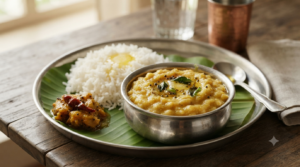
Traditional Andhra-style mudda pappu served with steamed rice, ghee, and mango pickle.
Mudda pappu tastes best when the lentils are fully soft yet the finished dal stays thick enough to sit on rice. You can keep it plain or add the optional seasoning from the older recipe.
Andhra Mudda Pappu Recipe at a Glance
- Dish: thick, mashed Andhra-style dal, usually eaten with rice and ghee.
- Dal in this version: split yellow moong dal, also called pesara pappu.
- Traditional alternative: toor dal, or kandi pappu, for a classic plain mudda pappu.
- Method: simmer the rinsed dal until completely soft, mash, then season.
- Time: longer than five minutes; the exact duration depends on the dal and cooking method.
- Yield: not measured or verified for the original one-cup batch.
Recipe testing note: The quantities below come from the previously published recipe. No documented kitchen test confirms its water ratio, cooking time, or serving yield, so treat them as a starting point and adjust by texture. This Andhra mudda pappu recipe does not claim a tested serving count.
What Makes Mudda Pappu Different from Other Dal?
Mudda pappu means a thick, soft preparation of cooked lentils in Andhra cooking. Unlike a thin, tangy pappu charu, the plain version needs no tomato, tamarind, or elaborate spice mix. It is often eaten first with hot rice, a little ghee, and a pickle.
A traditional plain version commonly uses toor dal. However, moong dal also has a place in Andhra pappu cooking. The dal choice changes the taste and texture, so this recipe keeps the original moong method without presenting it as the only authentic choice.
For a more soupy, sour dish, see the site’s Andhra pappu charu recipe. That is a different preparation, not a thinner name for the same dish.
Ingredients for This Andhra Mudda Pappu Recipe
The earlier article used one cup of dry split yellow moong and three cups of water. Those figures are retained for continuity, not presented as a newly tested formula. Use a normal measuring cup consistently, then judge the final texture rather than relying only on the ratio.
| Ingredient | Amount in original post | How to use it |
|---|---|---|
| Split yellow moong dal | 1 cup | Main lentil for this stovetop version |
| Water | 3 cups | Starting amount; add more if needed |
| Turmeric | 1/2 teaspoon | Optional, for colour and flavour |
| Salt | To taste | Add after the dal softens |
| Ghee | 1 tablespoon | Optional for tempering or serving |
Optional tempering from the original post: 1/2 teaspoon mustard seeds, 1/2 teaspoon cumin, 2–3 green chillies, 3–4 crushed garlic cloves, 1/2 teaspoon grated ginger, a few curry leaves, and 1–2 dry red chillies. These amounts are also untested. Use less, or skip the entire tempering, for a plainer dal.
The original list is quite strongly seasoned for something described as plain mudda pappu. In fact, the simplest toor dal version can be nothing more than cooked dal and salt. Adding garlic, chillies, and mustard gives a different, bolder home-style variation rather than a rule every family follows. In this Andhra mudda pappu recipe, that seasoning is optional.
Andhra Mudda Pappu Recipe: Step-by-Step Stovetop Method
- Rinse the dal. Pick out any debris, then rinse the split yellow moong several times. Drain it before adding fresh cooking water.
- Start cooking. Put the dal in a heavy saucepan with the original recipe’s three cups of water. Bring it to a boil, then lower the heat to a gentle simmer.
- Watch the pot. Leave the lid slightly open to avoid foaming over. Stir as needed, especially when the dal starts to thicken, and add small splashes of hot water if it sticks.
- Check for softness. Continue until you can easily crush the lentils against the side of the pot with a spoon. Do not stop at a fixed minute mark while the grains are still firm.
- Mash and season. Mash the cooked dal to the thickness you like. Stir in salt and the optional turmeric; let the mixture come back to a gentle simmer.
- Make the tempering, if wanted. Heat the ghee in a small pan. Let mustard and cumin sizzle briefly, then add the dry chillies and other aromatics. Stir until fragrant without scorching the garlic.
- Finish and serve. Mix the tempering into the dal, or leave the dal plain. Serve hot with steamed rice and a little ghee.
Do not treat the optional tempering as part of the basic cooking requirement. If the lentils are soft and seasoned, the dish is ready to eat. This also makes it easier to adapt for households that avoid garlic or chilli. The Andhra mudda pappu recipe still works without tempering.
How Long Does Andhra Mudda Pappu Recipe Take?
Five minutes is not a credible total time for rinsing and cooking dry dal on the stovetop. The older page itself listed five minutes of preparation plus 15–20 minutes of cooking, yet it advertised the whole recipe as a five-minute meal. Even that cooking estimate was not supported by a recorded test.
Actual cooking time varies with the lentil type, its age, the pan, water level, and heat. Split moong usually softens sooner than toor, but neither should be judged by a headline clock. Check the dal with a spoon and stop when no hard centre remains.
If you use a pressure cooker, follow its instructions for the specific dal and fill level. Allow pressure to release safely before opening. This stovetop article does not claim a tested whistle count or an Instant Pot programme.
Moong Dal or Toor Dal: Which One Should You Choose?
| Dal | What to expect | Best choice when |
|---|---|---|
| Moong dal (pesara pappu) | Softer, milder result when fully cooked | You want to follow the existing recipe’s main method |
| Toor dal (kandi pappu) | Fuller, earthier flavour; often needs longer cooking | You want the familiar plain Andhra mudda pappu served with avakaya |
To use toor dal, rinse it and cook until the grains mash easily. Then add salt and adjust the water to reach a thick consistency. The older moong recipe’s three-cup water figure has not been validated for a toor batch, so do not assume identical water or timing will work.
Either dal can taste good with rice and ghee. This Andhra mudda pappu recipe keeps the lentil choices separate so you can choose your favourite. However, a strongly spiced tempering can hide the subtle taste of the plain dish, so try the simple version first. If you want more spice on the plate, the site’s Andhra pappu podi offers a separate, dry seasoning option.
How Thick Should Mudda Pappu Be?
Mudda pappu should look soft and mashed, not like a clear broth. When spooned over rice, the dal should sit in a mound before you mix it in. It may thicken further as it cools because cooked lentils absorb water.
If it seems watery, simmer it uncovered while stirring until it thickens. If it becomes too stiff, mix in a little hot water and warm it through. The target is a texture you can mix with rice, not a rigid amount of liquid for every dal.
One easy mistake is adding the tempering before checking the cooked lentils. Seasoning adds flavour, but it will not fix a gritty centre. Cook and mash the dal first; then adjust salt, texture, and spices.
Serving Andhra Mudda Pappu with Rice and Ghee
Serve Andhra mudda pappu with steamed rice and ghee for a comforting meal. It also pairs well with a vegetable curry or a little pickle. In Andhra-style meals, avakaya mango pickle offers a sharp contrast to the plain dal.
Start with a small spoonful of dal over rice. Add a little ghee, mix until the grains are coated, and taste before adding pickle. Since pickles can be salty and hot, the simple dal gives you room to balance the plate.
For another Andhra dish using green gram, see the site’s Andhra pesarattu recipe. It uses whole green gram for a crepe, while mudda pappu uses cooked lentils as a rice accompaniment.
Nutrition, Portions and Recipe Limitations
The old page gave per-serving calories, protein, carbohydrate, fat, and fibre figures. However, it did not say how many portions the batch made or show a nutrition calculation. Those numbers have therefore been removed rather than repeated as fact.
Dal supplies plant protein and other nutrients, but the value of a serving depends on the dal, how much you eat, and any ghee or oil you add. Rice and side dishes also change the meal’s overall nutrition. No verified serving count, serving weight, or per-portion nutrition analysis is available for this Andhra mudda pappu recipe.
For a vegan preparation, omit ghee and either serve the dal plain or use a suitable cooking oil. If you add tomatoes, greens, or other vegetables, you are making a variation. That can be delicious, but it changes the recipe and any future nutrition calculation.
Cool, Store and Reheat Leftover Mudda Pappu Safely
Do not leave a deep pot of cooked dal on the counter until it cools overnight. Divide leftovers into clean, shallow containers so they lose heat faster, then refrigerate promptly. FoodSafety.gov’s food safety guidance says to refrigerate within two hours, or within one hour when the surroundings exceed 32°C.
Keep the fridge at 4°C or below. Properly refrigerated leftovers are generally best used within three to four days, according to USDA food-safety guidance. Freeze portions promptly if you need longer storage.
The previous article’s one-month freezer figure was not tied to a tested quality or safety assessment. Store leftover dal from this Andhra mudda pappu recipe the same way you would other cooked leftovers.
Reheating without drying out the dal
Dal usually thickens in the fridge, so transfer only the portion you plan to eat to a pan. Add a splash of water and stir while reheating. For safety, heat leftovers throughout to 74°C, as advised by the US Food and Drug Administration.
In a microwave, cover the dish loosely, stir midway, and check that the centre heats thoroughly. Use a food thermometer when possible. Discard dal left unrefrigerated beyond the safe time limit; reheating is not a way to rescue poorly stored food.
Cool leftover rice promptly too, and store it separately from dal. Rice and other cooked foods can develop food-safety hazards after long periods at room temperature, even if they look and smell fine.
Mudda Pappu Mistakes Worth Avoiding
- Trusting the five-minute promise: dry lentils need time to become mashable, so cook to texture instead.
- Calling moong the only authentic dal: plain toor dal is also central to Andhra mudda pappu.
- Using all the water blindly: treat the original ratio as a starting point, then adjust for thickness.
- Burning the tempering: garlic and dry chillies turn bitter quickly when ghee is too hot.
- Guessing nutrition per bowl: the serving yield has never been recorded for this batch.
- Cooling in one large pot: smaller, shallow containers help leftovers cool quickly.
Before You Make This Andhra Mudda Pappu Recipe
Keep the original moong dal method if you want a mild, soft dal with optional tempering. Choose toor dal if you prefer a classic plain Andhra pairing with rice, ghee, and avakaya. In either case, softness and thickness matter more than an unverified cooking time.
The quantities remain a guide until someone cooks and measures a full batch. For now, this recipe avoids a made-up yield, an unsupported nutrition panel, and a five-minute claim.
Andhra Mudda Pappu Recipe FAQs
Can mudda pappu really be ready in five minutes?
Not when you start with dry dal and use the stovetop method described here. Five minutes may cover some preparation tasks, but cooking continues until the lentils are fully soft. The original article’s total-time claim was misleading.
Is Andhra mudda pappu made with toor dal or moong dal?
Both appear in Andhra pappu cooking, but plain toor dal is a familiar traditional mudda pappu choice. The original recipe on this page uses split yellow moong. Keep the two versions distinct because their flavour, texture, and cooking needs differ.
Does mudda pappu need mustard seeds and garlic?
No. A simple preparation can use cooked dal and salt, with ghee added when serving. Mustard, cumin, garlic, ginger, and chillies form an optional seasoned variation rather than a requirement.
Why is my mudda pappu watery?
The dal may have more liquid than you need for a thick finish. Simmer uncovered and stir until it holds its shape on a spoon. Next time, judge the pot as it cooks rather than treating the starting water quantity as exact.
Can I make this recipe without a pressure cooker?
Yes. A heavy saucepan works when you simmer the dal gently and stir as it thickens. Add water if necessary, then cook until every grain crushes easily. Do not use an untested fixed time as a substitute for checking doneness.
How long can cooked mudda pappu stay in the fridge?
Refrigerate promptly in shallow containers at 4°C or below, then use properly stored leftovers within three to four days. If the dal has sat out for more than two hours, or one hour in heat above 32°C, discard it.
How should I reheat thick leftover dal?
Reheat one portion with a little water, stirring so it heats evenly. Bring the whole portion to 74°C and serve promptly. Stir halfway through microwave reheating, since the centre can remain cooler than the edges.
Can I freeze mudda pappu?
Yes. Divide cooked dal into small, shallow, freezer-safe portions and chill or freeze promptly rather than leaving it on the counter. Thaw in the fridge, then reheat thoroughly. Texture may change after freezing, so loosen it with water if needed.