Pumpkin Sambar Recipe That Keeps the Cubes Intact
This pumpkin sambar recipe turns an ordinary orange gourd into the sweetest bowl on a South Indian lunch plate. Pumpkin behaves nothing like drumstick or brinjal, though, because it carries its own sugar. It also collapses fast in tamarind water, so timing decides whether you get sambar or orange soup.
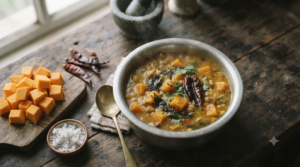
Cubed yellow pumpkin simmering in a tamarind and toor dal sambar, cooked just enough to hold its shape.
Most versions of this pumpkin sambar recipe skip the two things that actually go wrong. First, the vegetable itself: Tamil and Telugu names for pumpkin overlap with ash gourd, and shoppers come home with the wrong one. Second, the cook window, which is far shorter than any other sambar vegetable.
Pumpkin Sambar Recipe at a Glance
- Vegetable: yellow or red pumpkin, not white pumpkin (ash gourd)
- Dal: toor dal, half a cup for four servings
- Tang: tamarind, kept lighter than usual because pumpkin is sweet
- Jaggery: optional here, since the pumpkin already sweetens the pot
- Danger point: pumpkin needs only 8 to 10 minutes of simmering
- Total time: about 40 minutes with a pressure cooker
| Detail | Value |
|---|---|
| Prep time | 15 minutes |
| Cook time | 25 minutes |
| Servings | 4 |
| Cuisine | South Indian |
| Difficulty | Easy |
Yellow Pumpkin or Ash Gourd? Get the Vegetable Right
A pumpkin sambar recipe fails at the vegetable shop long before it fails at the stove. Buy yellow or red pumpkin for this dish. In Tamil that is parangikai, or manjal poosanikai when the seller wants to say “the yellow one”. Plain poosanikai on its own usually means ash gourd, which is a completely different vegetable.
This confusion is everywhere online. Several popular blogs title yellow-pumpkin dishes “poosanikai sambar”, and that label sends readers to the white gourd instead. Ash gourd is watery and bland, while yellow pumpkin is dense and sugary, so the swap changes the whole pot.
| Language | Yellow pumpkin | Ash gourd (white pumpkin) |
|---|---|---|
| Tamil | Parangikai / manjal poosanikai | Vellai poosanikai / neer poosanikai |
| Telugu | Gummadikaya | Boodida gummadikaya |
| Malayalam | Mathanga | Kumbalanga |
| Kannada | Sihi kumbalakayi | Boodu kumbalakayi |
| Hindi | Kaddu | Petha |
If your gourd is pale green outside and snow-white inside, that is ash gourd. Put it back. A good pumpkin has deep orange flesh, feels heavy, and shows no soft or weeping patches near the cut face.
Ingredients for This Pumpkin Sambar Recipe
Dal and tamarind base
- 1/2 cup toor dal (split pigeon peas), rinsed well
- 350 g yellow pumpkin, peeled, de-seeded, cut into 2 cm cubes
- 1 small lemon-sized ball of tamarind, soaked in 1/2 cup warm water
- 1/4 tsp turmeric powder
- 1 small tomato, chopped (optional, for extra body)
- 1 to 1.25 tsp salt, adjusted at the end
Ground masala
- 1/3 cup fresh grated coconut
- 3 dry red chillies, Byadagi or Kashmiri for colour without heat
- 1 tbsp coriander seeds
- 1 tsp chana dal
- 1/2 tsp cumin seeds
- 1/4 tsp fenugreek seeds, no more
- 1 tsp oil for roasting
Tempering
- 2 tsp sesame (gingelly) oil or coconut oil
- 1/2 tsp mustard seeds
- 1 dry red chilli, broken
- 10 curry leaves
- 1 generous pinch asafoetida (see the gluten note below)
Fenugreek is the one measurement in this pumpkin sambar recipe worth respecting. A quarter teaspoon adds a warm bitterness that balances sweet pumpkin, yet half a teaspoon turns the whole pot bitter. Coriander seeds carry the aroma, so buy them whole and roast them fresh if you can.
Pumpkin Sambar Recipe: Step-by-Step Method
Step 1: Cook the dal (12 minutes)
Rinse the toor dal until the water runs clear. Add it to a pressure cooker with 1.5 cups water, the turmeric and a few drops of oil. Cook for three whistles on medium heat, then let the pressure drop on its own.
Once open, whisk the dal until it is smooth and creamy. Lumpy dal never blends properly later, so this half minute matters.
Step 2: Soak the tamarind (5 minutes)
Soak the tamarind in warm water while the dal cooks. After ten minutes, squeeze it with your fingers and strain out the pulp. Keep the extract aside and taste it, because tamarind strength varies wildly between batches.
Step 3: Roast and grind the masala (7 minutes)
Heat a teaspoon of oil in a small pan on low flame. Add coriander seeds, chana dal, cumin and fenugreek, then roast until the dal turns light gold. Toss in the red chillies for the last thirty seconds only.
Cool the mixture completely before grinding. Then blend it with the grated coconut and about three tablespoons of water into a smooth paste. Warm spices grind into a gritty, slightly bitter paste, so patience pays here.
Step 4: Cook the pumpkin (10 minutes)
Timing is where a pumpkin sambar recipe is won or lost. Put the pumpkin cubes in a pot with the tomato, half the tamarind extract and 3/4 cup water. Cover and simmer on medium heat for eight to ten minutes. Test one cube with a knife tip after eight minutes.
The knife should slide in with slight resistance, not glide straight through. Pull the pot off heat the moment that happens, since pumpkin keeps softening in residual heat.
Step 5: Bring it together (6 minutes)
Add the whisked dal, the ground masala paste and the salt. Pour in water to reach a pouring consistency, roughly half a cup. Simmer gently for five minutes until the raw tamarind smell disappears.
Taste now, before the tempering. If it leans flat, add the remaining tamarind extract a spoon at a time. If it leans sharp, a small piece of jaggery fixes it instantly.
Step 6: Temper and rest (3 minutes)
Heat the sesame oil in a small pan until it shimmers. Add mustard seeds and wait for them to pop, then add the red chilli, curry leaves and asafoetida. Pour the whole sizzling mixture over the sambar and cover the pot.
Let it sit for ten minutes before serving. Sambar genuinely tastes better after this short rest, because the coconut paste needs time to settle into the dal.
Why Pumpkin Turns to Mush, and How to Stop It
Pumpkin has roughly 92% water and very little fibre holding it together. Tamarind acid then breaks down its cell walls faster than plain water does. That combination is why most home cooks end up with a thick orange purée.
Three habits prevent it. This pumpkin sambar recipe calls for 2 cm cubes rather than bite-sized ones, because small pieces disintegrate first. Add only half the tamarind while the pumpkin cooks, then balance at the end. Finally, never pressure cook the pumpkin along with the dal.
If the cubes have already collapsed, the dish is still worth eating. Thin it slightly, call it a pumpkin sambar of the softer Kerala style, and serve it over rice rather than with idli.
Ground Masala or Ready Sambar Powder?
Both versions of this pumpkin sambar recipe are authentic, and the choice depends on your evening. The freshly ground coconut masala above suits pumpkin best because coconut mellows the sweetness. On a weeknight, though, sambar powder gets dinner on the table twenty minutes sooner.
| Factor | Fresh ground masala | Ready sambar powder |
|---|---|---|
| Extra time | About 12 minutes | None |
| Quantity | Full paste as listed | 1.5 tbsp powder |
| Texture | Thicker, creamy | Thinner, brothier |
| Best with | Rice and ghee | Idli and dosa |
| Sweetness balance | Coconut softens it | Add a pinch of jaggery |
If you go the quick route, use a blend built for sambar rather than a general curry powder. A homemade mix works even better, and our Kannada Brahmin style sambar powder keeps for weeks in an airtight jar.
Mistakes That Ruin a Good Pot
- Pressure cooking the pumpkin with the dal. It turns to paste in one whistle.
- Too much tamarind. Pumpkin is sweet, so it needs less tang than brinjal or radish does.
- Heavy fenugreek. Anything above a quarter teaspoon fights the pumpkin instead of supporting it.
- Grinding hot spices. The paste goes gritty and slightly bitter.
- Skipping the rest. Serving straight after tempering leaves the flavours separate.
- Peeling too deep. The layer just under the skin holds most of the colour.
None of these mistakes are unique to a pumpkin sambar recipe, yet pumpkin punishes them faster than any other vegetable. One more thing surprises people: dark green Indian pumpkin skin is edible when young. Older, thick-skinned pumpkins need peeling, but a tender one only needs a scrub.
Is This Pumpkin Sambar Recipe Gluten-Free?
Not automatically, and this is where most recipe pages get it wrong. Toor dal, pumpkin, tamarind and coconut are all naturally gluten-free. The asafoetida in your tempering, however, usually is not.
Pure asafoetida resin contains no gluten. Because that resin is sticky and extremely strong, manufacturers cut it with a carrier, and the traditional carrier is wheat flour. Several widely sold Indian brands still compound their hing this way.
So anyone cooking for coeliac disease should check the ingredient list rather than assume. Rice-flour and starch-based hing is now sold as gluten-free, and packaged food labelling in India falls under the Food Safety and Standards Authority of India. When in doubt, simply leave the asafoetida out; the sambar loses a little depth but nothing essential.
Nutrition and What the Pumpkin Adds
Raw pumpkin holds about 26 kcal per 100 g, along with 6.5 g of carbohydrate and 340 mg of potassium, according to USDA FoodData Central reference data. Its headline nutrient is beta-carotene, which the body converts into vitamin A.
Paired with toor dal, a pumpkin sambar recipe makes a genuinely balanced bowl. The dal brings protein and the pumpkin brings colour pigments and potassium for very few calories.
| Per serving (approx.) | Amount |
|---|---|
| Calories | 150-190 kcal |
| Protein | 6-8 g |
| Carbohydrate | 18-24 g |
| Fat | 5-7 g |
| Fibre | 4-6 g |
These are estimates for a quarter of the pot, calculated from standard ingredient values. They shift with how much coconut and oil you use. Anyone managing diabetes or a restricted diet should treat them as a guide and speak to a qualified dietitian.
What to Serve With It
This pumpkin sambar recipe belongs with hot rice and a spoon of ghee, since the sweetness needs plain starch beside it. It also works with idli, although the coconut version can feel heavy at breakfast. Dosa, uttapam and steamed millets all pair well.
For a full plate, add a dry vegetable poriyal and a spoon of pickle. If you are building a South Indian breakfast spread instead, our idli, sambar and chutney combination covers the whole tray.
Storing and Reheating
Leftovers from this pumpkin sambar recipe keep well, with one caveat about texture. Cool the sambar fully, then refrigerate it in a covered steel or glass container for up to three days. It thickens overnight because the dal keeps absorbing liquid. Add a splash of hot water while reheating and stir gently.
Freezing works, but expect the pumpkin cubes to soften further. So freeze it only if you plan to serve it over rice. Reheat on the stove rather than the microwave, since even heat protects whatever cube shape survives.
Before You Cook
The whole dish rests on two decisions. Choose yellow pumpkin rather than ash gourd, and take the pot off heat while the cubes still resist a knife. Everything else in this pumpkin sambar recipe is forgiving.
Start with the ground coconut masala the first time, because that version shows what pumpkin brings to sambar. Once you know the taste, the quick sambar-powder route becomes an easy weeknight fallback. Regional cousins are worth exploring too, because coastal Karnataka grinds coconut into what it calls koddel. Our Mangalore style sambar guide covers that version in full.
Frequently Asked Questions
Can I make pumpkin sambar without tamarind?
Yes. Use two chopped tomatoes plus a squeeze of lime juice added off the heat. The result is milder and slightly sweeter, so add an extra red chilli to keep it balanced. Kokum also works if you have it.
Which pumpkin is used in sambar?
Yellow or red pumpkin is the correct choice, known as parangikai in Tamil, gummadikaya in Telugu and mathanga in Malayalam. Ash gourd or white pumpkin is a different vegetable with a different name. It makes a fine kootu but a watery sambar.
Do I need to peel the pumpkin?
It depends on age. Young Indian pumpkins have thin, edible skin that holds shape well during cooking, so a good scrub is enough. Older pumpkins with hard, waxy skin should be peeled before cubing.
Why did my pumpkin sambar turn watery?
Usually the dal was underwhisked or too thin. Whisk the cooked dal until creamy before adding it, and use only 1.5 cups of water per half cup of dal. Simmering uncovered for a few extra minutes also thickens it.
Can I use butternut squash instead?
Butternut squash substitutes well because it has similar sweetness and firmer flesh. It actually holds its shape better than Indian pumpkin does. Keep the cook time the same and check with a knife at eight minutes.
Is jaggery necessary in this pumpkin sambar recipe?
No, and it is often a mistake here. Pumpkin already contributes natural sugar, so added jaggery can tip the pot into dessert territory. Add a small piece only if the tamarind has made it too sharp.
Can I make it in an Instant Pot?
Yes, though cook the dal and pumpkin separately. Pressure cook the dal for eight minutes on high, then use sauté mode for the pumpkin and the finishing simmer. Cooking both together under pressure destroys the cubes.
Can I add other vegetables to this pumpkin sambar recipe?
Drumstick and small onions work beautifully alongside pumpkin. Add drumstick five minutes before the pumpkin, since it takes longer to soften. Avoid watery vegetables like bottle gourd, because the pot is already sweet and soft.
How long does pumpkin sambar keep?
Three days refrigerated in a sealed container, or about a month frozen. Because it contains coconut, leave it at room temperature for no more than two hours after cooking. Reheat it thoroughly before serving.