Sambar Recipe Without Onion Easy South Indian Style
A good sambar recipe without onion never tastes like a compromise. It tastes like the sambar ladled out in Udupi hotels and temple kitchens across South India.
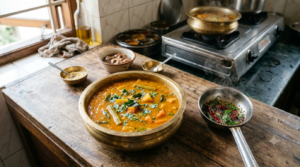
Home-style sambar made without onion or garlic, finished with a hot mustard-and-curry-leaf tempering.
Yet most home cooks who drop alliums end up with something thin and sourly flat, because they remove the onion and change nothing else. The fix is not a longer ingredient list. It is a pinch of asafoetida bloomed properly, the right souring balance, and two label checks almost nobody makes.
Sambar Recipe Without Onion: Quick Facts
Here is what this sambar recipe without onion involves, at a glance.
- Total time: about 55 minutes, including 15 minutes of soaking.
- Yield: 4 large servings, roughly 1.2 to 1.4 litres of sambar.
- Flavour base: asafoetida, curry leaves and fenugreek replace the onion’s savoury depth.
- Souring agent: tamarind, balanced with a teaspoon of jaggery.
- Diet notes: satvik and festival-friendly, but not automatically Jain-friendly or gluten-free — see the two sections below.
Why Cook a Sambar Recipe Without Onion?
Millions of South Indian households cook this way every day, so the practice is far from unusual. Temple kitchens in Tamil Nadu, Karnataka, Andhra Pradesh and Kerala prepare all prasadam without alliums, because onion and garlic fall outside satvik cooking.
Families also switch during festivals, Ekadashi, Karthika Masam and Shravan, when many households pause onion and garlic entirely. Brahmin kitchens across the south, particularly the Udupi and Tambrahm traditions, simply never used them in sambar at all.
There is a practical reason too. Onion and garlic are high in fermentable carbohydrates, so some people with sensitive digestion feel better without them. That said, this is general information and not medical advice, so anyone managing a diagnosed gut condition should speak to a doctor or dietitian.
Flavour Secrets of a Sambar Recipe Without Onion
Onion contributes sweetness and a savoury backbone. Any allium-free version must rebuild both, otherwise the pot tastes like sour dal water. Four levers do the work.
Asafoetida, bloomed in hot oil. Hing carries sulphur compounds close to those in onion and garlic, which is exactly why it works. However, stirring it into the finished pot wastes it. Add it to the tempering oil for two or three seconds only, then pour immediately.
Fenugreek seeds. A quarter teaspoon of methi, roasted until it just turns colour, adds the faintly bitter depth that stops sambar tasting one-dimensional. Burn it and the whole pot turns bitter, so watch it closely.
Jaggery against tamarind. Sourness without an answering sweetness reads as harsh. One teaspoon of jaggery in this quantity is enough, since it should round the tang rather than sweeten it.
Curry leaves, and plenty of them. Use a full sprig in the tempering while the oil is still hot. Their aroma is the signature note most people identify as “hotel sambar”.
Check These Two Labels Before You Start
This is where a sambar recipe without onion quietly goes wrong, and almost no guide mentions it.
Your sambar powder may contain garlic. Blends vary enormously between brands and regions. Several manufacturers now sell a dedicated no-onion, no-garlic sambar podi precisely because their standard blend is not one. So read the ingredient panel once, before the packet enters a festival kitchen.
Your asafoetida probably contains wheat. Pure hing resin is intensely sticky and difficult to measure, so manufacturers compound it with a carrier flour. That carrier is frequently wheat flour or wheat starch, and it can account for a large share of the packet by weight.
Pure resin is naturally gluten-free, yet most compounded powders on Indian shelves are not. Anyone cooking for coeliac disease should therefore buy hing labelled gluten-free, or one compounded with rice flour.
Ingredients for This Sambar Recipe Without Onion
| Detail | Value |
|---|---|
| Prep time | 15 minutes |
| Cook time | 40 minutes |
| Servings | 4 large servings |
| Difficulty | Easy |
- Toor dal (split pigeon peas) – 1 cup, washed and soaked 15 minutes
- Tamarind – lemon-sized ball, soaked in 1 cup warm water
- Water – 4 cups, adjusted as needed
- Drumsticks – 2, cut into 3–4 inch pieces
- Carrot – ½ cup, diced
- Pumpkin or white gourd – ½ cup, diced
- Potato – ½ cup, cubed
- Oil – 2 tbsp (groundnut, sesame or coconut oil)
- Mustard seeds – 1 tsp
- Urad dal – ½ tsp
- Fenugreek (methi) seeds – ¼ tsp
- Dry red chillies – 2
- Curry leaves – 1 sprig
- Asafoetida (hing) – a generous pinch
- Turmeric powder – ½ tsp
- Sambar powder – 2–3 tsp
- Jaggery – 1 tsp
- Salt – 1½ tsp, or to taste
- Fresh coriander leaves – 2 tbsp, chopped
If you grind your own masala, a fresh homemade sambar powder lifts this dish noticeably above any store-bought tin.
Sambar Recipe Without Onion: Step-by-Step Method
Work through this sambar recipe without onion in order, because the tempering only lands properly once the pot is already simmering.
1. Prepare the dal and tamarind
Wash the toor dal thoroughly under running water. Soak it for 15 minutes if time allows, because soaked dal cooks faster and digests more easily.
Meanwhile, soak the tamarind in 1 cup of warm water for 10 to 15 minutes. Squeeze out the juice, discard the solids, and set the extract aside.
2. Cook the dal (15 minutes)
Add the soaked dal to a pressure cooker with 2 cups of water and the turmeric. Cook on medium heat for 3 to 4 whistles, until soft. Mash it gently once the pressure drops.
3. Boil the vegetables (10 minutes)
In a deep pot, combine the drumsticks, carrot, pumpkin and potato with 1½ cups water. Add the salt, then simmer over medium heat until the pieces are just tender, about 8 to 10 minutes.
4. Add tamarind and spices (5 minutes)
Pour the tamarind extract into the pot of cooked vegetables. Stir in the sambar powder and jaggery. Let it boil steadily for about 5 minutes, since raw tamarind and raw masala both need heat to lose their sharp edge.
5. Combine and adjust consistency (5 minutes)
Add the mashed dal to the boiling pot. Stir gently, then add water until the sambar coats a spoon without clinging. Bring it back to a boil and simmer for 4 to 5 minutes.
6. Temper it (thalippu)
Heat the oil in a small pan. Add mustard seeds and wait until they splutter. Next add urad dal, fenugreek, red chillies and curry leaves, then the asafoetida last. After two or three seconds, pour the whole tempering into the simmering sambar and switch off the flame.
7. Rest, garnish and serve
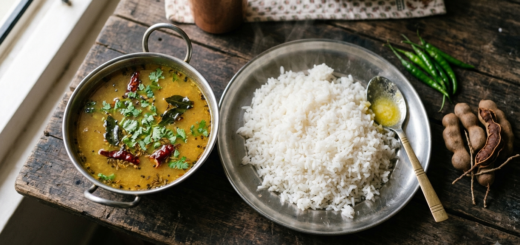
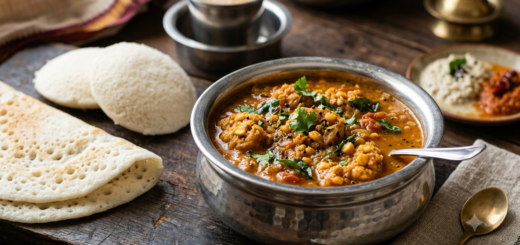
Scatter the coriander over the top. Cover the pot and leave it for ten minutes before serving, because sambar tastes markedly better once the tempering has settled into it. Serve hot with rice, idli, dosa or vada.
Best Vegetables for a Sambar Recipe Without Onion
Drumstick is the classic choice, yet the combination is genuinely flexible. Cut times matter more than the specific vegetable, so add slower items first.
| Vegetable | Approx. cook time | Best season |
|---|---|---|
| Drumstick | 10–12 minutes | Feb–May |
| Carrot, potato, pumpkin | 8–10 minutes | Year-round |
| Ash gourd, bottle gourd | 6–8 minutes | Summer |
| Brinjal, ladies finger | 5–6 minutes | Year-round |
| Radish | 10–12 minutes | Winter |
Keep the mix to three or four vegetables. More than that and no single flavour comes through clearly.
The Temple-Style Coconut Masala Variation
Udupi and North Karnataka kitchens take a different route to depth. Instead of leaning on packet masala, they grind a fresh paste, which is why their sambar recipe without onion tastes so rich.
Dry roast 1 tbsp coriander seeds, 1 tsp chana dal, ½ tsp urad dal, ¼ tsp methi and 3 dry red chillies in a teaspoon of oil. Once aromatic, add ¼ cup grated coconut and roast until it turns light gold. Grind with a little water into a coarse paste, then stir it into the sambar at step 5 and simmer for five minutes. Skip the packet sambar powder if you use this.
Making a Sambar Recipe Without Onion on the Stovetop
A pressure cooker is convenient, not essential, so you can cook this sambar on an open stove instead. Soak the dal for a full hour first, then boil it in 3 cups of water with the turmeric and a few drops of oil. It will take roughly 40 to 45 minutes to turn soft, so keep a kettle of hot water nearby and top up as it reduces.
Alternatively, cook everything in one pot. Add the vegetables directly on top of the dal in the cooker, give it 3 whistles, and continue from step 4. The vegetables soften more than they would separately, though the method saves a good fifteen minutes.
Fixing a Sambar Recipe Without Onion That Tastes Flat
Flat sambar almost always traces back to one of five causes. Diagnose it before you add anything else, because a second spoon of sambar powder rarely rescues a pot.
| Problem | Likely cause | Fix |
|---|---|---|
| Tastes flat or watery | Hing added off the heat, or too little | Redo a small tempering with hing and curry leaves |
| Too sour | Excess tamarind | Add ½ tsp jaggery and a little more cooked dal |
| Bitter aftertaste | Burnt fenugreek or over-roasted masala | Dilute with dal and a pinch of jaggery; no full rescue |
| Raw, dusty taste | Sambar powder not simmered long enough | Simmer another 5–6 minutes |
| Too thin | Dal not mashed, or too much water | Mash well and reduce uncovered for 5 minutes |
If you are avoiding tamarind altogether, tomatoes and kokum both work, though the method shifts slightly. Our separate guide to sambar without tamarind covers those adjustments in full.
Is This Sambar Recipe Without Onion Jain-Friendly?
Not as written, and this is the most common mix-up in allium-free cooking. No onion and no garlic is not the same thing as Jain, because Jain practice excludes all underground vegetables, not just alliums.
That exclusion covers potato, carrot, radish, beetroot, fresh ginger and turmeric root, all avoided under the principle of ahimsa since uprooting the plant destroys it entirely. This recipe contains both potato and carrot, so it is satvik but not Jain.
To make it Jain-friendly, swap the potato and carrot for ash gourd, pumpkin, raw banana or green beans. Keep the hing, which Jain kitchens use freely as the onion substitute of choice.
Sambar Recipe Without Onion: Nutrition and Storage
The figures below are calculated from the ingredient quantities in this recipe, using published composition data from the USDA FoodData Central database and the ICMR-National Institute of Nutrition. Treat them as estimates, since vegetable mix and oil quantity shift the totals.
| Per serving (about 300 ml) | Estimate |
|---|---|
| Calories | 250–280 kcal |
| Protein | 10–12 g |
| Carbohydrates | 35–40 g |
| Fat | 7–9 g |
| Fibre | 8–10 g |
One serving delivers roughly 10 to 12 grams of protein, mostly from the toor dal. Because a full cup of dal goes into a pot serving four, this sambar is considerably more substantial than a thin restaurant-style tiffin sambar.
Refrigerate leftovers in an airtight container for up to three days. Reheat with a splash of water, since it thickens overnight. Frozen sambar keeps for one to two months, although the tempering aroma fades noticeably. If you plan ahead, cook the dal a day early and store it separately.
What Home Cooks Get Wrong
Most disappointing attempts at a sambar recipe without onion trace back to these six habits.
- Adding hing to the pot instead of the oil. It needs fat and heat to release its aroma.
- Skipping the ten-minute rest. Sambar served straight off the flame tastes unfinished.
- Boiling the vegetables to collapse. Cook them just tender so they hold shape in the pot.
- Using an old packet of sambar powder. Ground spices fade within about six months.
- Adding salt only at the end. Salt the vegetables while they cook so the seasoning penetrates.
- Pouring tamarind extract in last. It needs a full five-minute boil to lose its raw edge.
The Bottom Line
A sambar recipe without onion succeeds on technique rather than on substitutes. Bloom the hing in hot oil, respect the fenugreek, balance the tamarind with jaggery, and let the pot rest before serving. Check your sambar powder and hing labels once, and the festival kitchen stays genuinely compliant.
If you enjoy this style of cooking, the same principles carry across to our rasam without garlic. Cook it once with the coconut masala variation, and you will understand why temple sambar has never needed onion.
Frequently Asked Questions
Does a sambar recipe without onion taste good?
It tastes good provided you rebuild the savoury base. Asafoetida, curry leaves and fenugreek supply the depth that onion normally contributes, while jaggery balances the tamarind. Temple and Udupi hotel sambar has always been made this way, and it is widely considered the more aromatic version.
What can I use instead of onion in sambar?
Asafoetida is the direct substitute, since it carries similar sulphur compounds. Use a generous pinch bloomed in hot oil. A freshly ground coconut and coriander seed masala adds body, and a teaspoon of jaggery restores the sweetness onion would have provided.
Can I make this sambar without tamarind?
Yes. Use two medium tomatoes or three or four kokum petals instead. Tomato is milder, so add it with the vegetables and reduce the added water slightly. Taste before adding jaggery, because tomato sambar needs less balancing.
Is sambar without onion and garlic healthy?
It remains a nutrient-dense dish. Lentils and vegetables supply protein, fibre and micronutrients whether or not alliums are present. Removing them lowers the fermentable carbohydrate load slightly, which suits some sensitive stomachs, though individual needs vary.
Is this sambar recipe without onion Jain-friendly?
Not as written, because it includes potato and carrot. Jain practice avoids all root vegetables, not only onion and garlic. Replace them with ash gourd, pumpkin or raw banana and the dish becomes Jain-friendly while the method stays identical.
Is sambar gluten-free?
The ingredients are naturally gluten-free, but the hing usually is not. Most compounded asafoetida sold in Indian stores uses wheat flour as a carrier. Buy a rice-flour or certified gluten-free hing if you are cooking for coeliac disease.
Which dal is best for sambar?
Toor dal, or split pigeon peas, gives the classic texture and body. Moong dal cooks faster but yields a lighter, thinner sambar. Some Kerala households blend toor and masoor, though toor alone remains the standard across Tamil Nadu and Karnataka.
What do I serve with this sambar?
Steamed rice with a spoon of ghee is the traditional pairing. It also works with idli, dosa, medu vada and pongal. A dry vegetable poriyal and appalam on the side complete a standard South Indian meal.
How long does sambar keep?
Three days refrigerated in an airtight container, or one to two months frozen. Reheat it gently with extra water, since it thickens as it sits. Adding a fresh tempering when reheating restores much of the lost aroma.
For background on the dish’s history and regional spread, the Wikipedia entry on sambar covers its lentil and tamarind foundation in detail.