Kannada Brahmin Style Sambar Recipe Easy Home
Kannada Brahmin Style Sambar Recipe Easy Cooking Home
Kannada Brahmin Style Sambar Recipe Easy Cooking Home is a classic South Indian lentil stew that brings authentic flavors from kitchens of Karnataka right into your house. This version focuses on simplicity and traditional tastes, perfect for everyday lunches or festive meals with rice, dosa, idli, or vada. In this article, you’ll learn how to make this beloved sambar with exact quantities, clear timings, and useful kitchen tips so you can cook like a pro at home.
Recipe Card
| Prep Time | 15 mins |
|---|---|
| Cook Time | 35 mins |
| Total Time | 50 mins |
| Servings | 4 servings |
| Difficulty | Medium |
Ingredients With Exact Quantities
For Dal & Vegetables
- ½ cup Toor Dal (split pigeon peas), rinsed well
- 1 cup Water (for cooking dal)
- ¼ tsp Turmeric Powder
- 1 medium Tomato, chopped
- ¼ cup Drumstick pieces (optional)
- ½ cup Brinjal (eggplant), chopped
- ½ cup Carrot, chopped
- 2 tbsp Tamarind Paste (adjust to taste)
- 5–6 Curry Leaves
- Salt to taste (about 1 tsp)
For Sambar Powder (Homemade)
- 2 tbsp Coriander Seeds
- 1 tbsp Chana Dal (Bengal Gram)
- 1 tbsp Urad Dal (Split Black Gram)
- 8–10 Dried Red Chillies (adjust to spice tolerance)
- 1 tsp Cumin Seeds
- ½ tsp Fenugreek Seeds
- ¼ tsp Asafoetida (Hing)
- ¼ tsp Turmeric Powder
For Tempering (Tadka)
- 2 tsp Oil
- 1 tsp Mustard Seeds
- 1 tsp Urad Dal (for tempering)
- 2 Dried Red Chillies, broken
- Pinch of Asafoetida (Hing)
- 5–6 Curry Leaves
Step-By-Step Instructions With Timings
1. Prepare Dal (15 mins)
Rinse ½ cup toor dal under cold water until water runs clear. In a pressure cooker, add rinsed dal, 1 cup water, and ¼ tsp turmeric. Cook for 3–4 whistles until dal is soft and mushy. Let pressure release naturally (about 10–12 mins). Once cooled, mash the dal thoroughly with a ladle. Set aside.
2. Make Homemade Sambar Powder (10 mins)
Heat a dry skillet on medium flame. Add 1 tbsp chana dal and 1 tbsp urad dal; roast for 1–2 minutes until slightly golden and aromatic. Add 2 tbsp coriander seeds, 8–10 dried red chillies, 1 tsp cumin seeds and ½ tsp fenugreek seeds. Understanding Kannada Brahmin Style Sambar is essential.
Roast for another 2–3 minutes until spices are fragrant. Add ¼ tsp turmeric powder and a pinch of hing for aroma; stir for 30 seconds then switch off heat. Let cool, then grind to a fine powder using a spice grinder.
3. Cook Vegetables (10 mins)
In a deep pan, add chopped tomatoes, drumstick pieces, brinjal and carrot with ½ cup water. Stir in 5–6 curry leaves and a pinch of salt. Cover and cook on medium heat for about 5–7 minutes until vegetables begin to soften.
4. Combine Dal, Tamarind & Spices (8 mins)
Add mashed dal to the simmering vegetables. Pour 2 tbsp tamarind paste and stir evenly. Add 2–3 tbsp of your freshly made sambar powder. Adjust seasonings with 1 tsp salt or as preferred. Add another ½ cup water if needed for consistency. Bring to a gentle boil, then reduce heat and let it simmer for 5 minutes so flavors meld together. This relates to Kannada Brahmin Style Sambar.
5. Tempering/Tadka (3 mins)
Heat 2 tsp oil in a small pan. Add 1 tsp mustard seeds and let them crackle. Add 1 tsp urad dal, broken dried red chillies, a pinch of hing, and 5–6 curry leaves. Stir for 30 seconds until urad dal turns golden. Pour this hot tempering over the simmering sambar. Turn off heat and cover the pan for 2 minutes so aromas infuse.
6. Serving
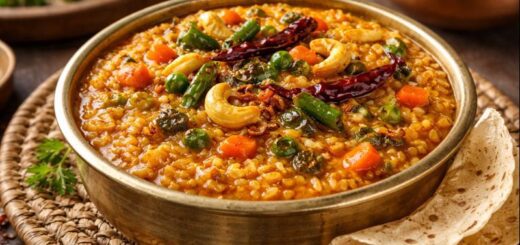
Your sambar is ready to serve! Pour hot Kannada Brahmin style sambar over steamed rice, or enjoy with idli, dosa or vada. The rich aroma of the tempering and spice blend will make your meal memorable.
Pro Tips From Personal Cooking Experience
- When I visited Karnataka temples, I was struck by how consistent the balance of tanginess and spice was in every sambar. Use tamarind paste sparingly at first and adjust to your taste.
- What surprised me most was how important the freshness of homemade sambar powder is. Grinding spices just before cooking enhances the flavor more than store-bought powders.
- I personally recommend roasting spices on low flame to avoid burning — even 30 seconds too long can make the powder bitter.
- Adding drumstick and brinjal not only boosts nutrition but gives a traditional texture that’s hard to replicate without these veggies.
Chef’s Notes
Substitutions
- If you don’t have fresh tamarind paste, use 1–2 tsp of tamarind concentrate dissolved in warm water.
- You can substitute store-bought sambar powder for homemade, but reduce quantity to 2 tbsp to avoid overpowering the dish.
- For a gluten-free version, ensure your tamarind paste and sambar powder are certified gluten-free.
Storage Tips
- Refrigerate leftover sambar in an airtight container for up to 3 days. Reheat gently on stove with a splash of water to loosen consistency.
- Sambar tastes even better the next day as spices continue to meld. Pour a little ghee on top before serving for enhanced aroma.
- You can freeze sambar for up to 1 month; thaw overnight in refrigerator then reheat.
Nutrition Information Per Serving
This nutrition estimate is based on typical South Indian homemade sambar made with toor dal and mixed vegetables. One serving (about one bowl or 200–220 ml) contains approximately: Learn more about Kannada Brahmin Style Sambar.
| Nutrient | Amount |
|---|---|
| Calories | 150–200 kcal |
| Carbohydrates | 25–30 g |
| Protein | 7–9 g |
| Fat | 4–6 g |
| Fiber | 6–8 g |
Sambar is rich in plant-based protein and fiber and provides vitamins from vegetables. According to nutrition data, one serving of homemade sambar typically supplies about 150–200 calories with a balanced nutrient profile.
Frequently Asked Questions (FAQs)
1. Can I make sambar without pressure cooker?
Yes. You can cook toor dal in a heavy pot with water, but it will take around 25–30 minutes until soft. Keep adding water as needed.
2. What is the best accompaniment for this sambar?
The classic pairing is steamed rice. It also goes well with idli and dosa. Serve with papad and coconut chutney for a full meal.
3. Is sambar powder essential?
Homemade sambar powder gives the best taste, but store-bought versions are okay. Adjust quantity to your spice tolerance.
4. Can I add other vegetables?
Yes — okra, potato, or pumpkin can be added. Just ensure they are chopped evenly and cooked thoroughly.
Learn More About Key Ingredients
Toor dal, the heart of this sambar, is a staple legume in South Indian kitchens; you can read about it on Wikipedia – Toor Dal for its cultural and nutritional significance.