Paal Payasam Recipe Milkmaid – Easy Hotel-Style Method
Paal Payasam Recipe Milkmaid is an easy way to make a creamy rice-and-milk dessert with a richer finish and less reduction time. This refreshed version uses 1 litre milk, 50 g rice and one 210 g Milkmaid Mini, which matches Nestlé Milkmaid’s current rice-kheer proportions. The result is thick, smooth and sweet enough for most tastes without adding sugar at the start.
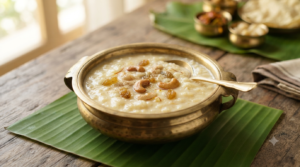
Creamy paal payasam made with milk, rice and Milkmaid, finished with roasted cashews and raisins.
Here, “hotel-style” describes the texture: glossy milk, very soft rice and a fuller body. It is not a fixed restaurant formula, so the key is controlling heat and stopping the payasam while it still flows. The dessert thickens further as it cools.
Paal Payasam Recipe Milkmaid at a Glance
This version keeps the ingredient list short while using the right order of cooking. Rice cooks first in milk, because condensed milk should go in only after the grains turn soft. Then Milkmaid cooks briefly with the rice and milk, so the payasam becomes creamy without excessive simmering.
| Detail | Guide |
|---|---|
| Prep time | 10 minutes |
| Cook time | 35–45 minutes on stovetop |
| Serves | 6 small dessert portions |
| Main base | 1 litre milk + 50 g rice |
| Milkmaid | 1 Mini pack, 210 g |
| Sweetness | No extra sugar initially |
Nestlé Milkmaid’s official rice-kheer recipe also pairs 1 litre milk with 50 g rice and one Milkmaid Mini. It lists a short final cook after adding Milkmaid, which is useful because prolonged boiling can make the finished payasam overly thick. You can compare the brand’s current method on the official Milkmaid rice kheer recipe.
Paal Payasam Recipe Milkmaid Ingredients
For Paal Payasam Recipe Milkmaid, use full-fat milk if you want the richest body, although toned milk also works. Short-grain rice gives a softer, creamier texture, while basmati stays more distinct. The old version of this post used roughly 190 g Milkmaid; the current Milkmaid Mini is 210 g, so this refresh uses one full Mini pack for a simpler measure.
- 1 litre full-fat milk
- 50 g raw rice, about ¼ cup
- 1 Nestlé Milkmaid Mini, 210 g
- ½ teaspoon cardamom powder
- 3 tablespoons chopped mixed nuts and raisins
- 1 teaspoon ghee, optional, for roasting nuts
- 5–6 saffron strands, optional
- Extra warm milk, only if needed to loosen the payasam before serving
Do not add sugar automatically because sweetened condensed milk already contributes substantial sweetness. Taste only after the Milkmaid has mixed through. If your family prefers a sweeter dessert, add a small amount of sugar at the end and dissolve it fully.
Paal Payasam Recipe Milkmaid: Step-by-Step Method
The easiest route is a heavy-bottomed saucepan on low to medium heat. This method gives you more control over reduction, so you can stop before the milk becomes too thick. Stir more often once the rice softens because starch settles quickly near the base.
- Wash and soak the rice. Rinse 50 g rice two or three times. Soak it for 15–20 minutes, then drain well.
- Warm the milk. Pour 1 litre milk into a heavy pan. Bring it to a gentle simmer over medium heat, then lower the flame.
- Cook the rice until soft. Add the drained rice and simmer gently. Stir every few minutes, especially around the bottom and corners of the pan.
- Check the grain. Pinch one cooked grain between your fingers. It should mash easily before you add condensed milk.
- Add Milkmaid. Stir in the full 210 g Mini pack. Keep the heat low and stir continuously for about 5–7 minutes.
- Add flavourings. Mix in cardamom and saffron, if using. Switch off the heat while the payasam still pours easily from a ladle.
- Finish with nuts. Roast nuts and raisins briefly in ghee, if desired, then fold them into the payasam.
- Rest before serving. Leave it for 10 minutes. Serve warm, or cool and refrigerate promptly for a chilled version.
The official Milkmaid method also tells cooks to soften the rice before adding condensed milk, then cook for another 5–7 minutes. That order matters because rice needs enough plain milk to cook properly before extra milk solids and sugar enter the pan. Nestlé describes Milkmaid as sweetened condensed milk intended for dessert use on its official brand page.
Paal Payasam Recipe Milkmaid: How to Get a Creamy Texture
In Paal Payasam Recipe Milkmaid, texture depends more on reduction than on adding extra ingredients. Keep the milk at a gentle simmer, because a hard boil can scorch the base and reduce liquid too quickly. The payasam should coat the ladle lightly but still fall back into the pan in a smooth stream.
For a thicker finish, mash one or two spoonfuls of cooked rice against the side of the pan. Then stir them back in. This releases more starch without adding cornflour, cream or extra condensed milk.
When should you stop cooking?
Stop while the payasam looks slightly thinner than your final target, because rice keeps absorbing liquid after cooking. A hot batch that looks perfectly thick can become spoon-standing after cooling. If that happens, add warm milk a little at a time and stir gently before serving.
| Problem | Likely cause | Fix |
|---|---|---|
| Too thin | Rice not fully soft or milk not reduced | Simmer 5–10 minutes longer |
| Too thick | Over-reduced or cooled fully | Add warm milk gradually |
| Scorched taste | Heat too high or little stirring | Transfer top layer immediately; do not scrape base |
| Too sweet | Extra sugar added early | Use no added sugar next time; dilute with milk now |
| Rice still firm | Milkmaid added too early | Cook rice fully before adding condensed milk |
What Changed From the Old Recipe
The old article had the right basic idea but left several practical gaps. It gave “½ tin, approximately 190 g” as the Milkmaid quantity, while the current Mini pack listed by Milkmaid is 210 g. Using one full Mini is easier to measure and aligns with the brand’s current rice-kheer recipe.
The earlier version also treated “hotel-style” as if it had one standard preparation. In practice, restaurants vary. This refresh defines the term by outcome instead: soft rice, richer milk solids and a flowing creamy texture.
Another improvement is sweetness control. Added sugar is not necessary at the beginning because Milkmaid is already sweetened. Starting without extra sugar gives you room to adjust the final dessert instead of trying to rescue an overly sweet batch.
Rice Choice, Milk Choice and Useful Substitutions
Sona Masuri, Ponni and other short-grain rice varieties make a soft paal payasam because they release starch readily. Basmati also works, although the grains stay more separate and add a stronger aroma. Avoid parboiled rice if you want a quick, pudding-like finish.
Full-fat milk gives the richest mouthfeel, while toned milk makes a lighter dessert. Plant-based milk changes both flavour and setting, so treat it as a variation rather than a direct substitute. Coconut milk is especially different because prolonged boiling can alter its texture.
Can I make it without Milkmaid?
Yes, but it becomes a different style of paal payasam because you must reduce milk longer and sweeten it separately. For a sugar-based version, Bhimas Cook already has an instant pal payasam recipe. If you prefer deeper caramel notes, use the separate paal payasam with jaggery guide instead of mixing jaggery into this Milkmaid version.
Paal Payasam Recipe Milkmaid: Mistakes to Avoid
The most common Paal Payasam Recipe Milkmaid mistake is adding condensed milk before the rice becomes fully soft. Rice cooks more predictably in plain milk, so finish that stage first. Another mistake is chasing thickness while the pan is still very hot.
- Do not use high heat after the milk starts simmering, because scorching develops quickly.
- Do not add extra sugar before tasting the finished payasam.
- Do not cook until the mixture looks like custard, since cooling will thicken it further.
- Do not scrape browned milk solids from a scorched base into the dessert.
- Do not skip stirring during the final 5–7 minutes after adding Milkmaid.
If you want a more traditional Kerala-style slow-cooked result, use the site’s Kerala pal payasam method. Keeping these versions separate helps each recipe serve a distinct intent: quick Milkmaid richness here, longer milk reduction there.
Paal Payasam Recipe Milkmaid: Storage and Reheating
Milk-and-rice desserts are perishable, so cool leftovers promptly rather than leaving the pan on the counter for hours. The Food Safety and Standards Authority of India advises refrigerating cooked food promptly and not leaving cooked food at room temperature for more than two hours. See the FSSAI safe-food guidance for general storage advice.
Transfer cooled payasam to a clean, covered container and keep it refrigerated. Milkmaid’s official rice-kheer page says refrigerated kheer can be stored for three to four days, although flavour and texture are best earlier. Reheat only the portion you need, and stir in a splash of milk if it has thickened.
Can you serve it cold?
Yes, chilled paal payasam works well because the condensed milk gives it a dense, creamy body. Chill it only after safe cooling and refrigeration. Before serving, stir well because rice and milk solids settle as the dessert stands.
Serving Ideas for Festivals and Family Meals
Serve Paal Payasam Recipe Milkmaid in small warm portions after a South Indian meal, because this version is richer than plain milk-and-sugar payasam. A few roasted cashews add contrast, while saffron gives colour without changing the base recipe. You can also serve it chilled in small bowls for a make-ahead dessert.
For festive meals, keep the garnish simple so the milk and cardamom remain dominant. If you are serving several sweets, reduce the portion size rather than thinning the recipe too much. The thick, flowing texture is the main reason to choose the Milkmaid method.
Why This Version Works Better for a Quick Dessert
Paal Payasam Recipe Milkmaid works best when you want the flavour of slow milk reduction without keeping the pan on the stove for a very long time. Sweetened condensed milk adds concentrated dairy solids and sugar, while the rice supplies starch for body. Together, they create a creamy texture with a shorter finishing stage.
For Paal Payasam Recipe Milkmaid, the practical rule is simple: cook rice first, add Milkmaid second, and stop before the payasam looks fully thick. That sequence is more reliable than adding everything together. It also makes sweetness easier to control because no extra sugar is required by default.
Paal Payasam Recipe Milkmaid FAQs
How much Milkmaid should I use for 1 litre of milk?
Use one 210 g Milkmaid Mini for 1 litre milk and 50 g rice. That ratio matches Milkmaid’s current official rice-kheer recipe. If you use a larger can, weigh or measure 210 g rather than guessing half the container.
Do I need sugar when using Milkmaid?
No extra sugar is needed at the start because Milkmaid is sweetened condensed milk. Taste the payasam after the final simmer. Add a little sugar only if your household prefers a noticeably sweeter dessert.
Which rice is best for this Milkmaid payasam?
Short-grain rice such as Sona Masuri or Ponni gives the creamiest texture because it softens well and releases starch. Basmati works too, especially if you prefer separate grains and a stronger aroma. Use about 50 g rice for 1 litre milk.
Why does my payasam become too thick after cooling?
Rice keeps absorbing liquid after the heat is switched off, so the payasam thickens as it rests. Stop cooking while it still flows easily. If it becomes too thick later, stir in warm milk gradually until the texture loosens.
Can I use cooked rice instead of raw rice?
Yes, cooked rice can shorten the process, but the texture and flavour will differ. Milkmaid’s official FAQ also permits cooked rice for kheer. Add it to simmering milk, soften it further, then add Milkmaid near the end.
Can I make this payasam in a pressure cooker?
Yes, but follow your pressure cooker’s safety instructions because milk can foam. Milkmaid’s official method allows pressure-cooking the rice in milk before adding condensed milk. For easier control and less cleanup, the stovetop method above remains the safer default for beginners.
How long can Milkmaid paal payasam stay in the fridge?
Milkmaid’s rice-kheer guidance says three to four days in an airtight refrigerated container. FSSAI also advises prompt refrigeration of cooked food. For best taste, cool the payasam safely, refrigerate it quickly and use a clean spoon each time.
Is hotel-style paal payasam a traditional fixed recipe?
No, “hotel-style” is not one standardized formula. Restaurants use different rice, milk and sweetness levels. In this recipe, the phrase simply means a richer, smoother and slightly thicker finish made with sweetened condensed milk.