Pepper Rasam Recipe Without Tomato For Cold And Cough
This pepper rasam without tomato is the soup I reach for the moment someone at home starts sniffling, coughing, or complaining of a scratchy throat. It is thin, peppery, and warming, and it comes together in about 20 minutes with pantry spices you already own. Here is the part most recipe pages skip: leaving the tomato out is not a shortcut or a compromise. Pepper and tamarind were the original rasam long before tomatoes reached Indian kitchens, so this version is arguably more traditional than the red one.
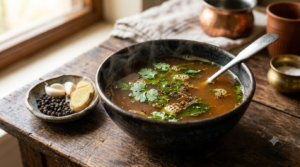
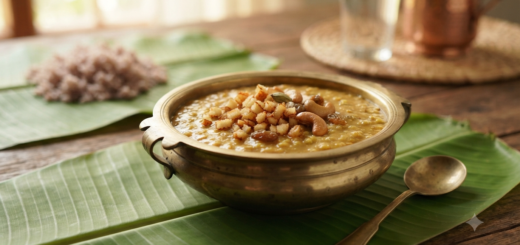
A warming bowl of pepper rasam without tomato, sipped as a soup during cold and cough season.
Below you get the exact quantities, the one technique that decides whether your rasam tastes fragrant or flat, and an honest look at why families sip it when they feel unwell.
A quick, friendly note before we cook: this is comforting home food and a folk remedy, not medicine. It can help you feel better and stay hydrated, but it does not treat an infection. See the safety note further down.
Pepper Rasam Without Tomato at a Glance
Short on time? Here is everything you need in one glance before the detailed steps.
- What it is: a tangy, peppery South Indian broth made from tamarind, crushed black pepper, cumin, garlic, and ginger.
- Why no tomato: tamarind supplies the sourness, so tomato is simply not needed. Skip it and the pepper shines.
- Best for: sipping like a soup when you have a cold, or ladling over hot rice with a spoon of ghee.
- Total time: roughly 30 minutes, start to bowl.
- The golden rule: take it off the heat the instant it froths. Never let it boil hard.
Why Pepper Rasam Without Tomato Is the Original Rasam
Rasam takes its name from the Telugu and Tamil word for essence or juice, and the earliest version was strikingly simple. Because tamarind and black pepper grew abundantly across South India, the first rasams were built on just those two things. Tomatoes arrived in Indian cooking far later, so a pepper rasam without tomato is closer to the dish’s roots than any modern tomato-heavy bowl.
This soup carries different names as you travel. In Tamil Nadu it is milagu rasam, in Telugu homes it is miriyala charu, and in Karnataka it becomes menasina saaru. The English word “mulligatawny” even comes from the Tamil milagu thanni, meaning pepper water. So when you make this, you are cooking a genuinely old recipe, not a trend.
Recipe Card
| Detail | Value |
|---|---|
| Prep time | 10 minutes |
| Cook time | 20 minutes |
| Total time | 30 minutes |
| Servings | 4 bowls |
| Difficulty | Easy |
Ingredients for Pepper Rasam Without Tomato
These are everyday spices, so you likely have most already. The pepper and cumin are the flavour engine, while garlic and ginger add the warmth that feels so good on a sore throat.
- 2 tablespoons whole black peppercorns
- 1 teaspoon cumin seeds (for crushing, plus ½ teaspoon for tempering)
- 1 lemon-sized ball of tamarind, or 1 tablespoon tamarind paste
- 6 large garlic cloves, lightly crushed
- 1 inch fresh ginger, peeled and finely chopped
- ½ teaspoon turmeric powder
- ¼ teaspoon asafoetida (hing, a savoury resin powder)
- 1 teaspoon mustard seeds
- 8–10 fresh curry leaves
- 1 tablespoon ghee, or neutral oil for a vegan version
- 1 teaspoon salt, or to taste
- 4 cups water
- 2 tablespoons chopped coriander leaves, to garnish
How to Make Pepper Rasam Without Tomato Step by Step
The method is quick because there is no dal to pressure-cook and no rasam powder to prepare. Follow the order below and watch the pot near the end, since timing is everything here.
- Extract the tamarind (5 minutes). Soak the tamarind in ½ cup warm water. Squeeze it well, then strain out the fibres. Set the tangy juice aside.
- Crush pepper and cumin (3 minutes). Using a mortar and pestle, coarsely crush the peppercorns with 1 teaspoon cumin. Keep it coarse, because a fine powder turns the broth bitter and cloudy.
- Temper the base (2 minutes). Heat the ghee in a pot on medium. Add mustard seeds and the remaining ½ teaspoon cumin. When they splutter, add curry leaves and asafoetida.
- Add the aromatics (2 minutes). Stir in the crushed garlic and ginger. Cook briefly until the raw smell fades and the kitchen turns fragrant.
- Pour in tamarind and water (3 minutes). Add the strained tamarind juice, 4 cups water, turmeric, and salt. Bring it to a gentle simmer, not a rolling boil.
- Add the crushed pepper (4 minutes). Stir in the crushed pepper and cumin. Let it simmer on low until the surface just starts to froth and foam.
- Finish the moment it froths (1 minute). As soon as that froth rises, switch off the heat. Scatter coriander over the top, cover, and rest it for two minutes before serving.
The Mistakes That Ruin a Good Rasam
Most disappointing rasam comes down to a few small errors. Fix these and yours will taste like a grandmother made it.
Boiling it too hard is the big one, so watch the pot closely. Rasam should never reach a violent, rolling boil after the pepper goes in. The aroma sits in delicate volatile oils, and hard boiling drives them off, leaving a dull, flat broth. Take the pot off the heat the second it froths.
Using stale pre-ground pepper. Freshly crushed peppercorns carry far more aroma and bite than powder that has sat in a jar for months. Since pepper is the whole point here, crush it fresh every time.
Forgetting to add extra tamarind. Tomato normally lends a little sourness, so when you leave it out, your tamarind has to carry that job alone. Taste the broth, and if it seems flat, add a touch more tamarind or a squeeze of lemon at the end.
Why Pepper Rasam Helps When You Have a Cold
Across South India, families have long turned to this peppery broth during the sniffly season, and the logic is easy to understand. Warm, spiced liquids feel soothing on an irritated throat, and the steam can ease a blocked nose while you sip. Because rasam is mostly water, it also keeps you hydrated when a fever or cold has dried you out.
The spices carry their own gentle reputation. Black pepper contains piperine, a compound studied for antioxidant activity, while ginger and garlic have long been valued in home kitchens for cold and cough season. Turmeric and cumin round out the mix. These are traditional roles, though, not a proven cure, so treat the bowl as comfort rather than treatment.
Safety note: pepper rasam can make a cold more bearable, but it is not a substitute for medical care. See a doctor if a fever runs high, if symptoms last beyond a few days, if breathing feels hard, or for a young infant. Go easy on the pepper for small children, in pregnancy, or if you have acid reflux or ulcers.
Substitutions and Storage Tips
This recipe bends easily around what you have. Below are the swaps I reach for most often.
- No tamarind? Stir in 1–2 tablespoons of lemon juice at the very end, off the heat, for a fresh tang.
- Want it heartier? Add ½ cup cooked toor dal after the tamarind boils, then warm it through for a thicker, soup-like bowl.
- No fresh curry leaves? Dried leaves work, although fresh ones give a brighter aroma.
- Vegan version: simply swap the ghee for a neutral oil. Everything else stays the same.
Leftovers keep well, so make extra when someone is unwell. Cool the rasam completely, then refrigerate it in a covered container for up to 3 days. Reheat gently on low heat, and add fresh coriander just before serving so it stays vibrant. You can freeze it too, though leave the coriander out until you reheat.
Make a Rasam Powder for Next Time
If you make pepper rasam without tomato often, it helps to keep a small jar of pepper-cumin powder ready. The classic ratio is roughly one part black pepper to four parts cumin seeds. Some cooks also add a little roasted toor dal and a dry red chilli. Dry-roast everything gently until fragrant, cool it fully, then grind to a coarse powder.
Stored in an airtight jar, this podi keeps for about two weeks and lets you skip the crushing step. On a busy sick day, that shortcut means a healing bowl is only ten minutes away. Just stir two teaspoons into the tamarind base at step six, then finish it the same way.
Nutrition Information Per Serving (Approximate)
| Nutrient | Per bowl |
|---|---|
| Calories | 60 kcal |
| Carbohydrates | 8 g |
| Protein | 1 g |
| Fat | 3 g |
| Fibre | 2 g |
| Sodium | 350 mg |
These figures are estimates and will shift with your ghee and salt. At roughly 60 calories a bowl, rasam stays light and fluid-rich, which is exactly why it suits recovery days.
How to Serve It
You have two classic options. When someone is under the weather, ladle it into a mug and let them sip it slowly like a clear soup. On a normal day, pour it over hot steamed rice, add a spoon of ghee, and pair it with a simple vegetable poriyal or a papad. For young children, mix a little rasam into soft rice with ghee, which is the gentle “rasam sadam” that South Indian kids grow up on.
If you enjoy a stronger garlic hit, my garlic pepper rasam without tomato leans harder into that flavour. For a lighter, citrusy cousin, try the lemon rasam without dal, and for an everyday base version, this quick rasam recipe is a handy starting point.
Before You Simmer
A good pepper rasam without tomato rewards restraint more than effort. Crush your pepper fresh, let the garlic and ginger bloom in the ghee, and pull the pot off the heat the instant it froths. Keep the tamarind generous since it is doing the tomato’s job. Serve it hot, sip it slow, and it will earn its place as your household’s go-to bowl whenever a cold comes knocking.
Frequently Asked Questions
Is pepper rasam without tomato authentic?
Yes, and it may be the most authentic form of all. The earliest rasams used only tamarind and black pepper, because both grew freely in South India. Tomato is a later addition, so a pepper rasam without tomato sits closer to the original dish.
Why is there no tomato in this rasam?
Tamarind already provides the sour, tangy base, so tomato becomes optional. Leaving it out lets the pepper and cumin flavours come through more clearly. Just add a little extra tamarind to make up for the sourness tomato would have contributed.
Does pepper rasam really help with a cold and cough?
It can make you more comfortable, mainly through warmth, steam, and hydration. The pepper, ginger, and garlic are traditionally used during cold season, though the broth is a soothing home food, not a medicine. For serious or lasting symptoms, please see a doctor.
Can I make it without garlic?
Yes. Garlic adds a savoury depth and is prized for cold season, but the rasam still tastes lovely without it. Skip it if you are allergic or observing a no-garlic day.
Is this rasam suitable for kids?
It can be, with less heat. Halve the pepper to about 1 tablespoon, and serve it mixed into soft rice with ghee rather than as a straight soup. That milder “rasam rice” is easy for little ones to eat.
Can I freeze pepper rasam?
Yes. Cool it fully and freeze it without the coriander garnish. Reheat it gently on low, then add fresh coriander just before serving so the aroma stays fresh.
Why should I not boil rasam hard?
Hard boiling drives off the fragrant oils in the pepper and spices, which flattens the taste. Rasam is meant to be heated only until it froths on the surface, then switched off straight away.
Can I use pepper powder instead of whole peppercorns?
You can in a pinch, but freshly crushed whole pepper tastes noticeably better. If you must use powder, add it near the end and keep the quantity slightly lower, since fine powder can turn the broth bitter.
External References
To read more about the spices in this bowl, see the overview of black pepper and its compounds on Healthline, and the background on rasam as a traditional South Indian dish on Wikipedia.