Moong Dal Payasam Kerala Style (Parippu Payasam)
Moong Dal Payasam Kerala style is a jaggery-sweetened lentil dessert finished with coconut milk, cardamom, dry ginger, cumin and fried coconut pieces. In Kerala, you will also hear it called cherupayar parippu payasam or parippu pradhaman. The key is simple: cook the dal fully first, simmer it with jaggery and thin coconut milk, then add thick coconut milk only at the end.
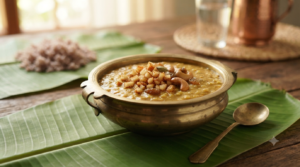
Kerala-style moong dal payasam made with jaggery, coconut milk, warm spices and fried coconut pieces.
This refreshed version keeps the easy home-cooking approach, but it fixes a few details that matter for flavour and texture. It also separates the Kerala method from Tamil-style pasi paruppu payasam, which may use dairy milk. Kerala Tourism lists parippu payasam among the classic payasam varieties served with a sadya, especially during Onam and other celebrations.
Moong Dal Payasam Kerala at a Glance
- Main base: split yellow moong dal, also called split green gram.
- Sweetener: jaggery, melted and strained if it contains visible impurities.
- Liquid: thin coconut milk for simmering and thick coconut milk for the final finish.
- Kerala flavour: cardamom, dry ginger powder and a small amount of cumin.
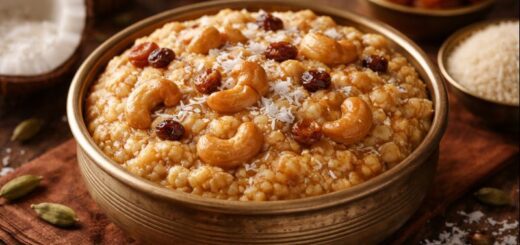
- Classic garnish: small coconut pieces fried in ghee; cashews and raisins are optional additions.
- Best texture: creamy but not completely smooth, with a little soft dal texture left in the bowl.
Kerala Tourism describes payasam as an important part of Onam sadya and notes that lentil-based versions are part of the wider payasam tradition. You can read its background on payasam in Onam sadya and its overview of Onasadya.
Why Moong Dal Payasam Kerala Style Tastes Different
The Kerala version gets its character from coconut milk rather than dairy milk. Jaggery adds a deep caramel note, while roasted moong dal gives the dessert a mild nuttiness. Dry ginger and cumin may sound unusual in a sweet, yet both add warmth and keep the coconut-jaggery flavour from tasting flat.
The Malayalam name is usually cherupayar parippu payasam or parippu pradhaman. Pasi paruppu payasam is a Tamil name, so using that name for Kerala households can blur the regional distinction. The recipes are related, but the finishing liquid and spice balance can differ by family.
Another difference is the garnish. Fried coconut bits are especially suited to this coconut-milk payasam because they echo the flavour already in the base. For Moong Dal Payasam Kerala style, that coconut garnish supports the regional flavour better than nuts alone. Cashews and raisins are common home additions, but they are not the only traditional way to finish the dish.
Moong Dal Payasam Kerala Ingredients
| Ingredient | Quantity | Why it is used |
|---|---|---|
| Split yellow moong dal | 1 cup | Gives body and a soft, nutty base |
| Water | 2½ cups, plus a little for jaggery | Cooks the dal and dissolves jaggery |
| Jaggery | ¾ to 1 cup, grated | Adds caramel sweetness; adjust to taste |
| Thin coconut milk | 2 cups | Simmering liquid that carries flavour |
| Thick coconut milk | 1 cup | Creates the rich final finish |
| Ghee | 2 tbsp | Roasts the garnish and adds aroma |
| Fresh coconut pieces | ¼ cup | Classic Kerala-style garnish and texture |
| Cashews | 10 to 12, optional | Adds crunch |
| Raisins | 1 tbsp, optional | Adds small bursts of sweetness |
| Cardamom powder | ½ tsp | Gives the main sweet spice aroma |
| Dry ginger powder | ¼ tsp | Adds gentle warmth |
| Cumin powder | ¼ tsp | Balances the sweet coconut flavour |
| Salt | 1 small pinch | Sharpens the jaggery flavour |
Jaggery varies a lot in sweetness and colour, so treat the quantity as a range rather than a fixed rule. Start with ¾ cup if you prefer a moderate sweetness. Add more only after tasting the dal-jaggery mixture before the thick coconut milk goes in.
Fresh coconut milk or canned coconut milk?
Fresh coconut milk gives the most traditional texture because you can keep the first thick extract separate from the thinner second extract. Canned coconut milk also works at home. Dilute part of it with water for the thin milk, then reserve undiluted coconut milk for the final stage.
The Kerala spice trio
Cardamom is the most familiar spice, but dry ginger and cumin make this version taste more distinctly like Kerala-style pradhaman. Use both lightly because they should sit in the background. A quarter teaspoon of each is enough for a one-cup dal batch.
How to Make Moong Dal Payasam Kerala Style
- Roast the dal. Pick over the dry moong dal, then roast it in a heavy pan over medium-low heat for 4 to 5 minutes. Stir often until it smells nutty and turns only lightly golden. Cool it briefly, then rinse well.
- Cook until soft. Add the roasted, rinsed dal and 2½ cups water to a pressure cooker. Cook until the grains are very soft, usually about 2 to 3 whistles depending on the cooker. Let pressure release naturally, then mash only part of the dal.
- Make jaggery syrup. Heat ¾ cup grated jaggery with about ¼ cup water until it dissolves. If the jaggery has grit or visible residue, strain the warm syrup through a fine metal strainer.
- Combine dal and jaggery. Add the syrup to the cooked dal. Simmer on low heat for 4 to 5 minutes so the sweetness moves through the dal. The dal must already be soft before this stage.
Finish the coconut-milk stage
The second half of Moong Dal Payasam Kerala preparation is about controlling heat. Thin coconut milk can simmer, while thick coconut milk should only warm through at the end.
- Add thin coconut milk. Pour in 2 cups thin coconut milk. Keep the heat low to medium and simmer gently for about 5 minutes. Stir often because the base can catch at the bottom.
- Add the spices. Mix in cardamom, dry ginger, cumin and a small pinch of salt. Taste now and add a little more jaggery only if needed.
- Finish with thick coconut milk. Lower the heat fully, add 1 cup thick coconut milk and stir. Warm it through without a hard boil, then switch off the heat.
- Fry the garnish. Heat ghee in a small pan. Fry coconut pieces until golden at the edges, then add cashews and raisins if using. Pour the hot garnish and ghee over the payasam.
This sequence is the most important part of Moong Dal Payasam Kerala style. Thin coconut milk can cook with the dal, but thick coconut milk belongs at the end. Traditional Kerala versions follow the same broad pattern of dal, jaggery, second coconut-milk extract and first extract at the finish.
The Coconut Milk Rule That Prevents Splitting
Do not boil the payasam hard after adding thick coconut milk. High heat can make the final mixture look oily or grainy and can dull the fresh coconut aroma. Instead, lower the flame, stir in the thick milk, warm it briefly and switch off.
If you use homemade coconut milk, think of it as two jobs. The thin second extract handles cooking and reduction. The thick first extract provides richness. In Moong Dal Payasam Kerala style, that order gives better control than adding all the coconut milk at once.
The same rule helps when reheating. Warm only the portion you need over low heat and loosen it with a little hot water or thin coconut milk. Avoid repeated boiling because the texture becomes heavier each time.
How Thick Should Parippu Payasam Be?
The ideal texture is pourable when hot and thicker after resting. It should coat a spoon, but it should not set like halwa or become as thin as sweetened milk. Leave a few soft pieces of dal intact so the dessert has texture.
Payasam naturally thickens as it cools because both cooked dal and coconut milk add body. Therefore, stop cooking while it still looks slightly looser than your final target. If it becomes too thick later, add warm water or thin coconut milk a few tablespoons at a time.
| Problem | Likely cause | Easy fix |
|---|---|---|
| Payasam is too thick | Too much reduction or cooling | Add warm thin coconut milk or water slowly |
| Payasam is too thin | Too much liquid | Simmer before adding thick coconut milk |
| Dal feels hard | Jaggery added before dal softened | Next time, cook dal fully before sweetening |
| Coconut milk looks split | High heat after thick milk | Use low heat and stop before a rolling boil |
| Flavour feels flat | Missing salt or spice balance | Add a pinch of salt and measured dry ginger/cumin |
Traditional Garnish: Coconut Pieces First
Small coconut pieces fried in ghee add both aroma and a gentle chew. They also make the dessert feel more connected to Kerala pradhaman than a garnish made only with nuts. Cut the coconut into small, even pieces so they brown at the same rate.
Cashews and raisins are fine if your family likes them. However, you can keep the garnish simple with only fried coconut bits. For a fully plant-based version, replace ghee with coconut oil; coconut milk and jaggery are already plant-based.
The older version of this recipe called the dish naturally vegan even though its ingredient list included ghee. That is not accurate. A vegan version needs a plant-based fat in both the base and garnish.
Moong Dal Payasam Kerala Variations
Once you understand the coconut-milk method, you can change the recipe without losing control of the texture. For a richer version, increase the final thick coconut milk slightly and reduce the thin milk. For a lighter version, keep the thick coconut milk closer to ¾ cup and add extra thin milk as needed.
If you want an ingredient-led version, Bhimas Cook also has a separate moong dal payasam with coconut milk recipe and a moong dal payasam with jaggery recipe. This page should stay focused on the Kerala-style method, especially the spice profile and two-stage coconut milk.
For a completely different Kerala dessert, compare it with Kerala-style pal payasam. Paal payasam uses milk and rice, while parippu payasam uses lentils, jaggery and coconut milk. Keeping those identities separate helps you choose the right sweet for the meal.
Can You Make It Without a Pressure Cooker?
Yes. Roast and rinse the dal, then simmer it in a heavy saucepan with about 3 cups water. Keep the lid partly closed and stir from time to time. Add small amounts of hot water if the pan dries before the dal becomes fully soft.
Moong Dal Payasam Kerala Storage and Reheating
Fresh payasam tastes best on the day you make it. If you have leftovers, cool them promptly and refrigerate in a clean, covered container. The Food Safety and Standards Authority of India advises keeping prepared leftovers cold, below 5°C, and reheating cooked food thoroughly before eating.
For quality, use coconut-milk payasam within about two days. Reheat only what you plan to serve, and use gentle heat. Add a splash of water or thin coconut milk because chilled payasam becomes noticeably thicker.
Serving It for Onam, Vishu or a Family Meal
Moong Dal Payasam Kerala style works well as the sweet course in a sadya because its jaggery and coconut flavour stands apart from milk-based desserts. Kerala Tourism includes lentil payasam among the regular sweet dishes associated with sadya. The exact menu varies by region and family.
Serve it warm if you want the coconut and spice aromas to feel strongest. Room-temperature payasam tastes thicker and sweeter, while chilled payasam becomes much denser. If you prepare it ahead, keep the final consistency a little loose.
A ripe banana is a classic partner for many Kerala payasams, and some families enjoy mixing a little banana into the dessert. That is a serving choice rather than a requirement, so keep the main pot plain and let people add banana at the table.
Mistakes That Change the Result
- Soaking before dry roasting: wet dal will steam first and roast unevenly. Roast dry dal first, then rinse and cook.
- Adding jaggery too early: get the dal fully soft before sweetening it.
- Skipping the thin/thick coconut milk split: this removes one of the easiest controls over richness and texture.
- Boiling thick coconut milk hard: gentle heat preserves a smoother finish and fresher aroma.
- Using too much dry ginger or cumin: both should support the jaggery, not dominate it.
- Calling the ghee version vegan: use coconut oil or another plant-based fat if you need a vegan payasam.
- Over-mashing the dal: leave a little texture instead of turning the whole batch into a paste.
Before You Serve It
The best Moong Dal Payasam Kerala style recipe is not about adding more richness at every step. It is about timing: roast the dal gently, cook it fully, sweeten it with jaggery, simmer with thin coconut milk and finish with thick coconut milk off strong heat.
For the most Kerala-specific flavour, keep the dry ginger, cumin and fried coconut pieces. Cashews and raisins can stay optional. Taste once before the final coconut milk so you can adjust sweetness without repeatedly reheating the finished payasam.
Frequently Asked Questions
What is Moong Dal Payasam Kerala style called in Malayalam?
It is commonly called cherupayar parippu payasam or parippu pradhaman in Malayalam. The dish uses split green gram or moong dal with jaggery and coconut milk. Names and small recipe details vary by household and region.
Is Kerala moong dal payasam the same as pasi paruppu payasam?
They are closely related lentil sweets, but the regional style can differ. Pasi paruppu is Tamil terminology, while Kerala cooks commonly use cherupayar parippu. Kerala-style versions strongly favour coconut milk and often include dry ginger, cumin and fried coconut pieces.
Can I use canned coconut milk?
Yes. Use diluted canned coconut milk as the thin portion and reserve undiluted milk for the finish. Avoid sweetened coconut cream, since it changes the sweetness and makes the recipe harder to balance.
Why should thick coconut milk go in last?
Thick coconut milk gives the final richness and fresh coconut aroma. Adding it near the end reduces the time it spends over heat. Keep the flame low and avoid a vigorous boil after it goes in.
Can I make this Moong Dal Payasam Kerala recipe vegan?
Yes, but replace the ghee. Use coconut oil or another suitable plant-based cooking fat for frying the coconut pieces and nuts. The dal, jaggery, coconut milk and spices themselves are plant-based.
Can I use sugar instead of jaggery?
You can, but the flavour will be quite different. Jaggery gives parippu payasam its deeper caramel note and traditional colour. If you use sugar, treat it as a variation rather than the classic Kerala-style version.
Why did my payasam become too thick after cooling?
Cooked dal continues to absorb liquid as the dessert rests, so thickening is normal. Warm it gently and add a little thin coconut milk or hot water. Add liquid in small amounts because the texture loosens quickly.
Can I prepare parippu payasam one day ahead?
Yes. Make it a little looser than usual, refrigerate it promptly, then reheat gently the next day. Add a small splash of water or thin coconut milk before serving because the chilled payasam will thicken.