Puran Poli Chana Dal Recipe: Soft Dough & Smooth Puran
This puran poli chana dal recipe pairs a soft wheat covering with smooth, jaggery-sweetened dal. The useful trick is not a secret ingredient: drain the cooked dal well, then cook the filling until it holds its shape. A flexible dough and a properly heated tawa matter just as much.
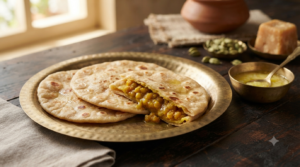
Soft homemade puran poli stuffed with smooth chana dal and jaggery filling, served warm with a little ghee.
Puran poli has regional relatives called bobbatlu, holige, obbattu and boli. This version keeps chana dal and jaggery at the centre, with a little maida in the dough for stretch. Results can vary with flour, jaggery moisture and rolling technique, so treat the method as guidance rather than a guarantee.
Puran Poli Chana Dal Recipe at a Glance
- Planned yield: roughly 10 to 12 medium polis, depending on portion size. This is an estimate, not a measured batch yield.
- Soaking: allow about 45 to 60 minutes for the dal if convenient; this is an untested planning range.
- Dough rest: allow about 30 to 45 minutes, or until the dough feels relaxed. This is also an estimate.
- Filling: 1½ level cups dry chana dal plus 1½ loosely filled cups grated jaggery.
- Key test: the cooled filling holds a ball without sticking heavily to your fingers.
- Cooking: brown both sides while checking that the flour layer has no raw, gummy patches.
Use a standard 240 ml measuring cup throughout this recipe. Measure chana dal while dry, not after soaking. Grate the jaggery before measuring, and avoid packing it firmly into the cup. These volume measures are a starting formula, not an independently tested gram-based ratio.
Why This Puran Poli Chana Dal Method Works
For puran poli chana dal, the main balance is between a soft covering and a filling that is not wet. Chana dal must become tender enough to mash smoothly, yet its extra water needs to drain away. Jaggery releases moisture when heated, so a filling that looks dry before adding it may loosen in the pan.
Resting helps the wheat dough hydrate and stretch around the filling. A very stiff dough cracks, while a very wet puran leaks through the seal. The aim is a smooth centre inside a thin but completely cooked flour layer.
Ingredients for Puran Poli Chana Dal
For the chana dal and jaggery filling
- 1½ cups dry chana dal (split Bengal gram), rinsed
- 3 cups fresh water (about 720 ml) for pressure cooking, with extra only if your cooker requires it
- 1½ cups loosely measured, grated or powdered jaggery
- 1 teaspoon ground cardamom
- 1 small pinch of nutmeg, optional
- 1 teaspoon ghee, optional
- 1 small pinch of salt
For the soft poli dough
- 2 cups whole wheat flour (atta)
- ½ cup maida (plain flour)
- 2 tablespoons neutral oil or melted ghee
- ¼ teaspoon salt
- ¼ teaspoon turmeric, optional
- About ¾ to 1 cup lukewarm water, added slowly as needed
- A little flour or oil for shaping, plus optional ghee for the tawa
The water range is a guide because flour brands absorb moisture differently. Start at the lower end and add small splashes until the dough feels soft and slightly tacky. Do not pour in the full amount automatically.
Allergen note: this recipe contains wheat and gluten. Ghee and milk are dairy ingredients, so choose oil and a dairy-free serving option when necessary. Check jaggery, flour and any optional toppings for cross-contact if cooking for someone with allergies. Chana dal is also a legume; those with a known pulse or chickpea allergy should avoid it.
Step-by-Step Puran Poli Chana Dal Recipe
1. Soak and cook the dal until tender
Rinse the dry chana dal, then soak it if time allows. Drain the soaking water and place the dal in a suitable pressure cooker with the fresh cooking water. Follow the cooker’s minimum-liquid and fill-limit instructions.
Cook until a dal grain crushes easily between two fingers. Pressure cookers and soaking times differ, so a fixed whistle count cannot guarantee the result. Let the pressure release safely according to the manufacturer’s directions before opening the lid.
Drain the cooked dal in a sieve. Set aside the liquid for a savoury dish if you plan to use it promptly. Do not tip that liquid into the puran, since extra water makes the filling hard to seal.
2. Cook the jaggery puran until it holds shape
For puran poli chana dal, put the drained dal and grated jaggery in a broad, heavy pan. Stir over low to medium heat as the jaggery melts. The mixture may turn runny before it starts to thicken, which is normal.
Keep stirring so the sweet mixture does not scorch. Once it gathers into a soft mass and pulls away from the sides, mash it well or use a puran yantra. Add cardamom, the optional nutmeg, salt and ghee near the end.
Let a small spoonful cool briefly, then test whether it holds shape. If it spreads like a paste, cook the main batch a little longer. If hard pieces of dal remain, mash or pass the mixture through a food mill without adding water.
3. Knead the dough and let it rest
Combine atta, maida, salt and optional turmeric. Rub in the oil or ghee, then add lukewarm water little by little. Knead until the dough is smooth, soft and pliable rather than firm like ordinary chapati dough.
Do not eat or taste raw flour or dough, and do not let children taste it.
Cover it to prevent a skin from forming. Give it the estimated resting period, then check the texture instead of relying on the clock. If the dough springs back sharply, let it rest a little longer under cover.
4. Portion, fill and seal each poli
Let the filling cool enough to handle safely, but do not leave cooked dal filling sitting out for hours. Divide the puran into roughly equal balls, then divide the dough into the same number of pieces. The number of portions determines the final yield.
Flatten one dough piece into a cup and place the filling inside. Bring the edges together and pinch the seam closed. Press the ball gently between your palms to spread the puran before using a rolling pin.
5. Roll gently without breaking the covering
Dust the surface lightly, or use a little oil if that suits your dough. Roll from the centre toward the edges and turn the poli often. A medium-thin disc is easier to manage than an extremely thin first attempt.
When a small crack appears, ease the pressure rather than rolling harder. A tear can signal coarse filling, stiff dough or too much moisture. Patch the seam with a tiny piece of dough if needed.
6. Cook the dough thoroughly on a tawa
To finish puran poli chana dal, warm a heavy tawa over medium heat. Lay the rolled poli on it and wait for small bubbles and pale cooked spots before turning. Cook the other side, then flip again as needed so both surfaces develop light golden patches.
Do not stop at surface colour alone. Check a thicker edge or the centre of a trial poli: the covering should look set and cooked, not sticky, floury or translucent. If raw dough remains, lower the heat and cook longer with another turn. High heat can brown the outside before the inner layer cooks.
Serve warm with a little ghee if you like. A clean towel can keep finished polis supple during a short serving period, but it is not a safe substitute for refrigeration when storing leftovers.
How to Check the Puran Poli Chana Dal Filling
For puran poli chana dal, filling texture is more useful than a fixed minute count. Jaggery and cooked dal can contain different amounts of water. Check a cooled sample before stuffing. The puran should press smoothly, form a loose ball and spread under gentle rolling without running out.
| Test | Ready when | If not ready |
|---|---|---|
| Pan test | Mixture gathers and leaves the sides | Stir longer on low heat |
| Cool sample | Small spoonful holds a ball | Cook off more moisture |
| Finger test | No firm dal grains remain | Mash or mill the filling |
| Rolling test | Puran spreads without leaking | Fix the seal or filling texture |
A filling can also become too dry. If it crumbles when pressed, it may tear the dough instead of spreading evenly. Stop cooking once it holds together and remains soft enough to shape.
Puran Poli Chana Dal Troubleshooting
Why does the filling turn sticky?
Sticky puran usually holds too much water after boiling, or the jaggery adds extra moisture. Return it to a wide pan over low heat and stir often. Test a cooled spoonful before deciding whether more cooking is needed.
Why does puran poli tear during rolling?
The dough may be too stiff, or the filling may have coarse dal grains. Rest the dough under cover, then press it gently. Smooth puran and a light hand help more than heavy flour dusting.
Why does the poli become hard?
Too much dry flour and prolonged high heat can toughen the outer layer. Keep the dough soft and use medium heat. Serve soon after cooking, or store promptly and reheat properly later.
What if the dough still looks raw?
Put the poli back on a moderate tawa and turn it until the flour layer cooks through. A brown outside does not prove the centre is done. For the next poli, reduce the heat slightly and roll to a more even thickness.
Which Flour Works for Puran Poli Chana Dal?
All three choices have a place, though they handle differently. Whole wheat flour brings a fuller flavour, while maida makes the covering easier to stretch. A mix offers a middle ground for cooks who prefer some atta flavour without a stiff wrapper.
| Dough choice | Likely texture | Useful for |
|---|---|---|
| Only atta | Hearty, slightly firmer | Whole-wheat preference |
| Atta and maida | Flexible, tender | Learning to seal and roll |
| Mostly maida | Thin, stretchy covering | Some bobbatlu styles |
For a more maida-forward approach, see the bobbatlu recipe with maida. The site’s Andhra-style bobbatlu guide covers a related regional preparation. These are variations, not substitutes for cooking the wheat covering fully.
What “Hotel-Style” Means for Puran Poli Chana Dal
For this home recipe, “hotel-style” describes an even filling, a thin layer of dough and a neat golden finish. It does not promise a restaurant-tested method. You also do not need extra jaggery or ghee to achieve that appearance.
The biggest difference comes from preparation. Smooth the filling, rest the dough and roll without forcing it. A small final brush of ghee adds shine if you enjoy it.
Safe Cooling and Reheating for Puran Poli Chana Dal
Leftover puran poli chana dal and its cooked filling need prompt chilling, so do not leave them on the counter until completely cold. Divide leftover puran or polis into shallow containers and refrigerate promptly. Place small warm portions in the fridge rather than waiting hours for them to cool.
Refrigerate within two hours of cooking or serving. In very hot conditions above 32°C, use a one-hour limit. Keep the fridge at 4°C or colder, then eat refrigerated leftovers within two to three days or freeze portions for later.
For reheating, warm the poli evenly until its centre reaches 74°C. A food thermometer provides the most dependable check where the filling is thick enough to measure. Turn the poli on the tawa or rotate it in the microwave so no cold pockets remain. Add a little ghee after heating, not instead of heating.
These storage and reheating limits follow guidance from the US Centers for Disease Control and Prevention and Health Canada. For Indian household food-safety resources, consult the Food Safety and Standards Authority of India.
Nutrition, Allergens and Serving Ideas
In puran poli chana dal, the dal adds pulse protein and fibre, but jaggery remains a concentrated sweetener. Treat puran poli as a festive food rather than assuming jaggery makes it sugar-free. The calories per poli will vary with portion size, flour, jaggery and extra ghee, so this article does not claim a tested nutrition value.
Serve with ghee, milk or a savoury katachi amti if you enjoy that pairing. The drained dal water can form a base for the amti, provided you use it promptly or chill it within the same food-safety limits. The ICMR-National Institute of Nutrition offers broader dietary guidance.
If you cook for guests, tell them the recipe includes wheat and, when used, dairy. Check toppings for nuts and other allergens, and do not assume a dish is allergen-free simply because it contains no eggs.
What Beginners Often Miss
- Measure dry dal before soaking, since soaked dal occupies more space.
- Drain the boiled dal before adding jaggery, because sugar draws out moisture.
- Check a cooled spoonful of puran instead of judging the hot pan alone.
- Use only a little dusting flour so the covering stays soft.
- Roll evenly, and look for uncooked dough rather than relying on brown spots.
- Chill extras promptly, even if the filling tastes sweet enough to seem shelf-stable.
If you prefer another regional variation, the Gujarati puran poli recipe follows a different style. Keeping the preparations separate helps readers choose the filling and dough they actually want.
Before You Make Puran Poli Chana Dal Again
The most useful adjustment is to learn what the dough and puran should feel like. Start with medium portions, then change the size once you can seal them comfortably. Keep the heat moderate and confirm that the centre cooks through.
Record your actual number of polis and cooking time if you repeat this batch. That gives you a more trustworthy kitchen reference than a promised yield or a universal whistle count.
Puran Poli Chana Dal Frequently Asked Questions
Do I have to soak chana dal first?
No, soaking is optional, but it may help the dal cook more evenly. The suggested 45 to 60 minutes is a planning estimate, not a tested requirement. Cook until the dal crushes easily, then drain it well.
How much jaggery should I use with chana dal?
For this formula, start with 1½ loosely filled cups of grated jaggery for 1½ cups of dry chana dal. This is a volume-based recipe ratio, not a weighed or trial-verified sweetness standard. Adjust a future batch after tasting.
Can I use only whole wheat flour?
Yes, replace the maida with more atta if you prefer. Add water slowly and keep the dough soft, since whole wheat flour may need a different amount. The finished poli may taste slightly heartier.
Can I make the filling a day ahead?
Yes, prepare the filling and put it into a shallow container for prompt refrigeration. Keep it cold until you are ready to portion it. Do not leave the cooked puran out overnight.
Can I replace jaggery with sugar?
Yes, but the filling will taste different. Add sugar gradually because sweetness and moisture vary, and then check the cooled texture. The classic jaggery flavour will be less pronounced.
How do I know the flour covering is fully cooked?
Check a thicker edge or cut into a trial poli. The dough should be set, without raw, sticky or translucent flour patches. If it still looks gummy, return it to moderate heat and turn it again.
How long can leftover puran poli stay outside?
Refrigerate cooked leftovers within two hours, or within one hour when the surrounding temperature exceeds 32°C. Do not wait until they feel completely cold. Discard food that has exceeded those limits.
How should I reheat a refrigerated poli?
Heat it evenly on a tawa or in a microwave until the centre reaches 74°C. Turn or rotate it during heating, since the outside can warm before the filling. Add ghee once it is thoroughly hot.
Are puran poli, bobbatlu and holige the same?
They are closely related sweet stuffed flatbreads, but regional recipes vary. Some use different dal, flour, sweetener or cooking methods. This version focuses on a chana dal and jaggery filling.