Cherupayar Parippu Payasam Coconut Milk Kerala Recipe
Cherupayar Parippu Payasam Coconut milk recipe works best when the moong dal is roasted first, the jaggery is strained, and thick coconut milk goes in only at the end. The result is a Kerala-style payasam with a nutty dal base, deep jaggery flavour, and a smooth coconut finish rather than a boiled or oily texture.
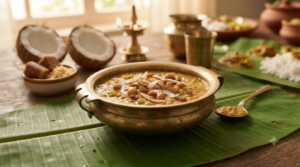
Kerala-style cherupayar parippu payasam made with roasted moong dal, jaggery, coconut milk and a fried coconut garnish.
This refreshed method keeps the familiar festive character of parippu payasam while making the sequence clearer for home cooks. It also explains fresh versus canned coconut milk, sweetness adjustments, texture fixes, vegan options, and safe storage.
Cherupayar Parippu Payasam Coconut Recipe at a Glance
This version uses split yellow moong dal, jaggery, thin coconut milk, and thick coconut milk in stages. Roast the dal, cook it until soft, blend it with strained jaggery syrup, simmer with the thinner coconut milk, and finish with the thick extract after lowering the heat.
| Detail | Guide |
|---|---|
| Prep time | 15 minutes |
| Cook time | 35–40 minutes |
| Total time | About 50–55 minutes |
| Servings | 6 |
| Difficulty | Easy to medium |
| Main flavour | Roasted moong dal, jaggery, coconut |
| Best texture | Pourable when hot, thicker after cooling |
Kerala Tourism lists payasam as an important part of Onam Sadya and names Parippu Pradhaman among Kerala’s many payasam varieties. Its overview of payasam in Onam Sadya also notes the broad use of coconut milk, ghee, grains or dals, sugar or jaggery, spices, nuts, and raisins.
Ingredients for Cherupayar Parippu Payasam Coconut Milk
For this Cherupayar Parippu Payasam Coconut recipe, the ingredient list stays flexible because jaggery strength and coconut milk thickness vary from kitchen to kitchen. Start at the lower end of the jaggery range, then taste before adding more.
- 1 cup or about 200 g split yellow moong dal, also called cherupayar parippu
- 3 to 3½ cups water for cooking the dal, plus a little extra if needed
- 350 to 500 g jaggery, grated or broken into small pieces
- 2 to 2½ cups thin coconut milk, also called the second extract
- 1 cup thick coconut milk, also called the first extract
- 2 tbsp ghee for tempering
- ¼ cup small coconut pieces or thin coconut chips
- 10 to 12 cashew nuts, optional
- 10 to 15 raisins, optional
- ½ tsp cardamom powder
- ¼ tsp dry ginger powder, optional but traditional in many Kerala versions
- A small pinch of cumin powder, optional
- A pinch of salt
For a less-sweet family dessert, 350 to 400 g jaggery is usually a sensible starting point. For a darker, sweeter festive version, add more only after tasting because different jaggery blocks vary in sweetness and flavour.
Fresh Coconut Milk, Canned Coconut Milk, or Carton Milk?
Fresh coconut milk gives the most distinct Kerala-style aroma, but canned coconut milk is a practical substitute. The key is not the package; it is keeping one portion richer and another portion thinner so the payasam cooks without becoming heavy.
Using fresh coconut
Blend freshly grated coconut with warm water and squeeze it through a clean cloth or fine strainer. The first squeeze gives the thick extract. Blend the same coconut again with more warm water to make the thinner second extract.
Using canned coconut milk
Reserve about 1 cup of undiluted coconut milk for the final stage. Dilute another portion with water for the thin coconut milk. Since brands vary, add water gradually until the thin portion pours easily but still tastes clearly of coconut.
Carton coconut beverages are usually much thinner than canned coconut milk, so they do not behave the same way. If you use one, expect a lighter result and adjust the final consistency before serving.
How to Make Cherupayar Parippu Payasam Coconut Milk
The order matters more than speed. Cook the dal fully before the jaggery stage, reduce the mixture before adding the richest coconut milk, and keep the final heat gentle so the coconut flavour stays fresh.
- Roast the dal. Heat a heavy pan over medium-low heat. Dry roast the moong dal for 3 to 5 minutes, stirring often, until it smells nutty and looks only lightly golden. Do not brown it deeply.
- Rinse and cook. Rinse the roasted dal, then add it to a pressure cooker with about 3 cups water. Cook until very soft. Three whistles is a useful guide on many cookers, but use softness rather than whistle count as the final test.
- Prepare the jaggery syrup. Heat the jaggery with about ½ cup water until it dissolves. Strain the syrup through a fine sieve, especially when using traditional unrefined jaggery that may contain small particles.
- Combine dal and jaggery. Lightly mash part of the cooked dal while leaving some grains visible. Add the strained jaggery syrup and simmer for 5 to 7 minutes, stirring often so the base does not catch.
Finish the Cherupayar Parippu Payasam Coconut Milk Base
- Add thin coconut milk. Pour in the thin coconut milk and simmer gently for 7 to 10 minutes. Stir from the bottom because jaggery and dal can settle in a heavy layer.
- Add the spice powders. Mix in cardamom, optional dry ginger, optional cumin, and a pinch of salt. Taste now and adjust the sweetness before the thick coconut milk goes in.
- Finish with thick coconut milk. Lower the heat to its gentlest setting or switch it off. Stir in the thick coconut milk and warm briefly. Avoid a hard boil because the rich coconut milk can separate and lose its fresh aroma.
- Temper and serve. Heat ghee in a small pan. Fry the coconut pieces until golden, then fry the cashews and raisins if using. Pour everything over the payasam and stir once before serving.
Why the Two Coconut Milk Stages Matter
Cherupayar Parippu Payasam Coconut milk gets better body when the thinner extract cooks with the dal, while the thick extract finishes the dessert. The thin portion can simmer without making the payasam excessively rich. The thick portion then supplies aroma and creaminess near the end.
This is also why adding all the coconut milk at the beginning is less reliable. Long boiling can make the final flavour flatter, while the payasam may look oily as the fat separates. A staged method gives you more control over both reduction and richness.
The technique matches the broader Kerala practice of using coconut milk in sweet preparations. Kerala Tourism describes payasam as a core Sadya dessert and notes that lentil payasam is among the desserts served in the feast. See its Onasadya guide for the wider meal context.
How Sweet Should Cherupayar Parippu Payasam Be?
There is no single correct jaggery level because recipes vary by family and by the strength of the jaggery. A darker block can taste deeper and more molasses-like even when the weight is the same.
Start with 350 to 400 g jaggery for 1 cup of dry moong dal if you prefer balanced sweetness. Increase toward 500 g for a sweeter festive style. Always dissolve and strain the jaggery before mixing it with the dal.
If the payasam tastes too sweet after adding the jaggery, do not dilute it with plain cold water at the end. Add warm thin coconut milk instead, then simmer briefly before the thick coconut milk stage so the texture stays cohesive.
Cherupayar Parippu Payasam Coconut Milk Troubleshooting
Most Cherupayar Parippu Payasam Coconut problems come from heat control, timing, or liquid balance rather than the ingredients themselves. The table below shows the fastest fix and the step that usually caused the issue.
| Problem | Likely cause | Fix |
|---|---|---|
| Payasam is too thick | Too much reduction or long resting | Add warm thin coconut milk a little at a time |
| Payasam is too thin | Too much cooking water | Reduce gently before adding thick coconut milk |
| Dal feels hard | Dal was not fully cooked first | Cook the dal until soft before adding jaggery |
| Texture looks oily | Thick coconut milk boiled hard | Use very low heat after the final coconut milk |
| Payasam tastes gritty | Jaggery impurities were not strained | Dissolve and filter the jaggery syrup |
| Bottom scorches | Heat is high or stirring is infrequent | Use a heavy pan and stir from the base |
Remember that parippu payasam thickens as it stands because the cooked dal continues to absorb liquid. Stop cooking while it is slightly looser than your preferred serving texture.
Traditional Garnish Versus Home-Kitchen Variations
Golden fried coconut pieces give this dessert a distinctly Kerala-style bite and are worth keeping. Cashews and raisins are common additions, although some households use only coconut pieces and ghee.
Dry ginger adds warmth that balances jaggery, while a tiny pinch of cumin gives a savoury aromatic edge. Both are optional, so leave them out if you want a cleaner cardamom-forward payasam.
If you prefer a dairy-free version, replace ghee with coconut oil. For a dairy-based variation, use the separate cherupayar parippu payasam with cow milk recipe instead of mixing the two methods.
Serving Cherupayar Parippu Payasam Coconut Milk
Cherupayar Parippu Payasam Coconut milk can be served warm, at room temperature, or chilled. Warm payasam gives the clearest roasted-dal aroma, while a chilled bowl becomes thicker and tastes more like a pudding.
During a Kerala Sadya, payasam is part of the festive sweet course. Kerala Tourism describes payasam as an essential part of Onam Sadya and notes that different homes serve different varieties. That makes this recipe suitable for Onam, Vishu, family celebrations, and ordinary weekend cooking.
Serve modest portions because jaggery, coconut milk, and ghee make the dessert rich. If you need a coconut-free version, Bhimas Cook also has a separate parippu payasam without coconut milk recipe with a different flavour profile.
Cherupayar Parippu Payasam Coconut Storage and Reheating
Cool leftover Cherupayar Parippu Payasam Coconut promptly, transfer it to a clean covered container, and refrigerate it. The Food Safety and Standards Authority of India advises storing leftover cooked food cold, below 5°C, and reheating cooked food thoroughly before eating. See FSSAI’s Food Safety at Home guidance for general storage practice.
For best taste and texture, use refrigerated payasam within 2 to 3 days. Reheat only the portion you need over low heat. Add a little warm water or thin coconut milk if it has become too thick.
Do not leave a large pot cooling on the counter for many hours. Divide leftovers into smaller containers so they chill faster, especially after a festive meal.
What This Refreshed Recipe Fixes
The older Cherupayar Parippu Payasam Coconut page gave the basic cooking sequence, but it left several practical questions unanswered. This version explains how to separate thick and thin coconut milk, how to scale sweetness, how to troubleshoot split or thin payasam, and how to store leftovers more safely.
It also removes the old nutrition estimate because the stated calorie range did not fit a recipe containing 500 g jaggery, coconut milk, dal, and ghee. Fresh coconut extracts vary greatly in fat content, so an exact nutrition table would need a defined coconut-milk product and a measured final yield.
Another important distinction is garnish style. Coconut pieces are a strongly traditional fit for Kerala parippu payasam, while cashews and raisins remain optional household variations rather than mandatory ingredients.
Before You Serve
Cherupayar Parippu Payasam Coconut milk is easiest to control when you treat it as three stages: soft dal, jaggery reduction, then coconut milk. Keep the thickest coconut milk for last, and stop cooking while the payasam is still slightly loose.
Use the jaggery range as a guide rather than a fixed command because sweetness varies. Fry coconut pieces for the most traditional texture, then add nuts only if your family enjoys them.
Frequently Asked Questions
Is cherupayar parippu payasam the same as parippu pradhaman?
They are often used for the same Kerala-style moong dal dessert, although family recipes differ. The common base is roasted split moong dal, jaggery, and coconut milk, followed by aromatic spices and a fried garnish.
Can I make Cherupayar Parippu Payasam Coconut milk without fresh coconut?
Yes. Use canned coconut milk for the thick portion, then dilute part of it with water for the thinner cooking portion. Add the undiluted coconut milk near the end and avoid a vigorous boil.
Why should I roast moong dal before making payasam?
Light roasting develops a nutty aroma and gives the dal a deeper flavour before it cooks. Keep the heat moderate because deeply browned dal can make the dessert taste bitter or overly toasted.
Why does my parippu payasam become thick after cooling?
The cooked dal continues to absorb liquid as the payasam rests, so the mixture naturally thickens. Stop cooking while it is a little looser than you want, or stir in warm thin coconut milk before serving.
Can I make this payasam vegan?
Yes. The coconut milk base is already dairy-free, so replace the ghee with coconut oil. Also check packaged ingredients if you need strict vegan labelling.
Can I reduce the jaggery?
Yes. Start around 350 g for 1 cup of dry moong dal if you prefer moderate sweetness, then taste after the jaggery has simmered with the dal. Add more only if needed.
Why should thick coconut milk go in last?
Thick coconut milk carries more coconut fat and aroma, so prolonged hard boiling can make it separate and taste flatter. Add it at the end, warm gently, and switch off before the payasam boils vigorously.
How long can I keep parippu payasam in the refrigerator?
For best quality, use it within 2 to 3 days and keep it covered and cold. FSSAI advises storing leftovers below 5°C and reheating cooked food thoroughly before eating.