Rasam Recipe With Dal: Easy South Indian Paruppu Rasam
This rasam recipe with dal is the everyday South Indian comfort bowl that turns a handful of pantry staples into a tangy, peppery broth in about 45 minutes. The dal is what sets it apart, because cooked toor dal gives the rasam a soft body and gentle creaminess that a plain tamarind rasam never has. Get two things right, the tamarind balance and the froth at the end, and you have a bowl worth pouring over hot rice with a spoon of ghee. Here is the honest, tested method, plus the small fixes most recipes skip.
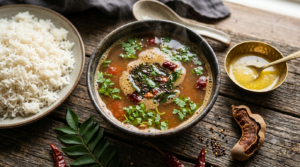
A steaming bowl of dal rasam garnished with fresh coriander, served with rice and ghee.
Dal Rasam at a Glance
Before the details, here is the quick picture so you know what you are signing up for.
- Prep time: 15 minutes, mostly hands-off while the dal cooks.
- Cook time: 30 minutes.
- Serves: 4 as part of a meal, or 2 as a hearty soup.
- Taste: tangy, mildly spicy, warm, with a soft lentil body.
- Best with: steamed rice and ghee, or sipped on its own when you have a cold.
- Diet: vegetarian, and easily vegan if you temper in oil instead of ghee.
What Makes This Rasam Recipe With Dal Special
Paruppu means lentils in Tamil, so paruppu rasam is simply the version where cooked toor dal is stirred in at the end. That dal is the whole point. It mellows the sharp tamarind, rounds out the pepper, and gives the broth a soft finish instead of a thin, watery one.
People often confuse three dishes here, so let me draw clean lines. Plain rasam is just spiced tamarind water, while sambar is thick and loaded with dal and vegetables. This rasam recipe with dal sits neatly in between, since it is thinner than sambar but more nourishing than a clear rasam.
If you want the thicker cousin instead, our Kerala sambar with coconut covers that side. For most weekday meals, though, this lighter dal rasam is the one families reach for again and again.
The dish travels under many names too. Tamil kitchens call it paruppu rasam, while in Karnataka the same bowl becomes bele saaru. Telugu homes make a close relative called charu. The base idea stays constant across all of them.
Ingredients for This Rasam Recipe With Dal
Everything here is a regular Indian pantry item, so you likely have most of it already. The quantities below make four comfortable servings.
Main Ingredients
- ½ cup toor dal (pigeon peas), rinsed and drained
- 1 large tomato, chopped
- 1 tbsp tamarind paste, or a gooseberry-size ball of tamarind soaked in warm water
- 1 tsp turmeric powder
- 1 tbsp rasam powder, store-bought or homemade
- 1 tsp salt, adjusted to taste
- 2 to 3 cups water, added gradually for the consistency you like
- 2 to 3 tbsp fresh coriander leaves, chopped for garnish
For the Tempering (Tadka)
- 2 tbsp ghee or oil
- 1 tsp mustard seeds
- ½ tsp cumin seeds
- 6 to 8 curry leaves
- 1 pinch asafoetida (hing)
- 1 to 2 dry red chillies, optional
No rasam powder on hand? You can dry-roast and grind cumin, coriander seeds, black pepper, and a couple of dried red chillies for a quick blend. For a proper batch, our Brahmin-style rasam powder keeps for weeks.
How to Make This Rasam Recipe With Dal
The method is genuinely easy, so follow the order and you will not go wrong. The one rule that matters most comes at the very end, and I have flagged it clearly.
- Cook the dal. Rinse the toor dal until the water runs clear. Pressure cook it with 1.5 cups water and ¼ tsp turmeric for 3 to 4 whistles. Once the pressure releases, mash the dal smooth. This mash is what gives the rasam its body.
- Soak the tamarind. If you are using whole tamarind, soak a small ball in warm water for 10 to 15 minutes, then squeeze out the juice. Using paste instead? Just measure a tablespoon and keep it ready.
- Build the base. In a deep pot, combine the tamarind water, chopped tomato, rasam powder, remaining turmeric, salt, and 1 cup water. Bring it to a low boil. Simmer for 7 to 8 minutes, until the tomato softens and the raw tamarind smell fades.
- Add the dal. Stir in the mashed toor dal. Pour in 1 to 2 more cups of water, depending on how thin you like it. Let it simmer gently until froth forms on top, about 4 to 5 minutes.
- Temper. Heat the ghee in a small pan. When the mustard seeds splutter, add cumin, curry leaves, dry chilli, and a pinch of hing. Fry briefly, then pour this sizzling tadka over the rasam.
- Finish. Stir gently, scatter the coriander, and serve hot.
The Froth Rule Nobody Explains
Here is the secret that separates a fragrant rasam from a flat one. Once the dal goes in, never let the rasam reach a rolling boil. You want it to simmer only until a light froth rises on the surface, then switch off the heat.
Boiling hard after this point drives off the volatile aromatics from the rasam powder and tamarind. The result tastes dull and muddy. So treat that froth as your finish line, because it appears exactly when the flavour peaks.
Regional Variations Worth Trying
One base recipe, many family versions. Each one is a small tweak, yet each changes the character of the bowl.
- No onion, no garlic: the classic temple and festival style, kept pure with just tamarind, tomato, and spices.
- Garlic-pepper version: coarsely crush garlic, black pepper, and cumin, then add it in place of some rasam powder for a bolder, warming kick.
- Without tomato: skip the tomato and let the tamarind carry all the sourness, as in our no-tomato rasam.
- Andhra style: often looser and spicier, closer to the everyday pappu charu that Telugu homes serve daily.
- Tamil Nadu classic: the balanced original, walked through in our traditional Tamil Nadu rasam.
Pro Tips for the Best Rasam Recipe With Dal
These are the small moves experienced cooks make without thinking. They are also the difference between fine and memorable.
- Crush fresh black pepper and add it just before tempering, the way many Chennai homes do, for an extra warm bite.
- If the tamarind is very sour, drop in a ¼ tsp of jaggery after step 4 to balance the tang.
- Always simmer the tamarind base before adding dal, so the dal does not clump or sink.
- Temper in ghee rather than oil when you can, since ghee carries the mustard and curry-leaf aroma far better.
- Add salt to the base early, but taste again after the dal, because the lentils soften the seasoning.
Common Mistakes and Quick Fixes
A rasam recipe with dal is forgiving, yet a few things go wrong often enough to name them. Here is how to rescue each one on the spot, so a small slip never ruins the pot.
- Too sour? Add a little hot water and a pinch of jaggery, then simmer for a minute.
- Too bland? It usually needs salt or a fresh pinch of crushed pepper, not more rasam powder.
- No froth forming? The mix was probably boiled too hard, so lower the flame and let it settle gently next time.
- Too thick? Loosen it with hot water, never cold, so the temperature and flavour hold.
- Bitter edge? The tempering likely burnt. Fry the tadka only until the seeds pop, then pull it off the heat.
Storage and Make-Ahead
A rasam recipe with dal is best eaten fresh, though it keeps for a short while with care. Store any leftover in an airtight container in the fridge for up to 2 days.
When you reheat, warm it gently on the stove and refresh it with a quick new tempering, since that revives the aroma. A clever make-ahead trick is to freeze the cooked rasam base without the extra water in small portions, then thaw and dilute when you need a fast bowl. Avoid leaving rasam at room temperature for more than a few hours, because the tamarind sours quickly in warm weather.
Serving Suggestions
The traditional way wins for a reason. Ladle the rasam over hot steamed rice, add a spoon of ghee, and pair it with papad and a dry vegetable poriyal.
On a cold or rainy day, though, skip the rice and sip it straight from a bowl like soup. This rasam recipe with dal also works alongside idli or dosa when you want something lighter than sambar. Many families reach for a bowl when someone has a cold, since the pepper and tamarind feel soothing on a scratchy throat.
Nutrition and Dietary Notes
This is a light, wholesome dish, so it fits most everyday diets easily. The figures below are a rough per-serving estimate and will shift with your salt, ghee, and dal quantity.
| Nutrient | Per serving (approx.) |
|---|---|
| Calories | 80 to 100 kcal |
| Protein | 4 to 5 g |
| Carbohydrates | 12 to 15 g |
| Fat | 4 to 6 g |
| Fibre | 3 to 4 g |
Two quick notes for careful eaters. Most asafoetida (hing) is bound with wheat flour, so check the label if you eat gluten-free. To keep the bowl fully vegan, simply temper in oil instead of ghee.
Before You Ladle It Out
A good rasam is less about a long ingredient list and more about balance and timing. Cook the dal soft, tame the tamarind, and honour that froth-and-switch-off moment, and this rasam recipe with dal will taste like it came from a South Indian grandmother’s kitchen. Start with the classic version above, then branch into the garlic-pepper or no-tomato variations once you know the rhythm. Serve it hot, and it rarely lasts long on the table.
Frequently Asked Questions
Can I make rasam without dal?
Yes, you can skip the dal entirely and make a clear rasam with just tamarind, tomato, spices, and water. It comes out thinner and lighter, which many people prefer as a plain soup. The dal version simply gives more body and a gentler flavour.
What is the difference between rasam and sambar?
Rasam is thin, tangy, and soup-like, while sambar is thick and hearty with plenty of dal and vegetables. They also use different spice blends, rasam powder versus sambar powder. In a full meal, rasam usually follows sambar.
Which dal is best for this rasam?
Toor dal, also called pigeon peas, is the standard and gives the best soft body. Moong dal works in a pinch and cooks faster, though the flavour is milder. Avoid heavier dals like chana, since they make the rasam too dense.
Can I make this rasam recipe with dal without rasam powder?
Yes, and it still tastes great. Dry-roast and grind cumin, coriander seeds, black pepper, and a couple of dried red chillies for a fresh instant blend. Freshly ground spices often taste brighter than an old store packet.
Why is my rasam not frothy?
The froth disappears when the rasam is boiled too hard after adding the dal. Keep the flame low and switch off the moment a light froth rises. That froth is the sign the aromatics are at their peak.
Is dal rasam good for a cold or cough?
Many South Indian homes serve it exactly for that reason. The black pepper, cumin, and tamarind feel soothing and warming on a sore throat. It is a comfort remedy by tradition, not a medical treatment, so treat it as one part of feeling better.
How do I fix rasam that is too sour?
Add a little hot water to dilute the tang, then stir in a small pinch of jaggery. Simmer briefly and taste again before adding more. Going slow here is safer than over-correcting.
Can I freeze rasam?
Freezing finished rasam is not ideal, since the texture and aroma fade. A better route is to freeze the concentrated base without extra water, then dilute and temper fresh when serving. For daily eating, though, it is best made fresh or kept refrigerated for up to 2 days.
For more on this beloved dish and its many regional forms, the overview of rasam on Wikipedia is a useful read, and you can learn about the star lentil itself on the pigeon pea page.