Sakkarai Pongal Brahmin Recipe With Jaggery Easy
Sakkarai Pongal Brahmin Recipe With Jaggery Easy Cooking
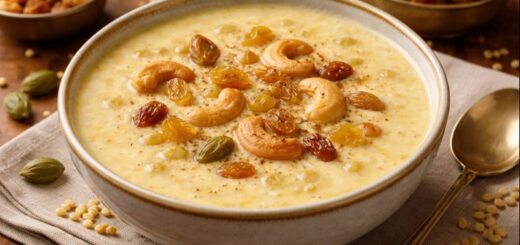
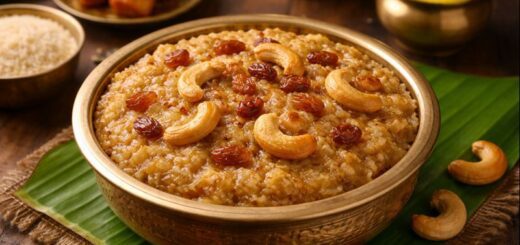
Sakkarai Pongal Brahmin Recipe is a traditional South Indian sweet made with rice, yellow moong dal, jaggery and ghee. In this Sakkarai Pongal Brahmin Recipe With Jaggery Easy Cooking article, you’ll learn how to prepare this festive dish step-by-step — just like it’s offered as prasadam in temples during harvest celebrations like Pongal or Sankranti. This recipe brings together creamy textures, rich aroma and festive flavours perfect for family gatherings and temple naivedhyam.
Recipe Card
| Prep Time | 15 mins |
| Cook Time | 40 mins |
| Servings | 4 servings |
| Difficulty | Medium (Traditional) |
Ingredients With Exact Quantities
- 1 cup Raw rice (short-grain recommended)
- ¼ cup Yellow moong dal (washed)
- ¾ cup Grated jaggery (adjust to sweetness)
- 3 tbsp Ghee (clarified butter)
- ½ cup Water (for jaggery syrup)
- 4 cups Water (for cooking rice & dal)
- ½ tsp Cardamom powder
- 10 Cashew nuts
- 12 Raisins
- 1 pinch Salt
- Optional: 1 pinch Edible camphor (for temple flavour)
Step-By-Step Instructions
Below is the traditional method, with exact timings so that even a beginner can follow along.
Step 1: Prepare Rice and Lentils (10 mins)
Wash the raw rice and moong dal separately under running water. Soak the rice with dal in warm water for about 10 minutes. This helps the grains cook uniformly and get that creamy texture.
Step 2: Cook Rice & Dal (20 mins)
Heat a heavy-bottomed pan or pressure cooker and add the soaked rice + dal with 4 cups of water and a pinch of salt. Cook until the rice and dal are very soft and mushy — about 3–4 whistles in a pressure cooker or 20 minutes on a stovetop simmer. You want a porridge-like consistency. Strain any excess water if too watery.
Step 3: Prepare Jaggery Syrup (5 mins)
In a separate pan, add the grated jaggery with ½ cup of water. Heat gently until the jaggery dissolves completely and becomes a smooth syrup. Strain the jaggery syrup through a fine mesh to remove impurities — this ensures a silky final texture.
Step 4: Roast Nuts and Fruits (5 mins)
In another small pan, heat 1 tbsp ghee. Roast the cashew nuts until golden, then add raisins and roast until they puff up. Set aside.
Step 5: Combine All Ingredients (5 mins)
To the cooked rice and dal mixture, pour the jaggery syrup and stir continuously on low flame. Add the remaining ghee, cardamom powder and a pinch of edible camphor (optional for temple style flavour). Mix well and let it simmer for 3–4 minutes until the pongal thickens.
Step 6: Garnish and Serve (2 mins)
Stir in the roasted cashews and raisins. Switch off the heat and let rest for a couple of minutes before serving. Serve warm with a drizzle of ghee on top.
What I Learned While Cooking This
When I visited a traditional Brahmin household in Tamil Nadu during the Pongal festival, I noticed that the key to a perfect Sakkarai Pongal Brahmin Recipe lies in the jaggery quality — free-flowing paagu vellam gives you a richer colour and aroma. I personally recommend using freshly harvested rice for best texture. The aroma of roasted ghee with cardamom filled the air in that kitchen — a sensory experience I will never forget!
Pro Tips From Personal Cooking Experience
- Always strain jaggery syrup to eliminate impurities like sand or husk particles.
- Add jaggery only after the rice and dal are fully cooked — adding too early can prevent proper cooking.
- For extra richness, a splash of warm milk (¼ cup) at the final stage adds creaminess.
- If the Sakkarai Pongal thickens too much upon cooling, reheat with a splash of warm water or milk.
Chef’s Notes: Substitutions & Storage Tips
If jaggery is not available, substitute with brown sugar (not white sugar) for a similar deep flavour. Cashews and raisins can be swapped with almonds and sultanas. To store leftovers, cool the pongal completely and refrigerate in an airtight container for up to 2 days. Reheat gently with a splash of warm water or milk to regain the porridge consistency.
Nutrition Information Per Serving
| Calories | ≈ 270 kcal |
| Carbohydrates | ≈ 48 g |
| Protein | ≈ 3 g |
| Fat | ≈ 10 g |
| Sugar | ≈ 18 g (from jaggery) |
These values are approximate and based on traditional Sakkarai Pongal ingredients. A standard serving of sweet pongal gives around 272 calories.
Serving Suggestions
Sakkarai Pongal is traditionally offered as prasadam during South Indian festivals. Serve it warm as a dessert, or as part of a festive meal alongside savoury items like vada or payasam. Many temples in Tamil Nadu and Andhra Pradesh serve this dish to devotees — a symbol of prosperity and sweetness after the harvest. Visit TTD Official Website to explore temple rituals where sweet offerings are central.
Frequently Asked Questions
Can I make this vegan?
Yes, you can substitute ghee with coconut oil, but note that the aroma will differ from traditional ghee-rich flavour.
Why does my pongal become hard after cooling?
As it cools, cooked rice and jaggery solids tighten — reheat with water or milk to soften.
Can I add cardamom after cooking?
Yes, but adding during cooking releases a more integrated aroma.
Conclusion
This Sakkarai Pongal Brahmin Recipe delivers a rich, sweet, and aromatic festive dish rooted in South Indian tradition. Whether made for the Pongal festival or a special family gathering, following the precise steps and quality ingredients ensures a dish that’s creamy, flavourful and delightfully sweet. The combination of jaggery, ghee and cardamom evokes the soul of festival feasts and temple offerings.