Jain Sambar Recipe Without Vegetables: Easy 40-Minute Method
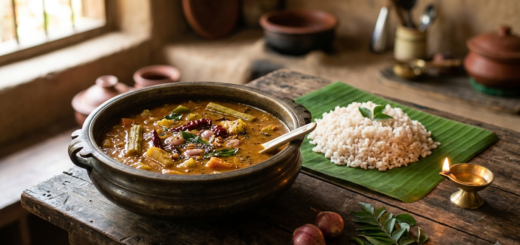
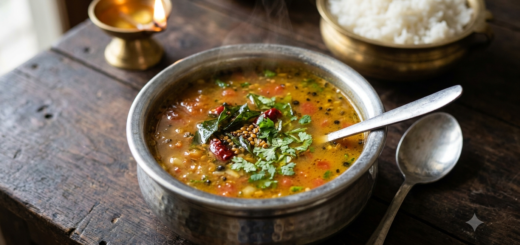
Jain Sambar Recipe Without Vegetables is a South Indian lentil stew built on toor dal, tamarind and tempered spices alone. Nothing else goes into the pot, so there is no potato, no carrot, no onion or garlic, and no vegetables at all.
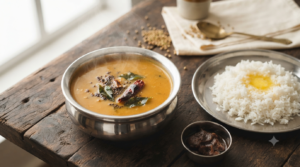
A vegetable-free Jain sambar made with toor dal, tamarind and a mustard-curry leaf tempering, served with steamed rice.
Yet most recipes labelled “Jain sambar” online still add bottle gourd, pumpkin or drumstick. Cooks who genuinely need a vegetable-free bowl are left guessing. This guide fixes that with exact quantities, honest timings, corrected nutrition figures, and the two tricks that stop a no-vegetable sambar tasting like thin dal water.
Jain Sambar Recipe Without Vegetables at a Glance
Here is the whole Jain Sambar Recipe Without Vegetables in six lines, before the detail below.
- What it is: a toor dal and tamarind sambar with zero vegetables and zero root ingredients.
- Total time: about 40 minutes, and roughly 12 of those minutes are unattended pressure cooking.
- Yield: 4 generous bowls, or close to 1.5 litres of finished sambar.
- Per bowl: around 215 kcal and 11 g of protein, because the dal load per serving is high.
- Jain check: no roots, no onion, no garlic; asafoetida and shop-bought sambar powder still need a label check.
- Serve with: steamed rice or khichdi rather than overnight-fermented idli batter.
| Detail | Value |
|---|---|
| Prep time | 10 minutes |
| Cook time | 30 minutes |
| Total time | 40 minutes |
| Servings | 4 bowls |
| Cuisine | South Indian, Jain |
| Difficulty | Easy |
Why This Jain Sambar Recipe Without Vegetables Skips Every Root
Jain cooking avoids root vegetables because pulling up a root kills the whole plant and disturbs the soil life around it. Potato, carrot, beetroot, radish, sweet potato, yam, onion, garlic and fresh ginger are therefore all out. Above-ground produce is a different matter, since harvesting it leaves the plant alive. That one rule is why a Jain Sambar Recipe Without Vegetables leans so heavily on tamarind and tempering.
Jain does not actually mean “no vegetables”
This is the correction almost every competing page misses. A Jain diet forbids roots, not vegetables in general, so bottle gourd, pumpkin, drumstick and beans are all permitted in ordinary Jain cooking. Many households also skip brinjal and other multi-seeded produce, though that varies by family.
So why cook a sambar with nothing in it at all? Because plenty of people want one anyway. Some are observing Paryushan or another vrat where the rules tighten further. Others simply have no fresh produce at home, or want a smooth dal-style bowl for a child.
If you want the festival version instead, our Jain sambar recipe for Paryushan covers the stricter timing rules.
Where most “Jain sambar” recipes online go wrong
Search results for this dish are genuinely unreliable. Several popular versions list shallots or a “small onion” while still calling themselves Jain. Others use fresh ginger, which is a rhizome and therefore avoided by observant Jains, although dried ginger powder is usually accepted.
Read any recipe carefully before trusting the label. Practices also differ between Digambar and Shvetambar traditions and between individual families, so follow your own household custom when a source disagrees with it.
Ingredients for Jain Sambar Recipe Without Vegetables
The Jain Sambar Recipe Without Vegetables below serves four people comfortably.
- Toor dal, split pigeon peas – 1 cup (200 g)
- Water – 4 cups total (about 1 litre), split across cooking and thinning
- Tamarind – 2 tablespoons, soaked, or 1 tablespoon ready-made paste
- Sambar powder – 2 teaspoons, label-checked
- Turmeric powder – ½ teaspoon
- Asafoetida (hing) – ⅛ teaspoon
- Mustard seeds – 1 teaspoon
- Cumin seeds – ½ teaspoon
- Curry leaves – 10 leaves
- Green chillies – 2, slit (optional)
- Dried red chilli – 1, broken (optional, for the tempering)
- Salt – 1 to 1½ teaspoons, to taste
- Jaggery – 1 teaspoon (optional)
- Oil or ghee – 1 tablespoon
- Fresh coriander – 2 tablespoons, chopped, to finish
Is asafoetida really Jain-friendly?
Asafoetida is the dried resin of a Ferula plant, and it is the standard onion-and-garlic replacement across Jain kitchens in India. Most Jain households use it freely. Even so, a minority avoid it precisely because the resin is tapped from the plant’s root, so treat it as a household call rather than a settled rule.
One practical warning matters more than the debate. Compounded asafoetida sold in Indian shops is usually cut with wheat flour, which makes it unsuitable for anyone avoiding gluten. Check the pack, since a few brands use rice flour instead.
Check your sambar powder before you cook
Shop-bought sambar masala is the most common way a “Jain” sambar quietly stops being Jain. Many blends include garlic powder, onion powder or dry ginger, and none of that appears in the dish name. Read the ingredient panel, which packaged food sold in India must carry under FSSAI labelling rules.
If your usual brand fails the check, grind a small batch yourself using the method further down. Our guide to sambar with shop-bought sambhar masala shows how much the blend changes the final taste.
How to Make Jain Sambar Recipe Without Vegetables Step by Step
Steps 1 to 3: dal, tamarind and tempering
- Cook the dal, 12 minutes. Rinse 1 cup toor dal until the water runs clear, because unwashed dal foams badly in a cooker. Add it to the pressure cooker with 2½ cups water, ½ teaspoon turmeric and a pinch of salt. Cook for 3 to 4 whistles on medium heat, then let the pressure fall on its own. The dal must be genuinely mushy before you move on, so whisk it briefly until it turns creamy.
- Soak the tamarind, 15 minutes. While the dal cooks, soak 2 tablespoons of tamarind in ½ cup warm water. Squeeze it well after 15 minutes, then strain and discard the fibre. Ready-made paste works too, although you should dilute 1 tablespoon in ¼ cup water first.
- Temper the spices, 3 minutes. Heat 1 tablespoon oil or ghee in a deep pan on medium. Add the mustard seeds and wait until they pop properly. Then add cumin seeds, curry leaves, the broken red chilli, slit green chillies and asafoetida, and stir for 30 seconds until the kitchen smells sharp and nutty.
That creaminess in the dal matters more than usual here, since there are no vegetables to give the pot any body.
Steps 4 to 6: combine, simmer and finish
- Combine dal and spices, 5 minutes. Tip the cooked dal into the tempering along with 1½ cups water. Stir in 2 teaspoons sambar powder, the jaggery if you are using it, and salt. Let it bubble gently for 2 to 3 minutes so the raw edge of the masala cooks off.
- Add the tamarind and simmer, 10 minutes. Pour in the strained tamarind extract and raise the heat until the sambar just boils. Drop it back to a steady simmer for 10 minutes. This stage is not optional, because tamarind tastes harsh until it has cooked for at least eight minutes.
- Finish and serve, 2 minutes. Taste, then adjust salt or jaggery. Stir in the chopped coriander and switch off the heat. A teaspoon of ghee poured over the top just before serving adds the aroma that a vegetable-free pot otherwise lacks.
Flavour Tricks for Jain Sambar Recipe Without Vegetables
A normal sambar borrows sweetness from pumpkin, body from bottle gourd and depth from drumstick. Strip all of that out and a Jain Sambar Recipe Without Vegetables has to work harder. Three techniques do most of that work.
Roast a spoon of the dal. Dry-roast 1 tablespoon of the toor dal until it turns golden before you pressure cook the rest. That single step adds a toasted, nutty base note you cannot get any other way.
Add coconut, not vegetables. Grind 2 tablespoons of fresh grated coconut with a teaspoon of the soaked tamarind and stir it in during the final simmer. Coconut is Jain-permissible and it gives the sambar the weight that missing vegetables took away.
Temper twice. Keep a second half-tablespoon of ghee with a few mustard seeds and curry leaves aside. Pour it over the finished sambar at the table, since a fresh tempering smells far stronger than one that has simmered for ten minutes.
Homemade Jain Sambar Powder in 10 Minutes
Grinding your own removes every labelling doubt at once. This small batch yields roughly half a cup, which is enough for eight to ten pots. It also guarantees your Jain Sambar Recipe Without Vegetables stays genuinely Jain.
- Coriander seeds – 3 tablespoons
- Chana dal – 1 tablespoon
- Urad dal – 1 teaspoon
- Cumin seeds – 1 teaspoon
- Fenugreek (methi) seeds – ½ teaspoon
- Black peppercorns – ¼ teaspoon
- Dried red chillies – 8 to 10, adjusted for heat
- Turmeric powder – ½ teaspoon, added after grinding
Dry-roast each item separately on low heat until it smells fragrant, because they brown at very different speeds. Cool everything completely, then grind to a fine powder and mix in the turmeric. Store it in a clean airtight jar for up to two months.
Troubleshooting Jain Sambar Recipe Without Vegetables
Complaints about a Jain Sambar Recipe Without Vegetables almost always fall into these five buckets.
| Problem | Why it happens | Fix |
|---|---|---|
| Tastes flat | No vegetables and under-cooked masala | Simmer 5 minutes longer, then add a second tempering |
| Too sour | Excess tamarind, or it was added too late | Stir in ½ teaspoon jaggery and a splash of hot water |
| Too thin | Dal not mashed, or too much water | Whisk the dal hard, then simmer uncovered |
| Too thick | Natural thickening as it stands | Add hot water, never cold, and reheat |
| Raw masala smell | Sambar powder added at the end | Always cook the powder for 2 to 3 minutes |
Cooking Methods for Jain Sambar Recipe Without Vegetables
| Method | Water for the dal | Dal cooking time |
|---|---|---|
| Stovetop pressure cooker | 2½ cups | 3 to 4 whistles, about 12 minutes |
| Electric pressure cooker | 2½ cups | 12 minutes high, natural release |
| Open pot | 4 cups | 45 to 55 minutes, topping up water |
Nutrition in Jain Sambar Recipe Without Vegetables
Older versions of this page carried a figure of roughly 150 kcal per serving, which came from generic restaurant sambar data. That number does not fit this recipe. Because 200 g of dry toor dal feeds only four bowls, each serving of this Jain Sambar Recipe Without Vegetables carries about 50 g of dry dal. The numbers rise accordingly.
| Nutrient | Per serving (approx.) |
|---|---|
| Calories | 215 kcal |
| Protein | 11 g |
| Carbohydrates | 33 g |
| Fat | 4.5 g |
| Fibre | 7 g |
One bowl therefore delivers roughly 215 kcal and 11 g of protein. These are calculated estimates based on raw pigeon pea values published by USDA FoodData Central, so your figures will shift with portion size, oil quantity and how much water you add.
A digestion note is worth adding here. Pulses cause bloating in some people, and asafoetida is traditionally used partly to ease that. Anyone managing a medical condition or a restricted diet should check portion sizes with a qualified dietitian rather than relying on a recipe page.
Pro Tips, Substitutions and Storage
These notes come from cooking the Jain Sambar Recipe Without Vegetables repeatedly, not from theory.
- Soak the dal for 20 minutes if your cooker runs weak, since it then softens in three whistles instead of five.
- Soak tamarind for a full 20 minutes when you want a sharper tang.
- Freshly ground sambar powder beats a six-month-old packet by a clear margin.
- Salt after the tamarind goes in, because sourness changes how salty the pot tastes.
- Keep the finished sambar slightly thinner than you want, as it thickens within an hour.
Substitutions. Moong dal and masoor dal work if toor dal is unavailable, although the texture turns softer and the flavour milder. Lemon juice replaces tamarind at roughly 1 tablespoon, stirred in off the heat. Skip fresh ginger entirely and use a pinch of dried ginger powder if you want that warmth.
Storage and reheating. Refrigerate leftovers in an airtight container for up to 3 days. Reheat on the stovetop with a splash of hot water so it loosens back to a pourable consistency. It freezes for about a month, though the tempering aroma fades, so add a fresh one after thawing.
What to Serve With Jain Sambar Recipe Without Vegetables
Steamed rice is the natural partner, and a spoon of ghee over the rice makes the pairing complete. Plain khichdi works well too, especially for a light evening meal. Papad and a coconut chutney round out the plate without breaking any dietary rule.
There is one pairing worth thinking about first. Idli and dosa batter ferments overnight, and many observant Jains avoid fermented foods because fermentation multiplies micro-organisms. If your household follows that practice, serve this sambar with rice, millet pongal or an unfermented instant dosa instead. Households that do eat idli will find this sambar pairs with it perfectly well.
Many Jain families also finish their last meal before sunset, so plan the cooking accordingly during Chaturmas and Paryushan. For a version with vegetables on ordinary days, our Mangalore style sambar uses a coconut-forward masala that suits a Jain kitchen once you leave the shallots out.
The Bottom Line
A Jain Sambar Recipe Without Vegetables succeeds or fails on three things: properly mushy dal, a tamarind stage that actually simmers, and a tempering with enough aroma to stand in for the missing produce. Get those right and nobody notices the absent pumpkin.
Check your sambar powder label once, and grind your own if it fails, because that habit protects every Jain dish you cook afterwards. Dietary practice varies between families and traditions, so treat this as a working method rather than a ruling.
FAQs About Jain Sambar Recipe Without Vegetables
Does Jain food really allow no vegetables at all?
No. Jain dietary rules forbid root vegetables such as potato, carrot, onion, garlic and fresh ginger, not vegetables in general. Above-ground produce like bottle gourd, pumpkin and beans is permitted. This particular recipe leaves out everything simply because many cooks want a plain dal-style sambar.
Can I make this sambar without tamarind?
Yes, although tamarind gives the authentic tang. Add 1 tablespoon of lemon juice at the very end instead, off the heat, so the flavour stays bright. The result tastes cleaner and sharper rather than deep and fruity.
Is asafoetida allowed in a strict Jain kitchen?
Most Jain households use asafoetida as the main substitute for onion and garlic. A minority avoid it because the resin comes from a plant root. Follow your family tradition, and check the pack, since compounded hing usually contains wheat flour.
Which store-bought sambar powders are safe?
Any blend with no onion powder, no garlic powder and no dry ginger listed on the panel will work. Brands change formulations, so read the current label rather than trusting a brand name. Grinding a small batch at home removes the uncertainty completely.
Can I serve this with idli and dosa?
You can, but the batter is fermented overnight, and many observant Jains avoid fermented foods. Rice, khichdi or an unfermented instant dosa are safer choices during Paryushan and Chaturmas. Outside strict observance periods, plenty of Jain families eat idli normally.
How do I fix sambar that has turned too sour?
Stir in half a teaspoon of jaggery and a splash of hot water, then simmer for two minutes. A small extra pinch of salt also rounds off the sourness. Adding more cooked dal is the surest fix when the pot is badly over-soured.
How long does this sambar keep?
Refrigerated in an airtight container, it keeps for up to 3 days. Frozen, it holds for about a month, though the tempering aroma weakens noticeably. Reheat with hot water and add a fresh tempering before serving.
Is sambar without vegetables still healthy?
Yes, because the lentil base supplies most of the nutrition anyway. Each bowl of this Jain Sambar Recipe Without Vegetables gives roughly 11 g of plant protein and 7 g of fibre. You do lose the vitamins that vegetables contribute, so pair the meal with a salad or a side of greens when you can.