Godhuma Rava Upma Recipe: Easy Home-Style Breakfast
This godhuma rava upma recipe makes a soft, savoury breakfast with separate grains, simple tempering, and an adjustable water ratio for different types of broken wheat. The key is to identify the rava you have, use enough hot water, and give the grains time to steam. Curd is not required for this method.
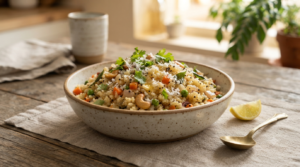
Soft home-style godhuma rava upma prepared with vegetables, curry leaves, mustard seeds, and simple South Indian tempering.
Wheat rava is sold under several names, including broken wheat, dalia, godhuma rava, bansi rava, and sometimes samba rava. However, the grain size and wheat variety can differ by brand. For that reason, the most reliable recipe uses a water range rather than pretending one ratio works for every packet.
Godhuma Rava Upma Recipe at a Glance
- Prep time: about 10 minutes
- Cook time: about 18 to 25 minutes, depending on grain size
- Servings: 3 to 4
- Base ratio: 1 cup wheat rava to 2.5 to 3 cups water
- Best texture: soft grains that hold their shape without turning watery
- Curd needed: no
The useful rule is simple: finer wheat rava usually needs less water and cooks faster, while coarse broken wheat needs more water and a longer covered simmer. If your packet gives a cooking ratio, use that as the first reference.
What Is Wheat Rava?
Wheat rava is a coarse wheat product rather than fine wheat flour. In Indian shops, the same shelf may contain products labelled broken wheat, dalia, bansi rava, or godhuma rava. These names overlap, but they do not always describe an identical grain size or processing method.
That difference matters because a fine rava can soften quickly, while a coarse broken grain may stay firm after the same cooking time. Also, do not assume every packet is a whole-grain product. Check the ingredient list and pack description if whole-grain content matters to you.
The ICMR-National Institute of Nutrition Dietary Guidelines for Indians recommend variety in cereal choices and encourage a combination of whole grains, pulses, millets, vegetables, and other food groups. This recipe can fit into that broader pattern, but its nutritional value still depends on the exact wheat product, oil, vegetables, portion, and side dishes.
Ingredients for This Godhuma Rava Upma Recipe
| Ingredient | Quantity | Purpose |
|---|---|---|
| Wheat rava or broken wheat | 1 cup | Main grain |
| Water | 2.5 to 3 cups | Adjust to grain size |
| Oil or ghee | 2 tablespoons | Tempering and flavour |
| Mustard seeds | 1 teaspoon | Tempering |
| Urad dal | 1 teaspoon | Crunch and flavour |
| Chana dal | 1 teaspoon | Crunch and flavour |
| Green chillies | 1 to 2, slit | Heat |
| Ginger | 1 teaspoon, finely chopped | Aroma |
| Curry leaves | 8 to 10 | Tempering aroma |
| Onion | 1 small, chopped | Optional savoury base |
| Carrot | 1/3 cup, finely diced | Optional vegetable |
| Green peas | 1/4 cup | Optional vegetable |
| Salt | To taste | Seasoning |
| Lemon and coriander | As needed | Finish |
Cashews or peanuts are optional, so add them only if they suit your household. You can also skip onion without changing the cooking method. For a separate no-onion variation, see BhimasCook’s upma without onion and garlic.
Best Water Ratio for Godhuma Rava Upma Recipe
A practical starting range is 2.5 to 3 cups water for 1 cup wheat rava. Use the lower end for finer or pre-roasted rava when you want a firmer texture. Use closer to 3 cups for coarse broken wheat or when you prefer softer upma.
Do not add the full maximum amount blindly. This godhuma rava upma recipe works better when you adjust for the grain in front of you. Brands vary, so begin with 2.5 cups if you are unsure. Keep another 1/4 to 1/2 cup of hot water ready, then add it only if the grains remain firm after the first covered simmer.
| Type | Starting water | What to expect |
|---|---|---|
| Fine wheat rava | About 2.5 cups | Faster cooking, softer texture |
| Medium wheat rava | 2.5 to 2.75 cups | Balanced, separate grains |
| Coarse broken wheat | 2.75 to 3 cups | Longer simmer, chewier grains |
If you are comparing this with regular sooji upma, remember that the two products absorb water differently. BhimasCook’s separate rava upma water-ratio guide is for semolina-based upma, not coarse broken wheat.
How to Make Godhuma Rava Upma Recipe Step by Step
- Check the rava. Look at the grain size and package instructions before cooking. If it is already roasted, you can shorten or skip the dry-roasting step.
- Roast gently. Place the wheat rava in a dry kadai over low to medium heat. Stir for 3 to 5 minutes until it smells lightly nutty, but do not brown it deeply.
- Make the tempering. Remove the rava. Heat oil or ghee, then add mustard seeds. When they crackle, add urad dal and chana dal and cook until lightly golden.
- Add aromatics. Add green chillies, ginger, and curry leaves. If using onion, cook it until translucent.
- Cook the vegetables. Add finely diced carrot and peas. Sauté for 2 to 3 minutes, so the vegetables begin to soften.
- Add water and salt. Pour in 2.5 cups water and bring it to a strong simmer. Taste the water carefully for seasoning before adding the grain.
Finish the cooking without making it gummy
- Add wheat rava slowly. Lower the heat, then sprinkle the roasted rava into the simmering water while stirring. This helps distribute the grains evenly.
- Cover and cook. Keep the pan on low heat for about 8 to 12 minutes. Coarse rava can need longer, so check the centre of a few grains before switching off the heat.
- Adjust only if needed. If the grains are still firm and the pan looks dry, add hot water in 1/4-cup portions. Mix gently, cover again, and continue cooking.
- Rest before serving. Switch off the heat and leave the upma covered for 5 minutes. Fluff gently, then finish with coriander and lemon if you like.
This godhuma rava upma recipe works best when the pan stays covered during the final cooking stage. Steam finishes the centre of the grain, while repeated stirring can make the texture heavy.
Why This Godhuma Rava Upma Recipe Does Not Need Curd
Curd is not necessary for wheat rava upma because the grain softens through hot water and covered cooking. Unlike instant rava idli or some batter recipes, upma does not depend on curd for acidity, fermentation, or leavening. Water, salt, heat, and steam are enough to cook the grain.
If you found an older recipe that describes this as a special “without curd” version, the practical point is simply that you can cook it with water alone. The flavour comes from the tempering, vegetables, ginger, curry leaves, and finishing ingredients rather than curd.
How to Keep Wheat Rava Upma Soft but Not Sticky
Sticky upma usually comes from one of three problems: too much water for the grain size, aggressive stirring after the rava starts swelling, or cooking too long after the water has already absorbed. The fix begins before the grain enters the pan.
- Roast unroasted rava gently, because dry grains separate more easily during cooking.
- Add the rava gradually to simmering water, so it does not clump in one place.
- Cook on low heat after the first stir, then let steam do most of the work.
- Add extra water in small amounts only when the grains remain firm.
- Rest the finished upma for 5 minutes before fluffing.
If the finished upma is slightly wetter than you wanted, do not keep stirring over high heat. Instead, uncover it briefly over low heat, then switch off and let it rest. The texture often settles as steam escapes.
Easy Godhuma Rava Upma Recipe Variations
Plain wheat rava upma
Skip carrot and peas, then keep the tempering simple with mustard, dals, chillies, ginger, and curry leaves. Onion can stay or go. This version is useful when you want a quick breakfast from pantry ingredients.
Vegetable wheat rava upma
Add finely chopped beans, carrot, peas, or capsicum. Keep the vegetable pieces small because the rava cooks quickly. Hard vegetables should soften before you add the water.
No-onion, no-garlic version
Omit onion and garlic, then use ginger, green chilli, curry leaves, cumin, and a small pinch of asafoetida if suitable. The basic water ratio stays the same, so you do not need a separate cooking method.
More filling one-pot variation
For a different texture and a higher pulse content, try a daliya-and-dal meal rather than turning upma into something it is not. BhimasCook’s masala daliya khichdi combines broken wheat with moong dal and vegetables for a separate one-pot dish.
Common Godhuma Rava Upma Recipe Problems and Fixes
| Problem | Likely cause | Fix |
|---|---|---|
| Grains are hard | Too little water or short cooking | Add 1/4 cup hot water, cover, and cook longer |
| Upma is mushy | Too much water for the rava | Use less water next time; rest uncovered briefly |
| Lumps form | Rava added too quickly | Sprinkle slowly while stirring |
| Bottom catches | Heat too high after thickening | Use low heat and a heavy pan |
| Flavour is flat | Weak tempering or low salt | Season the cooking water and finish with lemon |
The most important troubleshooting habit is to adjust one variable at a time. If you change the water, pan, roasting time, and grain brand together, it becomes hard to know what improved the result.
Is Wheat Rava Upma a Healthy Breakfast?
It can be part of a balanced breakfast, but the answer depends on the actual wheat product and what you serve with it. A dish made with whole-grain broken wheat, vegetables, moderate oil, and a protein-rich side has a different nutrition profile from refined semolina cooked with more fat.
For that reason, this article avoids claiming that wheat rava upma is automatically “better for diabetes” or guaranteed to support weight loss. Those outcomes depend on portion size, total diet, health needs, and the specific grain. If blood-sugar management is important, use advice from a qualified clinician or dietitian rather than relying on a recipe label.
Also, wheat rava contains wheat and is therefore unsuitable for a gluten-free diet. If you need a gluten-free breakfast, use a verified gluten-free grain and avoid cross-contact in the kitchen.
Storage and Reheating
Fresh upma has the best texture, so cook only what you expect to eat when practical. The Food Safety and Standards Authority of India food-safety guidance advises eating cooked food promptly. If food must be stored, it should be kept cold below 5°C and reheated thoroughly before eating.
For this godhuma rava upma recipe, cool leftovers promptly, transfer them to a clean covered container, and refrigerate. When reheating, add a small splash of water and warm the upma until it is steaming hot throughout. Discard food that has been left at unsafe temperatures for an extended period or shows signs of spoilage.
Before You Serve
The strongest godhuma rava upma recipe is not the one with the longest ingredient list. It is the one where the wheat rava is fully cooked, the tempering tastes fresh, and the water ratio matches the grain in your packet. Start with less water, add more only when needed, and give coarse grains enough covered cooking time.
This godhuma rava upma recipe is flexible enough for vegetables, a plain version, or a no-onion variation. Most importantly, curd is optional because it is not required for the cooking process.
Frequently Asked Questions
What is the best water ratio for wheat rava upma?
Start with 2.5 cups water for 1 cup wheat rava, then increase toward 3 cups for coarser grains or a softer texture. The exact ratio varies by grain size and processing, so the package instructions are useful when available.
Do I need to roast wheat rava before making upma?
Roasting is helpful when the rava is raw because it improves aroma and can help the grains stay separate. However, some packets are sold pre-roasted. In that case, a brief warming is enough and a second full roasting step is unnecessary.
Can I Make This Godhuma Rava Upma Recipe Without Curd?
Yes. Wheat rava upma does not require curd. The grain cooks in hot water, while the tempering and vegetables provide flavour. Curd can be served on the side if you enjoy it, but it is not part of the essential cooking method.
Why is my wheat rava upma still hard?
The rava may be coarser than expected or may need more water. Add about 1/4 cup hot water, cover the pan, and continue cooking on low heat. Repeat only if the centre of the grains remains firm.
Can I make wheat rava upma without vegetables?
Yes. Use the same method with only the tempering, water, wheat rava, and salt. Onion is also optional. A squeeze of lemon and fresh coriander can brighten the simpler version before serving.
Is wheat rava the same as sooji?
Not always. Product names vary, and both are wheat-based, but broken wheat or godhuma rava is usually coarser than the fine or medium semolina commonly sold as sooji. Check the packet because grain size changes the required water and cooking time.
Can I cook wheat rava upma in a pressure cooker?
You can, but stovetop cooking gives more control over water adjustment and texture. Pressure-cooker timing also varies with grain size. If you use a cooker, follow the grain manufacturer’s directions and avoid assuming the same timing works for every wheat rava.
What can I serve with wheat rava upma?
Coconut chutney, peanut chutney, sambar, pickle, or a squeeze of lemon all work well. For a more balanced meal, pair the upma with a suitable protein-rich side instead of relying on the grain alone.