Coconut Payasam Recipe: Jaggery, Rice & Coconut Milk
Coconut payasam recipe success comes down to three things: cook the rice-coconut base fully, strain the jaggery, and add thick coconut milk only after the hard boiling is over. This version keeps the flavour clean and coconut-forward, with enough rice to give body without turning the dessert into porridge.
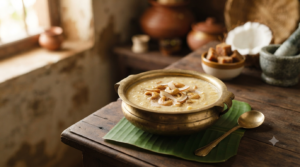
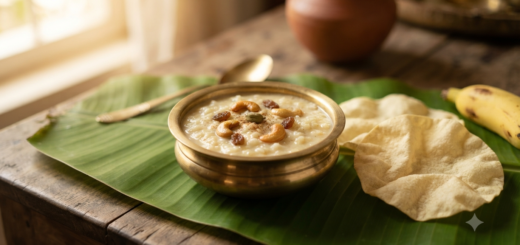
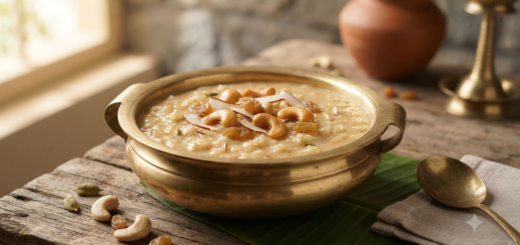
South Indian coconut payasam made with jaggery, rice, coconut milk, cardamom and roasted cashews.
The result is a smooth South Indian payasam with a gentle jaggery sweetness, cardamom aroma and roasted cashews. It works for festival meals, family lunches and any day you want a traditional sweet without condensed milk or a long reduction.
Coconut Payasam Recipe at a Glance
- Style: South Indian coconut-and-jaggery payasam with rice for light thickening
- Prep time: 30 minutes, mostly soaking
- Cook time: about 25 minutes
- Total time: about 55 minutes
- Serves: 4 to 5 small dessert portions
- Sweetener: jaggery
- Dairy-free option: use coconut oil instead of ghee
- Best texture: flowing when hot, slightly thicker after resting
This coconut payasam recipe is not meant to be as thick as rice kheer. A good bowl should fall easily from the ladle while still coating the spoon. Because coconut milk thickens as it cools, stop cooking while the payasam still looks a little looser than your final target.
For a coconut payasam recipe that stays pourable, resist the urge to reduce it until it looks finished in the pan. The five-minute rest does part of that work for you.
What Makes This Version Different
Many online recipes mix three different desserts under one name: tender-coconut payasam, rice kheer with coconut milk, and arisi-thengai payasam made from ground rice and coconut. This recipe follows the third style. Raw rice and fresh coconut are ground together, then cooked before jaggery and coconut milk go in.
That order matters. Rice starch needs water and heat before the sweetener enters, while thick coconut milk tastes best when it is not boiled hard. The method also avoids the common mistake of adding dairy milk and jaggery together over high heat, which can make the mixture look split.
Ingredients for This Coconut Payasam Recipe
| Ingredient | Quantity | Purpose |
|---|---|---|
| Raw rice | 2 tbsp | Light thickening and body |
| Fresh grated coconut | 1 cup | Main flavour and texture |
| Jaggery, grated or chopped | 3/4 cup | Sweetness and caramel note |
| Water | About 2 1/2 cups | Grinding, cooking and syrup |
| Thin coconut milk | 1 cup | Cooking liquid and coconut flavour |
| Thick coconut milk | 3/4 cup | Final creamy finish |
| Cardamom powder | 1/2 tsp | Aroma |
| Ghee | 2 tsp | Roasting garnish |
| Cashews | 10 to 12 | Crunch |
| Raisins | 1 tbsp | Optional garnish |
| Small coconut pieces | 1 tbsp | Optional toasted bite |
| Salt | One small pinch | Balances sweetness |
Use fresh coconut if you can, because it gives a rounder aroma than desiccated coconut. Frozen grated coconut also works when thawed fully. If you use packaged coconut milk, choose an unsweetened product and shake it well before measuring.
How to judge the jaggery amount
Jaggery varies in sweetness and flavour, so 3/4 cup is a starting point rather than a law. If your jaggery is very dark and intense, begin with a little less. Taste only after the cooked base and syrup have combined, then add more melted jaggery if needed.
Step-by-Step Coconut Payasam Recipe
Cook the rice-coconut base
- Soak the rice. Rinse 2 tablespoons of raw rice and soak it for 30 minutes. Soaking makes the grain easier to grind, so the finished payasam feels smooth rather than gritty.
- Grind rice and coconut. Drain the rice. Blend it with 1 cup grated coconut and about 1/2 cup water until you get a fine, slightly grainy paste.
- Cook the base. Transfer the paste to a heavy pan and add 1 1/2 cups water. Cook on low to medium heat for 8 to 10 minutes while stirring often.
- Check doneness. The raw rice smell should disappear, and the mixture should look glossy and lightly thickened. If it becomes too tight, add a little hot water.
- Make the jaggery syrup. Melt 3/4 cup jaggery with about 1/2 cup water in a small pan. Once dissolved, strain it through a fine sieve to remove grit.
Sweeten, finish and garnish
- Add jaggery. Pour the strained syrup into the cooked coconut-rice base. Simmer gently for 2 to 3 minutes, stirring so the bottom does not catch.
- Add thin coconut milk. Stir in 1 cup thin coconut milk and a pinch of salt. Heat gently for 3 to 4 minutes without a rolling boil.
- Finish off the heat. Turn off the stove, then stir in 3/4 cup thick coconut milk and the cardamom powder. Rest the payasam for 5 minutes before checking consistency.
- Roast the garnish. Heat ghee in a small pan. Fry cashews until golden, then add raisins and coconut pieces for a few seconds.
- Serve. Add the garnish to the payasam and serve warm. For a chilled version, cool it quickly and refrigerate it promptly.
The most important stage is step four. If the rice-coconut paste still smells raw, jaggery cannot hide it. Give the base another minute or two before sweetening, because the finished payasam will taste cleaner and feel smoother.
Why Thick Coconut Milk Goes in Last
Thick coconut milk contains more coconut solids and fat than the second or thinner extract. Strong boiling can make it lose its fresh aroma and can leave an oily-looking surface. So use the thinner milk during the warm stage and stir the thick milk in after switching off the heat.
This is also why the old habit of boiling every liquid together is unreliable. You may get a good batch once and a separated batch the next time. A gentler finish gives you a more repeatable result, especially with packaged coconut milk.
Mistakes That Spoil a Coconut Payasam Recipe
In a coconut payasam recipe, most texture problems come from timing rather than expensive ingredients. Fix the order of cooking first, then adjust sweetness and richness.
Using too much rice
Too much rice turns the dessert into a heavy paste as it cools. Two tablespoons are enough for this quantity because the coconut itself adds body. If you want a true rice kheer texture, that is a different recipe and needs a different liquid ratio.
Adding jaggery before the rice base cooks
Cook the rice-coconut paste first, then sweeten it. This keeps the grain from staying chalky in the centre. It also makes it easier to judge the final thickness before sugar enters the pan.
Boiling thick coconut milk hard
Once thick coconut milk goes in, avoid a vigorous boil. Gentle heat protects the aroma and gives a smoother surface. If you need to reheat the payasam later, use low heat and stir continuously.
Skipping the jaggery straining step
Traditional jaggery can carry fine grit or fibres. Melt it separately and strain it before it reaches the payasam. The extra pan takes only a few minutes and prevents an unpleasant sandy bite.
How to Fix Coconut Payasam When It Goes Wrong
| Problem | Likely cause | Fix |
|---|---|---|
| Too thick | Too much rice or long simmer | Stir in hot water or warm thin coconut milk a little at a time |
| Too thin | Base undercooked | Simmer the rice-coconut base longer before thick coconut milk is added |
| Grainy texture | Rice not soaked or ground enough | Soak fully and grind finer next time |
| Oily surface | Thick coconut milk boiled hard | Cool slightly and whisk gently; next time add it off heat |
| Overly sweet | Jaggery added all at once | Loosen with unsweetened coconut milk and a pinch of salt |
| Raw taste | Rice-coconut paste undercooked | Return to low heat before adding the final thick coconut milk |
If the batch becomes too thick after cooling, do not dilute the entire pot immediately. Warm only the portion you plan to serve, then add a spoonful of hot water or thin coconut milk. That keeps the remaining payasam from becoming watery in the fridge.
Fresh Coconut Milk vs Packaged Coconut Milk
Fresh coconut milk gives the brightest coconut aroma, yet packaged unsweetened coconut milk is convenient and consistent. For this coconut payasam recipe, fresh milk gives the most distinct coconut finish. Blend grated coconut with warm water, strain once for the thick first extract, then strain again with more water for the thinner second extract.
With canned coconut milk, you can create a similar two-stage effect by diluting part of it with water for the cooking stage. Keep the undiluted portion for the finish. Avoid sweetened coconut cream because it changes both the sugar level and the texture.
Can You Make This Payasam Without Dairy?
Yes. The recipe itself uses coconut milk, so only the ghee needs changing for a fully dairy-free version. Use a small amount of coconut oil for roasting the cashews, or dry-roast them if you prefer.
There is no need to add cow’s milk for creaminess. In fact, keeping the recipe fully coconut-based removes one common source of splitting when jaggery is present. The flavour also stays more focused.
Serving, Storage and Food Safety
Serve the payasam warm in small bowls, or chill it after cooling. Because coconut milk is perishable, do not leave the finished dessert sitting at room temperature for long. The Food Safety and Standards Authority of India advises keeping prepared food cold below 5°C when it must be stored.
For leftovers, cool the payasam promptly in a shallow container and refrigerate it. The USDA Food Safety and Inspection Service recommends refrigerating perishable leftovers within two hours and generally using refrigerated leftovers within three to four days. For best flavour and texture, this dessert is usually nicest within the first two days.
Useful Variations Without Losing the Base Recipe
Once you understand the base, small variations are easy. Keep the coconut payasam recipe method unchanged, then add a pinch of dry ginger for a warmer Kerala-style note. You can also toast chopped coconut with the cashews or use palm jaggery for a deeper flavour.
If you want vermicelli instead of ground rice, use the separate semiya payasam recipe because its cooking method is different. For a milk-heavy dessert, the paal payasam with condensed milk follows another texture profile. You can also compare the paruppu payasam without coconut milk when you want a lentil-based version.
Before You Start Cooking
This coconut payasam recipe is easiest when every ingredient is measured before the stove comes on. The rice base thickens quickly, so stopping midway to grate jaggery or open a coconut-milk pack can lead to sticking.
Keep one cup of hot water nearby as insurance. Then you can loosen the base without cooling it suddenly. Most importantly, trust the texture after a short rest rather than trying to force final thickness while the pan is still boiling.
Frequently Asked Questions
What is coconut payasam made of?
Coconut payasam is a South Indian sweet made with coconut, a small amount of rice, jaggery, coconut milk and cardamom. Cashews and raisins are common garnishes. Some regional versions use dal, vermicelli or dairy milk, so the exact formula changes from one household to another.
Can I make coconut payasam with canned coconut milk?
Yes. Use unsweetened canned coconut milk and dilute part of it with water for the cooking stage. Keep a thicker portion undiluted for the finish, because that preserves a fresher coconut aroma and gives the payasam a smooth texture.
Why did my coconut payasam split?
Hard boiling after adding thick coconut milk can make the surface look oily or separated. Dairy milk can also split more easily in a jaggery-based mixture. Use gentle heat, add thick coconut milk off the stove, and avoid a rolling boil after the final addition.
Can I use sugar instead of jaggery?
Yes, but the flavour will be lighter and less caramel-like. Add sugar only after the rice-coconut base has cooked. Start with less than the jaggery quantity, taste, and adjust because granulated sugar and jaggery do not sweeten in exactly the same way.
How do I make coconut payasam thicker?
Simmer the rice-coconut base a little longer before you add thick coconut milk. Do not solve thin payasam by adding a large amount of rice flour at the end, because that can create a pasty texture. The dessert will also thicken naturally as it cools.
How do I thin coconut payasam after refrigeration?
Warm the portion you need over low heat and add hot water or thin coconut milk one spoonful at a time. Stir continuously until it flows easily from the ladle. Avoid adding cold liquid directly to a hot pan because it makes the texture harder to judge.
Is coconut payasam vegan?
It can be fully vegan when you use coconut milk and replace ghee with coconut oil. The core recipe needs no dairy milk. Check packaged coconut milk labels if you are avoiding dairy strictly, since formulations can vary by brand.
Can coconut payasam be made ahead?
Yes. Make it earlier the same day, cool it promptly and refrigerate it. It will thicken as it rests, so loosen it gently before serving. If you want the freshest nut texture, add the roasted cashews and coconut pieces shortly before serving.