Bisi Bath With Sambar Powder: Easy Karnataka Shortcut Recipe
Bisi bath with sambar powder is the practical shortcut to use when you do not have dedicated Bisi Bele Bath masala, but the two powders are not identical. A good result depends on three things: soft rice and dal, enough tamarind, and a small flavour boost so the dish does not taste like ordinary sambar rice. This method keeps the cooking simple while making that difference clear.
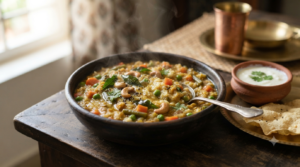
Soft and comforting Bisi Bele Bath prepared with regular sambar powder, vegetables, toor dal and tamarind.
For bisi bath with sambar powder, the shortcut works because the rice, dal and tamarind still provide the dish’s basic structure. Karnataka Tourism describes Bisi Bele Bath as rice and lentils combined with vegetables and a special Bisi Bele Bath masala. MTR also lists Sambar Powder and Bisibele Bhath Masala as separate products, which confirms an important point: sambar powder is a substitute here, not a like-for-like replacement. Use it when convenience matters, then adjust the flavour with the tips below.
Bisi Bath With Sambar Powder at a Glance
- Prep time: about 20 minutes, including chopping and soaking.
- Cook time: about 40 minutes.
- Serves: 4 to 5 as a main meal.
- Rice to dal: 1 cup rice to 1/2 cup toor dal.
- Sambar powder: start with 3 tablespoons for this batch, then adjust after simmering.
- Texture: soft, spoonable and slightly loose while hot because it thickens as it rests.
- Best shortcut: add a small cinnamon-clove-pepper booster if your sambar powder tastes flat.
The key decision is the masala. If you already have proper Bisi Bele Bath powder, use the homemade Bisibelebath powder recipe instead. If you specifically want a packet-based shortcut, the readymade Bisi Bele Bath powder version is the closer flavour match.
Why Bisi Bath With Sambar Powder Tastes Different
When you make bisi bath with sambar powder, the powder can season the dish well, but it usually lacks the same warm-spice balance as dedicated Bisi Bele Bath masala. The exact blend varies by brand and household. That is why two pots made with the same rice, dal and vegetables can taste very different.
The official MTR range lists Sambar Powder and Bisibele Bhath Masala separately. That is a useful kitchen clue, not just a product distinction. If you use regular sambar powder, build back a little warmth with cinnamon, clove and black pepper instead of simply adding more powder.
| Feature | Bisi Bele Bath masala | Regular sambar powder |
|---|---|---|
| Main use | Rice, dal and vegetable bath | Sambar and lentil gravies |
| Flavour | Warm, tangy, aromatic | More direct chilli-coriander profile |
| Shortcut result | Closer to classic Karnataka style | Good, but can lean toward sambar rice |
| Best fix | Usually none needed | Add a small warm-spice booster |
Ingredients for Bisi Bath With Sambar Powder
This ratio gives a soft, comforting pot without making the dal dominate. Sona masuri works especially well because it softens easily. You can use another everyday short-grain rice if that is what you keep at home.
Main Ingredients for Bisi Bath With Sambar Powder
- 1 cup sona masuri rice
- 1/2 cup toor dal
- 1/2 teaspoon turmeric powder
- 1 medium carrot, diced
- 8 to 10 French beans, chopped
- 1/2 cup green peas
- 1 small potato, diced
- 1 small onion, chopped, optional
- 1 small tomato, chopped, optional
- 3 tablespoons sambar powder
- 2 tablespoons thick tamarind extract
- 1 to 2 teaspoons grated jaggery, optional but useful for balance
- Salt to taste
- 5 to 6 cups hot water in total, added in stages
For Tempering
- 1 to 2 tablespoons ghee, or neutral oil for a vegan version
- 1 teaspoon mustard seeds
- 10 to 12 curry leaves
- 1 pinch asafoetida
- 2 tablespoons cashews or peanuts, optional
Optional Flavour Booster for Bisi Bath With Sambar Powder
- 1 small piece cinnamon, about 2 cm
- 2 cloves
- 1/4 teaspoon black pepper
- 1 tablespoon dry coconut or desiccated coconut
Dry-roast the booster ingredients on low heat until aromatic, then cool and grind them finely. This tiny batch gives the sambar powder more depth without turning the shortcut into a long spice-roasting project. Skip it if your sambar powder already has a strong warm-spice note.
How to Make Bisi Bath With Sambar Powder
For the best texture, cook the rice and dal until softer than you would for plain rice. Then cook the vegetables in a separate tamarind-spice base. Combining them only after both parts are ready gives you more control over sourness, salt and consistency.
1. Rinse and Soak the Rice and Dal
Rinse 1 cup rice and 1/2 cup toor dal until the water looks mostly clear. Soak them together for 15 minutes while you chop the vegetables. The soak is helpful because the final dish needs a soft, cohesive texture.
2. Pressure-Cook Until Very Soft
Add the soaked rice and dal to a pressure cooker with 4 cups water and 1/2 teaspoon turmeric. Cook for 4 whistles on a conventional pressure cooker, then let the pressure release naturally. The grains should mash easily with the back of a spoon.
Pressure cookers vary, so use softness rather than whistle count as the final test. If the mixture still looks separate and firm, cook it a little longer with extra hot water. Bisi Bele Bath should not have distinct, fluffy grains like pulao.
3. Start the Vegetable Base
Heat 1 tablespoon ghee or oil in a wide, heavy pan. Add mustard seeds, then curry leaves and asafoetida after the seeds crackle. Add onion if using, and cook until it softens.
Add carrot, beans, peas and potato next. Stir for 2 to 3 minutes, then add the optional tomato. Pour in about 2 cups hot water and simmer until the vegetables are just tender.
4. Add Tamarind Before the Rice Mixture
Stir in the tamarind extract, jaggery and salt. Simmer for 3 to 4 minutes so the raw edge of the tamarind softens. Taste the liquid now because correcting sourness is easier before the thick rice-dal mixture goes in.
5. Add Sambar Powder Without Scorching It
Lower the heat, then stir in 3 tablespoons sambar powder. Add the optional ground booster at the same time. Mix well and simmer for 3 minutes so the powder hydrates and loses any raw, dusty taste.
If the masala sticks to the pan, add a small splash of hot water immediately. Do not fry dry powder over high heat because chilli and fenugreek can turn bitter. A gentle simmer gives a cleaner flavour.
6. Combine, Loosen and Simmer
Add the cooked rice and dal to the vegetable base. Mix gently, then add hot water until the dish looks slightly looser than your ideal serving texture. Simmer on low heat for 8 to 10 minutes while stirring every minute or two.
The starch keeps thickening as the pot stands, so stop before it looks dry. If you can drag a ladle through the centre and the mixture slowly flows back, the consistency is close. Add more hot water if the channel stays open.
7. Finish With Tempering
Heat the remaining ghee in a small pan. Fry cashews or peanuts until golden, then add a few curry leaves if you like. Pour the hot tempering over the finished bath and serve at once.
Bisi Bath With Sambar Powder: Flavour Calibration
This shortcut becomes much more reliable when you adjust one taste at a time. Do not respond to a flat pot by adding another spoonful of sambar powder immediately. First check salt, sourness, sweetness and texture because each one changes how the spices taste.
| Problem | Likely cause | Fix |
|---|---|---|
| Tastes like plain sambar rice | Warm-spice note is missing | Add the cinnamon-clove-pepper booster |
| Tastes harsh or bitter | Powder was fried too hard or too much was added | Add hot water, a little jaggery and more cooked rice if available |
| Too sour | Tamarind is strong | Add hot water and a small amount of jaggery |
| Too thick | Rice and dal absorbed water while resting | Stir in boiling water before serving |
| Flavour feels dull | Salt or fat is too low | Correct salt first, then finish with a little ghee |
Best Vegetables for Bisi Bath With Sambar Powder
Carrot, beans, peas and potato make the easiest all-season combination. They soften at similar rates and give enough sweetness to balance tamarind. Capsicum can add a stronger aroma, while brinjal makes the texture softer and more homestyle.
Drumstick works well if you enjoy it, although it changes how you eat the dish because of the fibrous pieces. Avoid loading the pot with too many watery vegetables. The final flavour should still taste of rice, dal, tamarind and masala rather than a mixed-vegetable stew.
Onion and tomato are optional in this shortcut. If you want a flavour closer to dedicated Bisi Bele Bath masala, reduce the tomato or skip it. Too much tomato plus sambar powder pushes the dish toward regular sambar sadam.
Common Mistakes With Bisi Bath With Sambar Powder
The most common mistake with bisi bath with sambar powder is treating the finished dish like seasoned rice. It needs more water and a softer finish. If the grains stay separate, the masala coats them unevenly and the dish tastes less integrated.
The second mistake is using sambar powder and calling the result identical to traditional Bisi Bele Bath. It can be very good, but it is still a shortcut. Karnataka Tourism describes the classic dish with a dedicated Bisi Bele Bath masala, while packaged brands also sell the two spice mixes separately.
The third mistake is adding cold water near the end. Cold water drops the simmer and can make the texture feel patchy. Use hot or boiling water, then simmer briefly so the added liquid blends into the starch.
Serving Bisi Bath With Sambar Powder
Serve bisi bath with sambar powder piping hot because the texture is best before it tightens. A spoonful of ghee, crisp papad, potato chips or khara boondi gives the soft rice a useful contrast. Plain curd or a simple cucumber raita also works well when the masala is spicy.
Karnataka Tourism notes that Bisi Bele Bath is commonly served with crisp items such as chips or boondi. That pairing works especially well here because the sambar-powder version is deliberately soft and spoonable. Keep the side simple so it does not compete with the tamarind and spice.
Storage and Reheating for Bisi Bath With Sambar Powder
Cool leftover bisi bath with sambar powder promptly and refrigerate it in a clean, covered container. The Food Safety and Standards Authority of India advises that cooked food should not sit at room temperature for more than two hours. It also recommends thorough reheating before consumption.
For best eating quality, use refrigerated leftovers soon. Reheat only the portion you need, and add a splash of hot water because the rice and dal keep absorbing moisture. Heat until steaming throughout, then finish with fresh ghee or a quick tempering if desired.
For broader home food-safety guidance, see the FSSAI Food Safety at Home guidance. If food has been left out for an unsafe period, do not rely on reheating to make it safe.
When to Use a Different BhimasCook Version
Choose this page when regular sambar powder is what you already have. Choose the MTR powder Bisi Bele Bath recipe when you have a dedicated branded Bisi Bele Bath masala. The cooking logic is similar, but the spice amount and flavour correction are different.
If you want the spice blend itself to be the star, make the homemade powder version instead. That route takes longer, yet it gives you direct control over cinnamon, cloves, chillies, coconut and other aromatics. Keeping these pages distinct prevents a shortcut recipe from pretending to be the traditional method.
Bisi Bath With Sambar Powder: Before You Serve
Bisi bath with sambar powder works best when you treat sambar powder as a useful base rather than an exact substitute. Keep the rice and dal soft, simmer the powder gently, and adjust tamarind before adding more spice. Then use the optional warm-spice booster only if the pot needs it.
The final bisi bath with sambar powder should be loose, tangy and aromatic, not dry or aggressively spicy. Serve it hot with one crisp side. If you later buy proper Bisi Bele Bath masala, use the dedicated version and compare the difference for yourself.
Bisi Bath With Sambar Powder FAQs
Can I Really Make Bisi Bath With Sambar Powder?
Yes, regular sambar powder can make a tasty shortcut version. However, it will not taste identical to a batch made with dedicated Bisi Bele Bath masala. Use the optional cinnamon-clove-pepper booster if you want more of the warm aromatic note associated with the Karnataka dish.
How Much Sambar Powder Should I Use for Bisi Bath With Sambar Powder?
Start with 3 tablespoons sambar powder for 1 cup rice and 1/2 cup toor dal in this recipe. Brands vary in chilli, coriander, salt and fenugreek strength, so taste after the powder has simmered. Add more only if the dish needs it.
Is Bisi Bele Bath the Same as Sambar Rice?
No. They overlap in rice, lentils, vegetables and tamarind, but the masala profile and finished character differ. Dedicated Bisi Bele Bath masala usually brings a warmer spice profile, while a sambar-powder shortcut can taste closer to sambar sadam unless you adjust it.
Can I Make Bisi Bath With Sambar Powder Without Onion and Garlic?
Yes. Skip the onion, and note that this recipe does not require garlic. Increase the vegetables slightly if you want more body, then keep the same tamarind and spice method. The dish still works because its structure comes from rice, toor dal and the masala base.
Why Does Bisi Bath With Sambar Powder Become Solid After Cooling?
Rice and dal continue absorbing water after cooking, so the mixture thickens quickly as it rests. Keep the pot slightly loose before switching off the heat. When reheating, add hot water a little at a time until the bath becomes spoonable again.
Can I Use Leftover Cooked Rice?
Yes, although the texture will be slightly different. Cook the toor dal until very soft, prepare the vegetable and tamarind base, then add the cooked rice near the end. Mash part of the rice into the dal so the dish becomes cohesive rather than looking like rice mixed with sambar.
Can I Skip Jaggery?
Yes. Jaggery is optional in this shortcut, but a small amount can soften sharp tamarind and bitter spice notes. Taste first, especially if your sambar powder already contains sweet or roasted ingredients. Add only enough to balance the pot, not to make it sweet.
What Should I Serve With Bisi Bath With Sambar Powder?
Serve it with a crisp, simple side such as papad, potato chips or khara boondi. Plain curd or cucumber raita is useful when the dish is spicy. A small spoonful of ghee on top adds aroma and richness just before serving.